
American “Beauty”
The centerpiece of Philip Glass’s operatic “Cocteau trilogy” cast its spell anew in a Berkeley revival

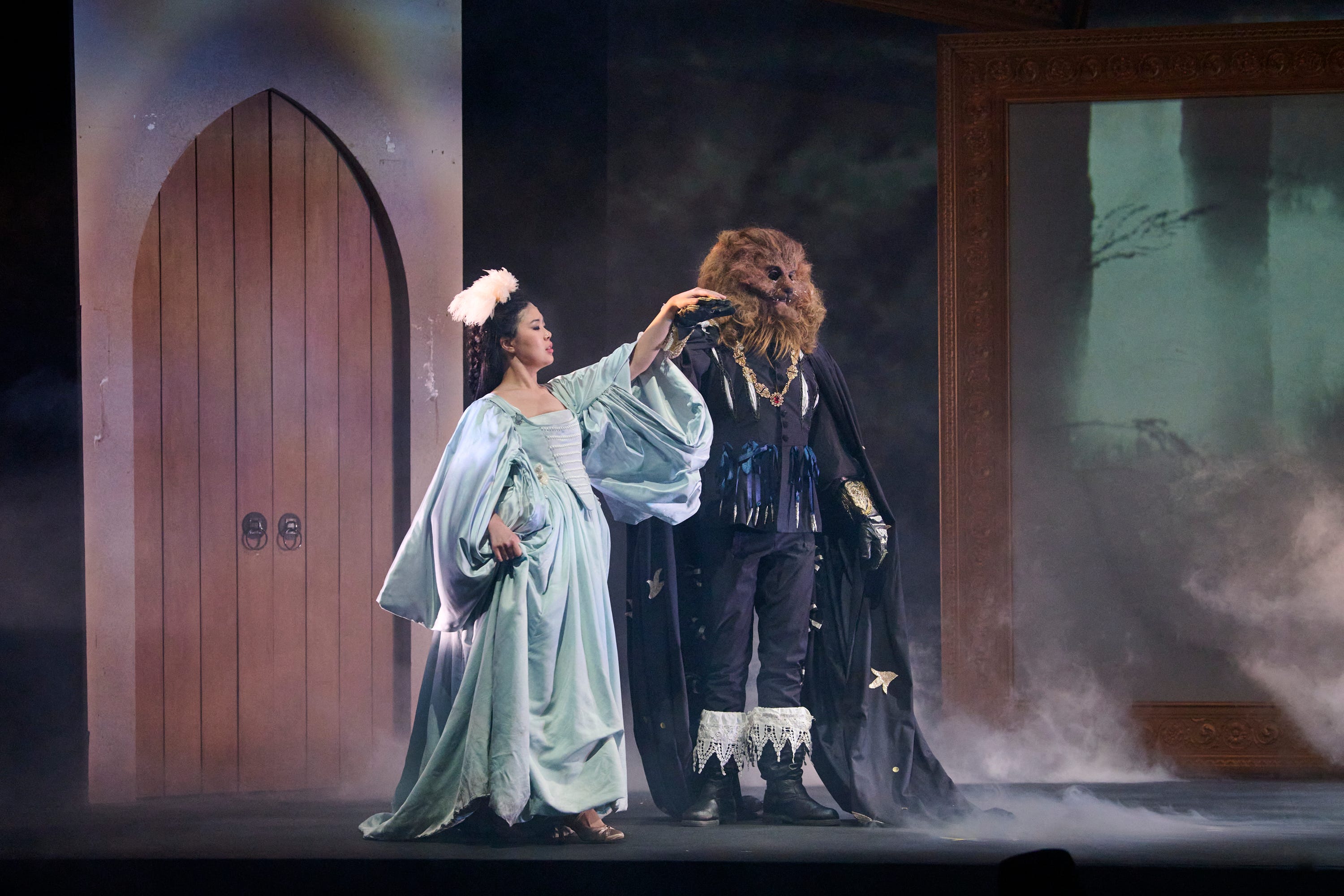
One of the things I love about Opera Parallèle’s superb production of La Belle et la Bête (Beauty and the Beast), which returned for two all-too-brief performances over the weekend at Cal Performances, is how multilayered it is. Whenever I try to describe it to someone, either in person or in writing, I have to begin by practically diagramming the different strands of the project. There’s Jean Cocteau’s 1946 classic film, with its shadowy fairytale surrealism and its blend of Romanticism and mordant wit. There’s Philip Glass’s operatic treatment from 1994, which strips out the film’s soundtrack (including a score by Georges Auric) and replaces it with his own music, written to be performed and sung live while the film plays silently. And then there’s the production itself, concocted by director Brian Staufenbiel, whose newly filmed sequences place the live actors seamlessly into mockups of Cocteau’s film.
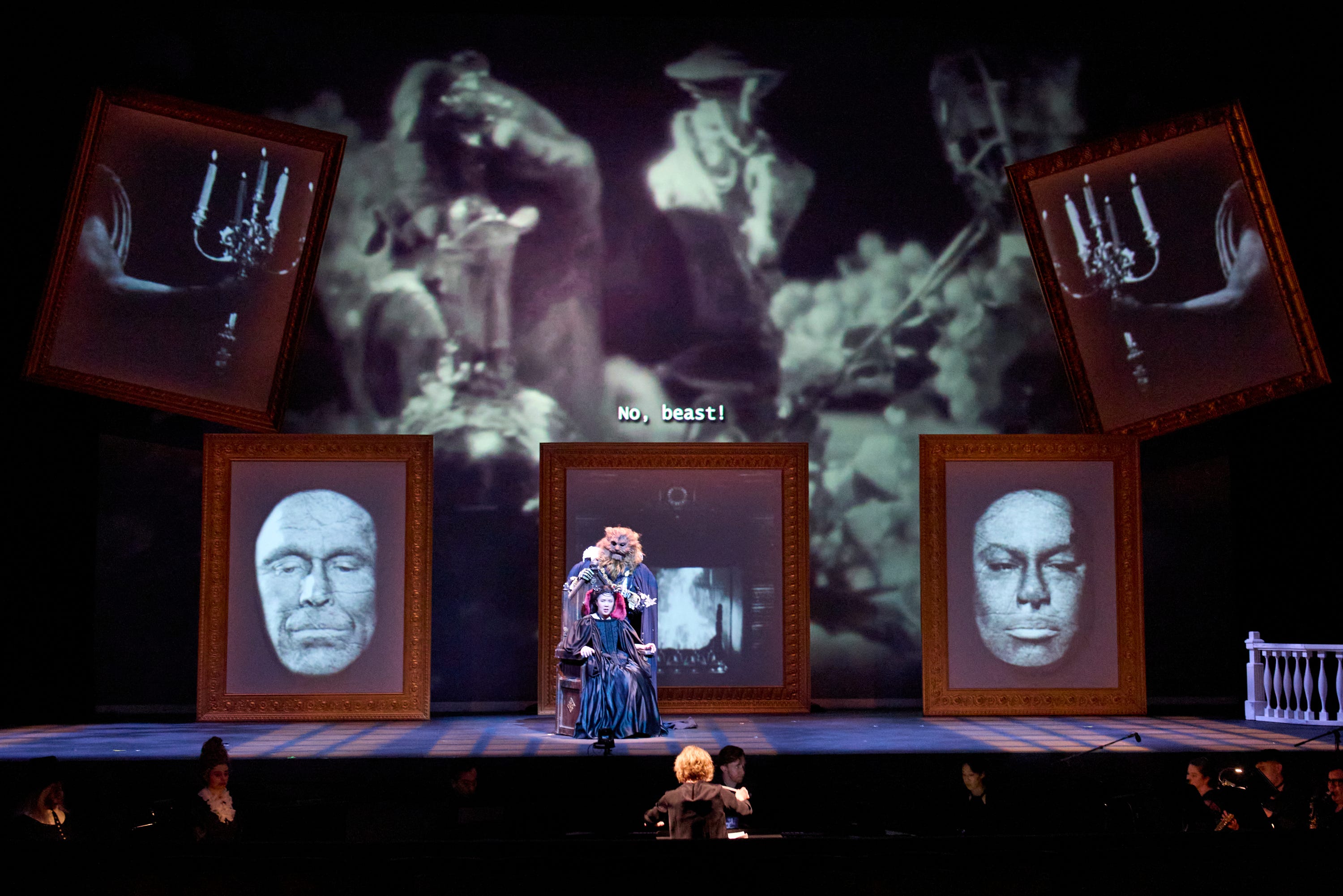
During a performance, all those strains intertwine in a way that is both powerful and elusive. It’s a combination of direct address and elaborate headfakery. As you watch the movie, projected at the center of the stage, the singers might sidle into view before you’ve noticed they’re there. Glass’s music is sometimes the driving force of the entire undertaking, and sometimes barely more than atmospheric background. There are scenes in which the Cocteau footage disappears for a bit to allow the live performers to take center stage. An array of small movie screens surrounding the main one allows the action to expand (most impressively during the nighttime journey of Belle’s father through the fog-laden forest surrounding the Beast’s manor) and contract. And watching the singers appear in the same costume, now on screen and now onstage, is always exhilaratingly disorienting.
Underlying it all is Glass’s burbling, richly expressive score, which is one of the great demonstrations of how versatile his compositional style can be. The familiar building blocks are all in place — the rippling arpeggios, the moody minor-key harmonies, the repetitions that are never just repetitions — but the shades of the instrumental music comport affectingly with Cocteau’s black-and-white cinematography. And Glass’s vocal writing here feels new and adventurous; he casts the words of the screenplay in luminous melodic lines that arch and curl, with a suave Gallic flair.
When the production had its premiere in 2022 at the SFJazz Center, the closeness of the Miner Auditorium compelled the performance to overspill its borders in exciting ways. The singers didn’t only appear on stage and screen; they also made forays into the aisles, not quite interacting with the audience members (that would’ve been weird) but certainly coming into our personal space. It felt like one more aspect of the porousness of the production’s boundaries: If the opera could bounce blithely from stage to screen and back again, why shouldn’t it seep out into the hall itself?
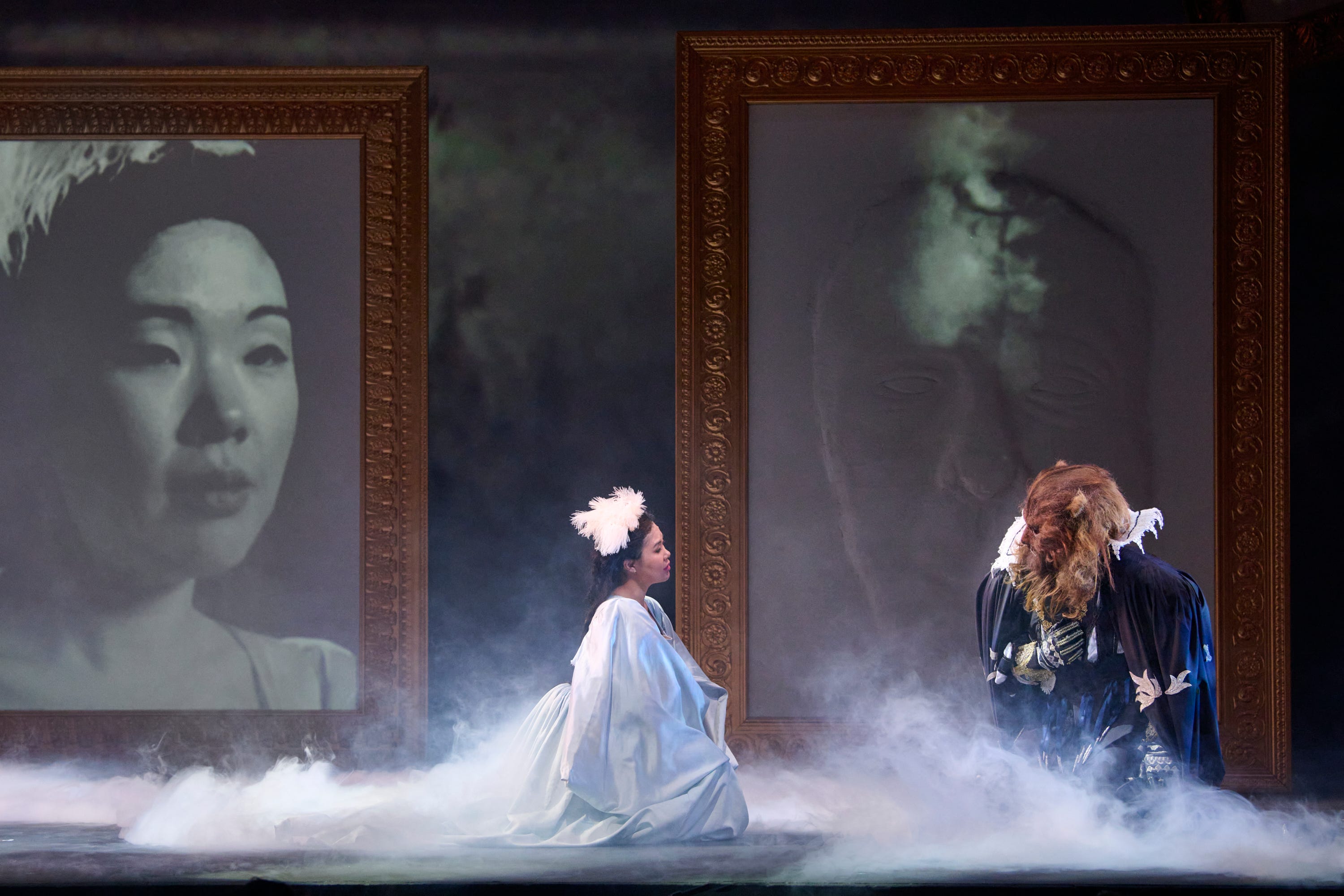
Zellerbach Hall, unfortunately, didn’t lend itself to that kind of shenanigans; the footlights, as it were, represent a real bulwark there. But that was the only disappointment in a program that was otherwise enthralling, drawing wisdom, beauty, and enchantment from all its various sources. Artistic director Nicole Paiement conducted with sweeping eloquence, and the cast (Chea Kang and Hadleigh Adams, respectively, in the title roles, along with Sophie Delphis and Aurelien Mangwa) brought elegance and vulnerability to their respective roles. All I want now is a return engagement.
Elsewhere:
Lily Janiak, San Francisco Chronicle: “Glass’s 1994 score is like those rustling curtains as music. He tinges his arpeggios with new notes that gently but inexorably color everything anew, like a drop of dye seeping through fabric. Paiement teases out the swelling drama in each phrase, making a whole library of mystery volumes.”
Lisa Hirsch, SFCV: “Glass’s beautiful and mesmerizing score furthers that sense of being lifted to a different plane. Within his well-known style of minimalism, he found a kaleidoscopic range of color, mood, and rhythm to match the emotional breadth of the film. I would go so far as to say that Glass’s opera represents an improvement on the original.”
Patrick Vaz, The Reverberate Hills: “Though the whole opera ‘sounds like’ Philip Glass, each scene reflects an appropriate, often strikingly distinct, mood: uncanny, yearning, threatening, frightening, touching, elevating. The segments of the score move along with cinematic speed, like camera cuts.”
Caroline Crawford, Bay City News: “Instrumental action scenes get the most lavish musical colors; for example, when Belle rides a shining white mare to the Beast’s castle and when her father approaches the castle entry, which is lit by arms bearing candelabra and smiling faces embedded in carved walls.”
A Bach in Gilead
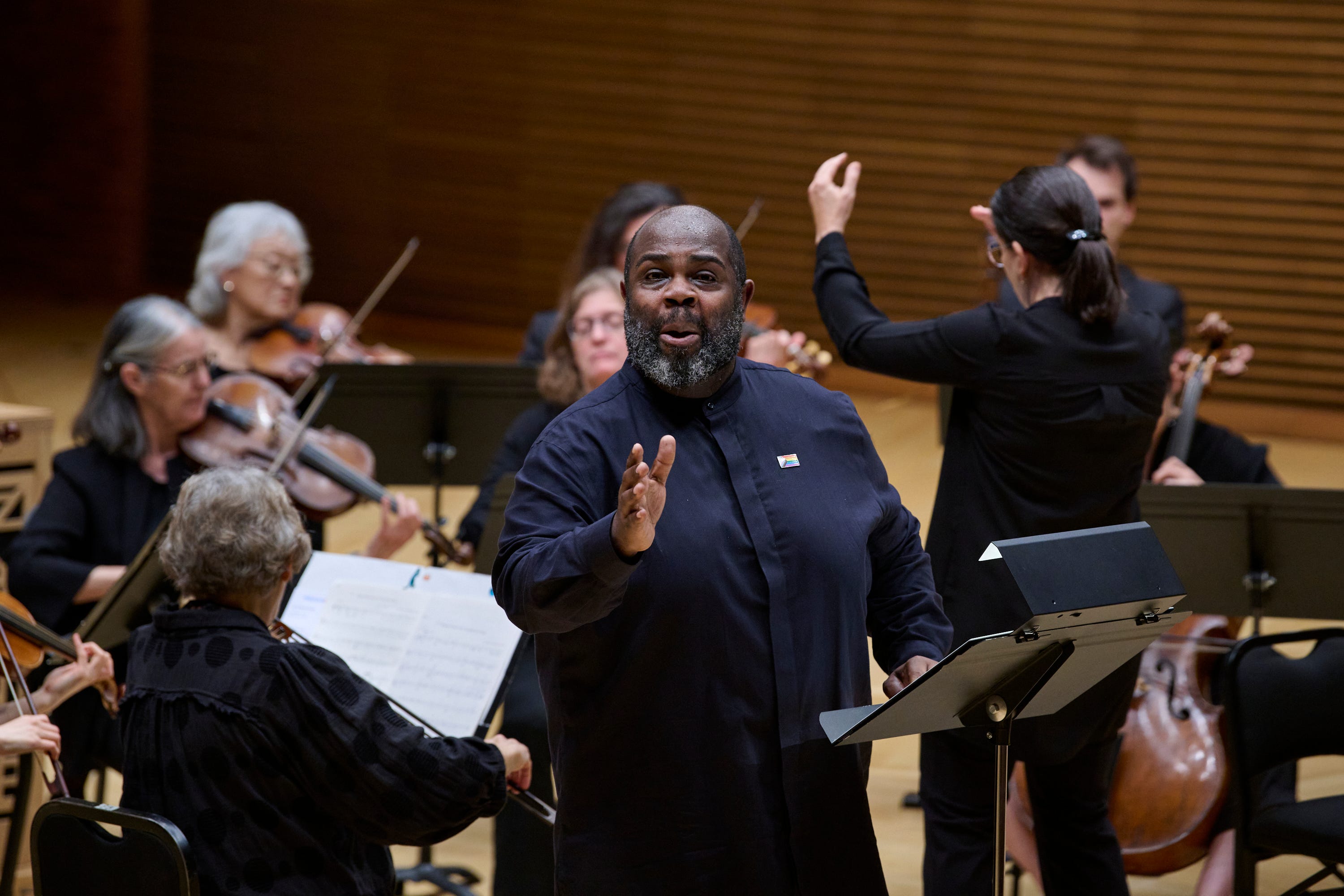
Last weekend’s concert program by the Philharmonia Baroque Orchestra & Chorale was one of those chocolate-and-peanut-butter undertakings in which someone takes two musical strains that each stand beautifully on their own — in this case religious music from the German Baroque and African American spirituals — and kind of smooshes them together in hopes of producing something doubly delightful.
The metaphor goes only so far, unfortunately. It falters because a Reese’s Cup is objectively ambrosial, whereas this program, titled “Pearls of Sorrow,” wound up as a stylistic mix that was occasionally revelatory but more often awkward or simply flat. A commissioned collaboration among the orchestra, countertenor Reginald Mobley, and arranger Henry Lebedinsky, “Pearls of Sorrow” draws on sacred works by such 17th- and 18th-century celebrities as Heinrich Schütz, Dieterich Buxtehude, and J.S. Bach, as well as little-known figures like David Pohle and Philipp Heinrich Erlebach. Alongside these are such spirituals as “There is a Balm in Gilead” and “Sometimes I Feel Like a Motherless Child.”
Do these two bodies of musical expression illuminate one another? Now and again they do, though largely thanks to Lebedinsky’s ingenuity. For “Sometimes I Feel,” for example, he threads in an oboe obbligato, picking up seamlessly from the oboe solo in the preceding Bach selection. His scoring makes use of Baroque sonorities in ways that often feel inventive.
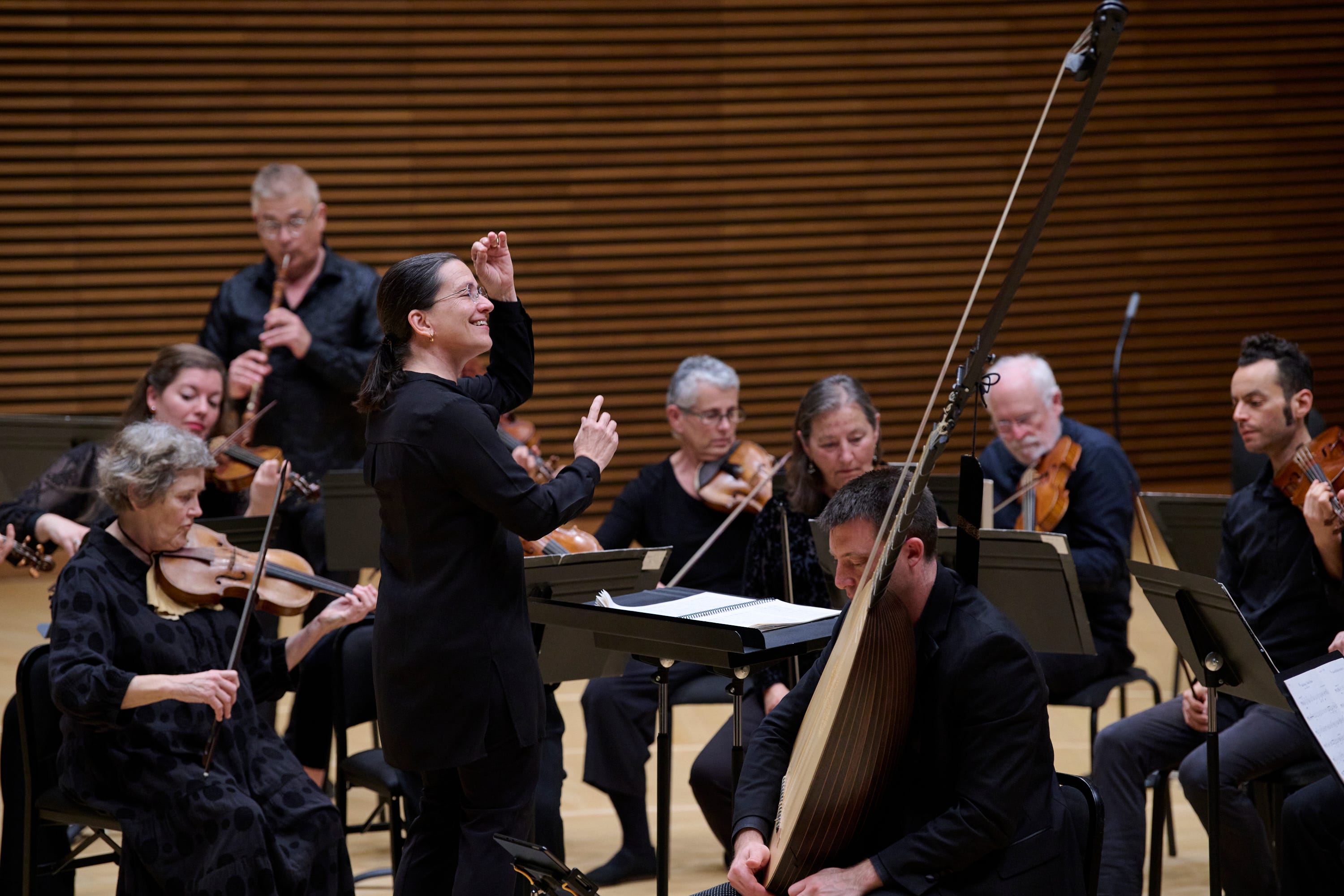
Ultimately, though, the program’s separate streams generally just stand side by side, each politely taking its turn. And on Saturday afternoon in Berkeley’s First Congregational Church, the musical performance often felt unrelievedly somber. Much of that was due to the repertoire itself, which could perhaps have used a little more variety of mood. But Mobley’s singing, which was sweet and often eloquent but underpowered, and Christine Brandes’ stately, uninflected conducting helped make much of the concert sound wan and underdeveloped.
Cryptic clue of the week
From Out of Left Field #311 by Henri Picciotto and me, sent to subscribers last Thursday:
Let’s switch the final parts, just in case (4)
Last week’s clue:
Advance vocalist’s solo (4)
Solution: LOAN
Advance: definition
vocalist’s: homophone indicator
solo: “lone”
Coming up
• Silkroad Ensemble: The brilliant musical polymath Rhiannon Giddens leads the multicultural ensemble through a dizzyingly eclectic program of music from across the world. The program’s sources range from Italy to the Congo, from India to the United States, all bound together with a spirit of joyful collaboration. March 19-20, Zellerbach Hall, UC Berkeley. www.calperformances.org.
• Dan Tepfer: The inventive French-American pianist comes to Noe Music for a two-night program that features his original takes on the keyboard music of J.S. Bach. The first program is devoted to the composer’s Inventions, followed by an evening focused on the Goldberg Variations. March 21-22, Noe Valley Ministry. www.noemusic.org.
Fabulous Glass review, really.
lest