
Animal passion
In a powerful Berkeley staging, Edward Albee’s “The Goat” explored one of the last genuine taboos

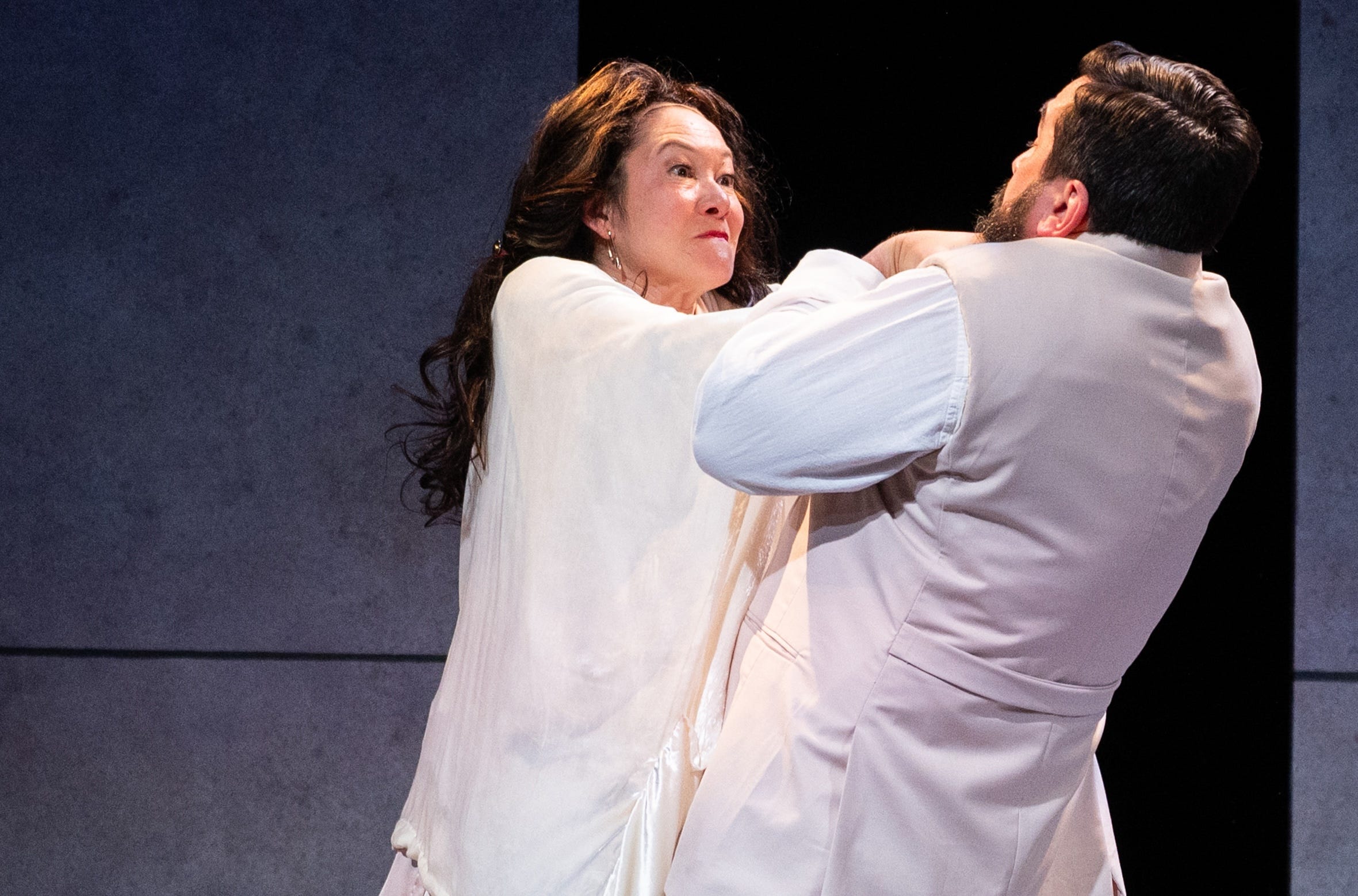
One way to think about The Goat, or Who is Sylvia?, Edward Albee’s 2002 Tony-winning play that opened over the weekend in a haunting and ingenious production at Shotgun Players, is as an inversion of Karl Marx’s often-quoted observation that historical events happen twice, once as tragedy and then as farce. Albee’s sleek one-acter concerns a man who falls in love, both emotionally and carnally, with a goat. It has plenty of laughs — some airy, many grimly mordant — but it’s a tragedy in a consciously Greek sense. (The play’s subtitle is “Notes toward a definition of tragedy.”) Like Sophocles before him, Albee understands “downfall” as a real concept, and before the play’s 100-minute run is over, director Kevin Clarke makes us feel viscerally just what that amounts to.
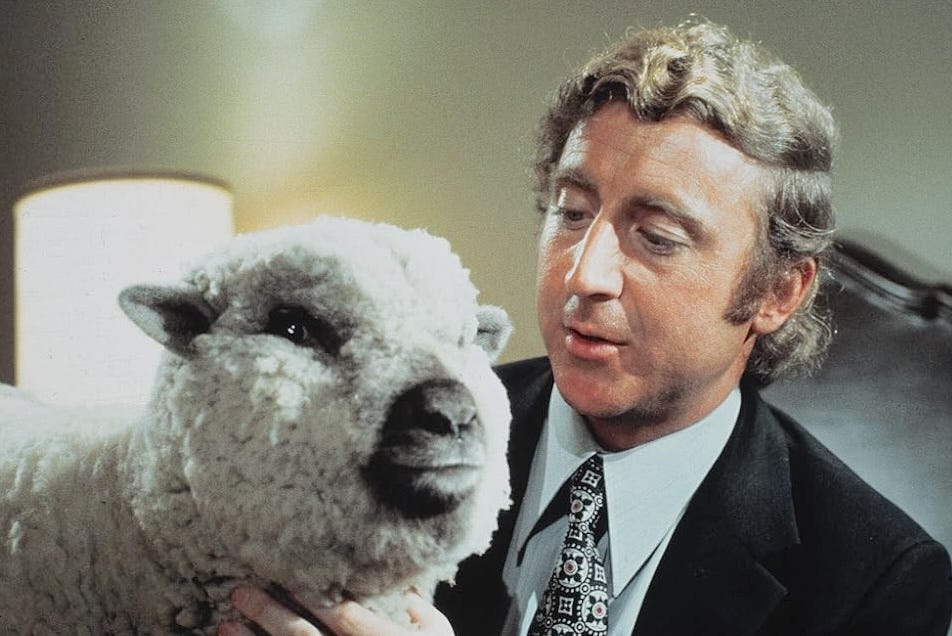
If The Goat stands as a tragic version of these events, meanwhile, the play’s farcical predecessor is the bestiality segment in Woody Allen’s 1972 screen comedy Everything You Always Wanted to Know About Sex (But Were Afraid to Ask). For moviegoers of a certain age, the parallels are unmistakable and telling. There too, a successful middle-class professional — Gene Wilder as an Upper Manhattan doctor — finds his life irreparably upended when he suddenly and inexplicably falls for a barnyard animal (in his case a sheep). In both cases it turns out that, whether the story is played for smirking humor or disruptive force, some taboos really are forces to be reckoned with.
For Martin and Stevie, Albee’s prosperous, happily married professional couple, the improbability — the inexplicability — of the whole incident is part of its essence. “Don’t you see the ‘thing’ that happened to me?” Martin exclaims in one of his many anguished attempts to try to get Stevie to understand. “It can’t have happened! It did, but it can’t have!”
What’s particularly moving is the skill with which both Albee and William Giammona, who plays Martin with a combination of bewilderment and bedrock self-confidence, help us not to understand the premise necessarily, but to experience the awe and wonder of it. We share Stevie’s shock and disgust, and we enjoy the verbal dexterity with which she voices her outrage (Erin Mei-Ling Stuart’s performance is a tour de force of rage compounded with heartache). But we’re never permitted to dismiss the whole thing out of hand, as she does.
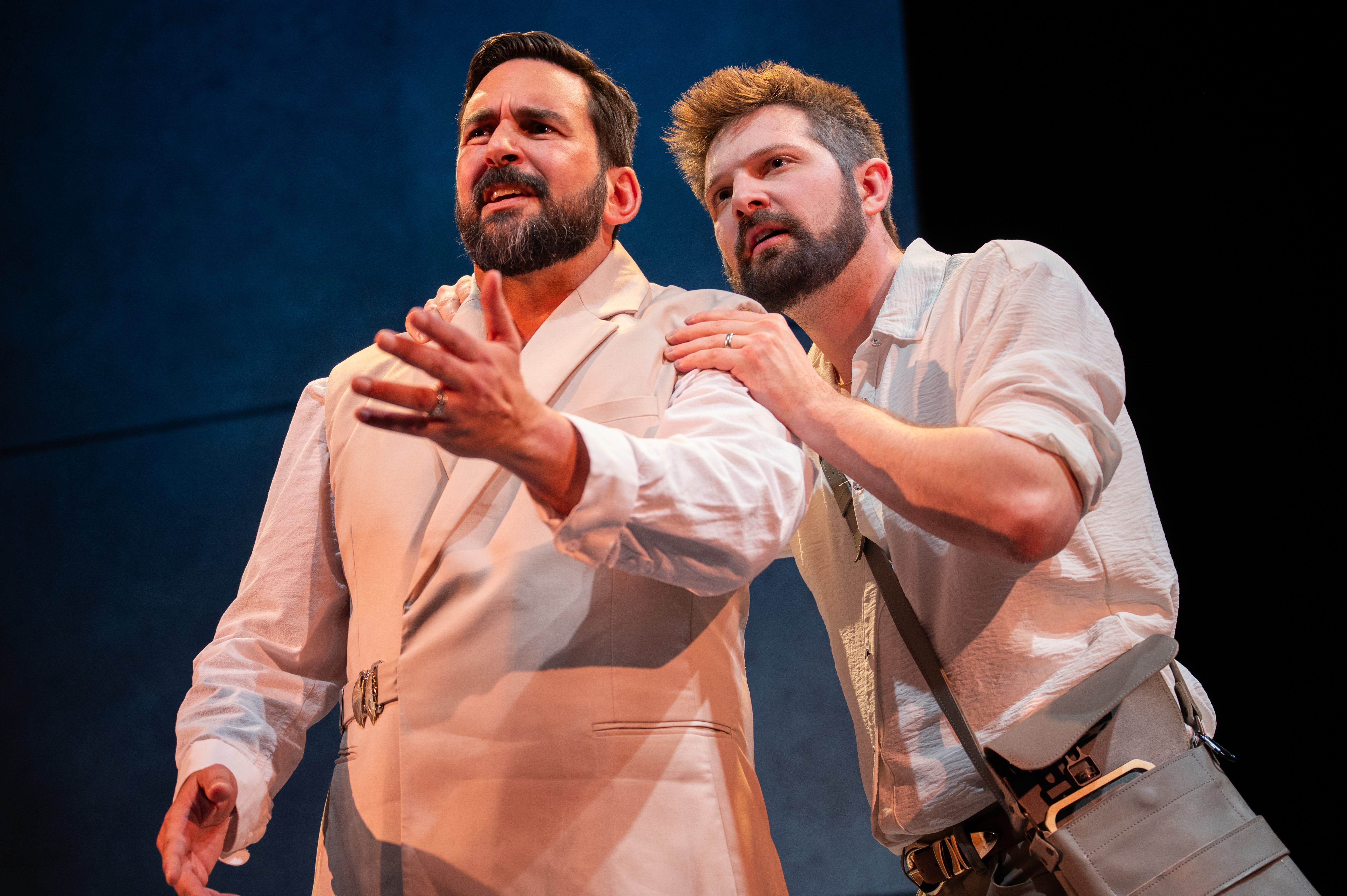
Like Allen’s film skit, The Goat is in some ways a simple twist on an age-old trope: husband has an affair, wife is wounded, marriage is destroyed. It’s just that the paramour in this case is a beast. The dark joke, though, is that “an affair” is exactly the wrong way to describe Martin’s love for Sylvia. He’s repeatedly required to reject that designation when it’s wielded by Stevie or their teenage son (Joel Ochoa) or Martin’s best friend (Kevin Singer). But that’s the only framework they have for trying to assimilate something that in Martin’s view is far more rich and strange. Albee keeps insisting — to his characters, to his audience — that we question those reflexive judgments. How sure are we, really, that the neat mental, moral, and sexual categories under which we operate are the only ones conceivable?
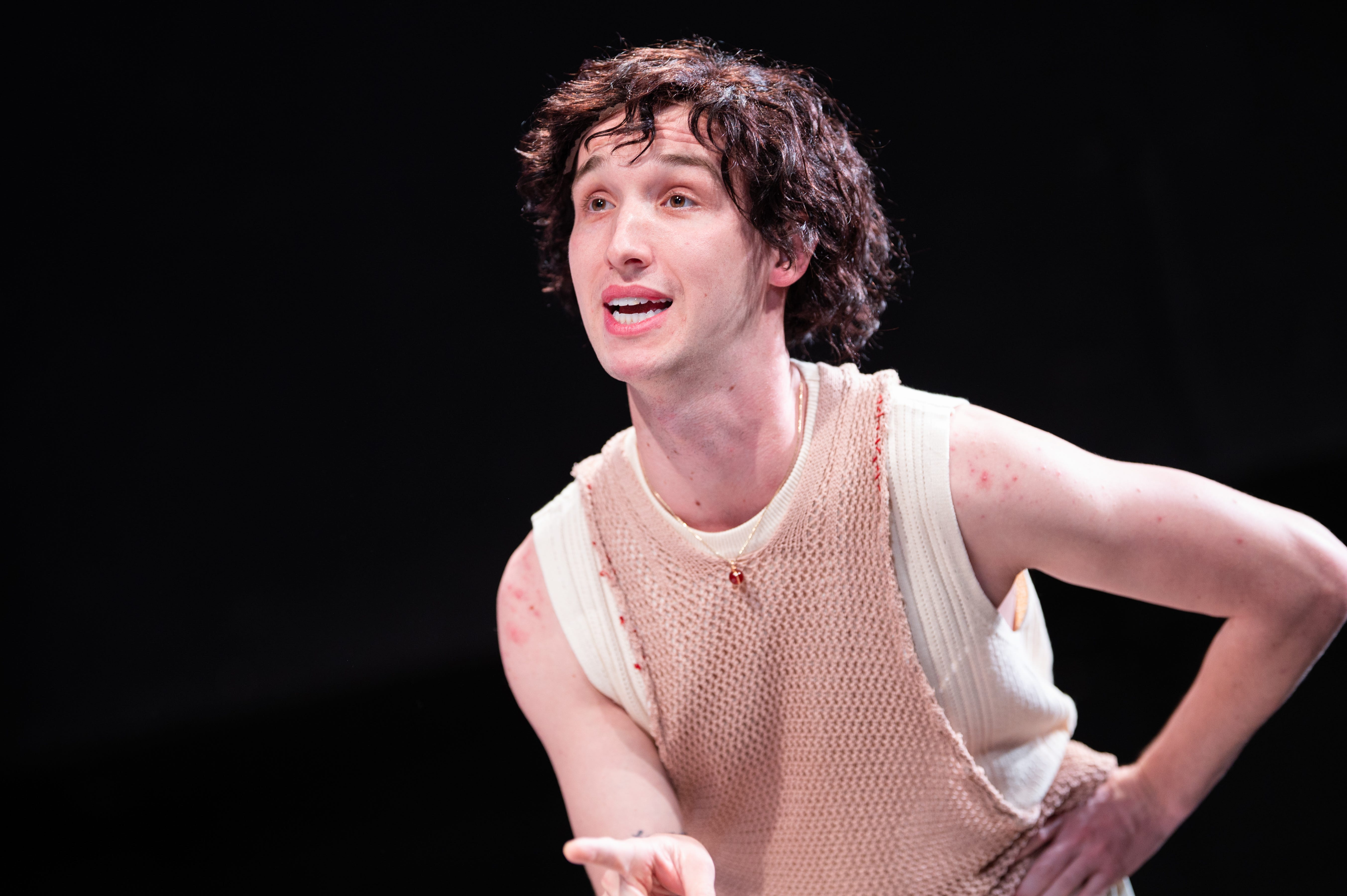
Albee’s script can be understood as a drawing-room comedy that slips its traces (at one point Martin and Stevie execute a little Noël Coward burlesque, as a nod to their shared theatrical DNA). Clarke and his cast don’t quite have that comedic machinery fully oiled; the lightness and speed of delivery required for this genre are not always in evidence. During Sunday’s matinee, a few of the play’s ripest laugh lines were met with silence, sometimes from an audience apparently unaware that humor had even been attempted. But the play’s emotional potency — its painstaking anatomy of a fall, its ability to probe the most shadowy corners of the psyche with fearless candor — remains strong throughout, up to and including the bone-crunching climax. It’s an experience that remains with you long after you’ve left the theater.
The Goat, or Who is Sylvia?: Shotgun Players, through April 26. www.shotgunplayers.org.
Elsewhere:
David John Chávez, KQED: “On the surface, this is a play about bestiality, and a human finding carnal connection with an animal that, while displaying human characteristics, has no capacity for greater yearning. But that’s not all the play is trying to convey. Ultimately, The Goat is about societal taboos, many of them centered on human sexuality — but who determines those, where is the line, and who has the right to draw that line?”
Jean Schiffman, Bay City News: “In a drama that could be simply absurd, or comic, or one dimensional, or totally not believable, this production is, yes, funny at times, and shocking, but also heartbreaking.”
Jim Gladstone, Bay Area Reporter: “Amidst his protagonist’s ungulate undoing, Albee raises serious questions about how to define love, soul, sexuality, fidelity, and even humanity.”
Success-ion
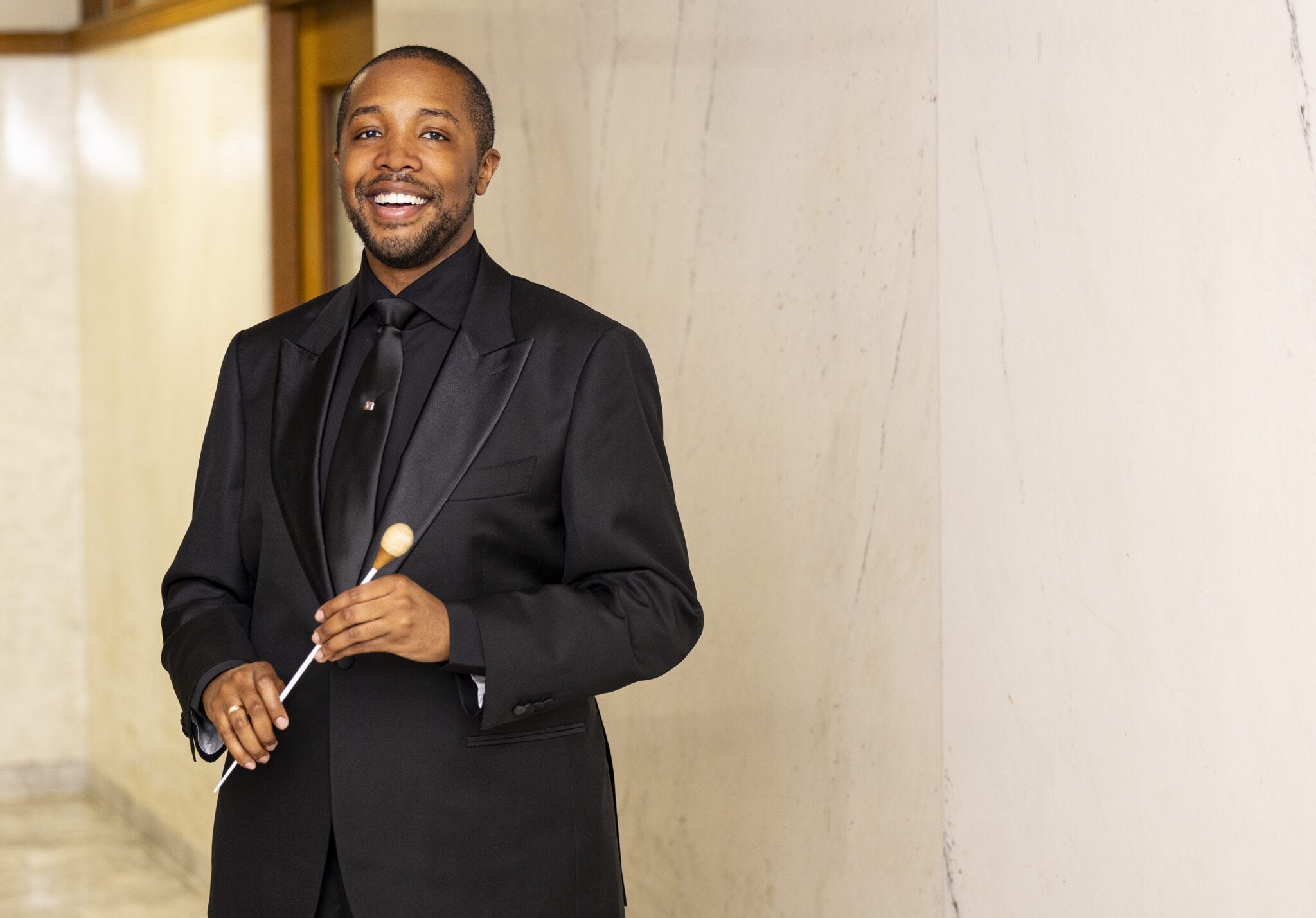
Every time I hear the Oakland Symphony perform under its newish music director, Kedrick Armstrong, I become ever happier and more excited about the orchestra’s decision to bring him on just two years ago. In the wake of Michael Morgan’s terrible early death in 2021, there were countless ways the organization could have gone astray in charting its next chapter, and only a few that would have honored and upheld Morgan’s profound legacy as an artist and a civic leader. The idea that anyone could find a music director equipped to fill Morgan’s shoes — by which of course I mean not merely replicating his successes but putting a new and distinctive stamp on everything he had built — seemed implausible.
And now here’s Armstrong, doing all of that and doing it with infectious vitality and flair. His programming is exploratory and varied, a blend of wonderful discoveries and familiar fare. He conducts with a live-wire energy that still allows for reflection and wisdom. His artistry is that of a young man, in the best sense, and I have to believe it will only become riper and more seasoned over time.
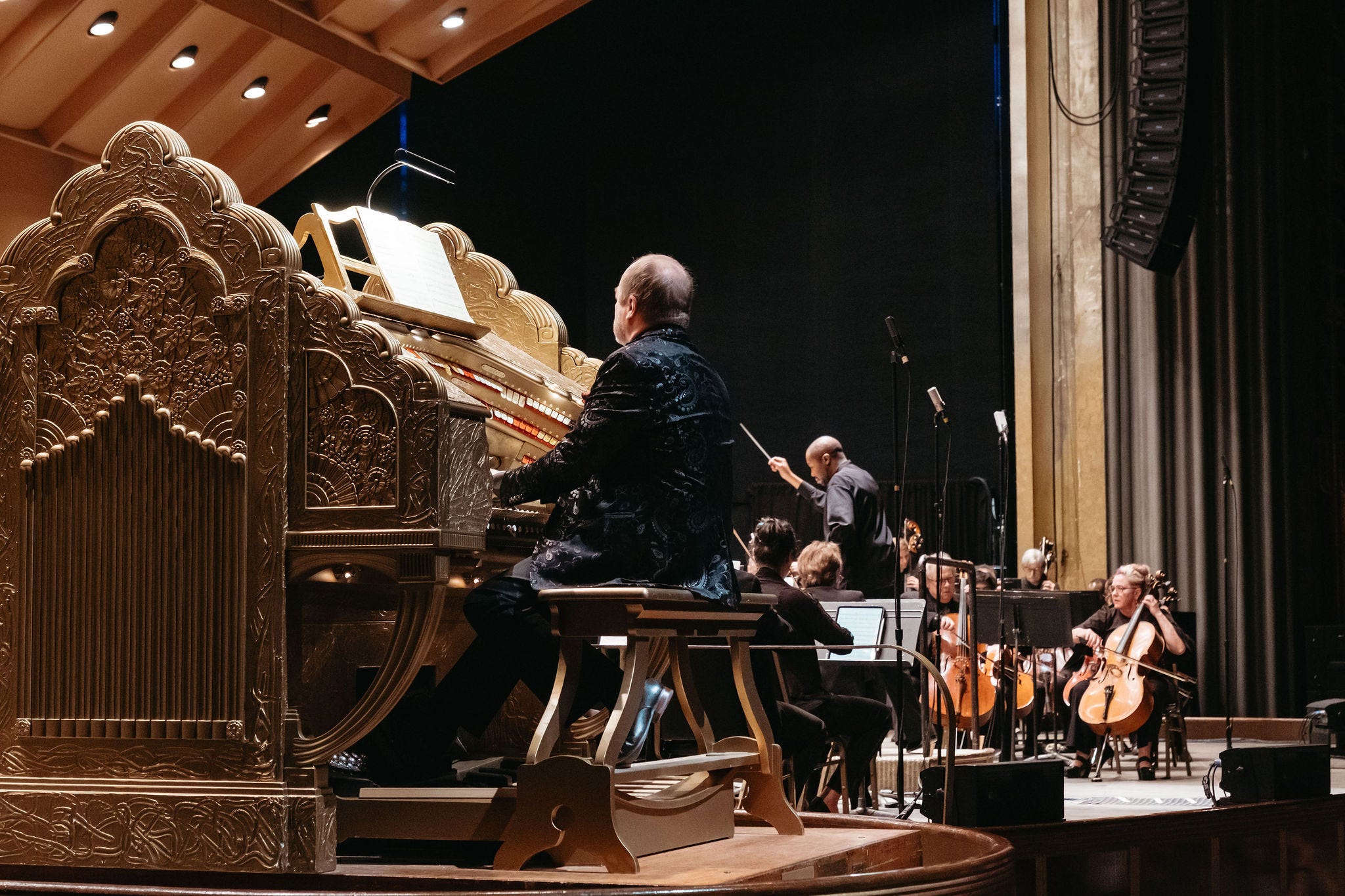
I was pondering this sequence of events in the Paramount Theatre on Friday night as Armstrong led the orchestra in, of all things, Saint-Saëns’ “Organ” Symphony. The first half of the program promised on paper to be more interesting — a little curtain-raiser by Clarice Assad, followed by Brian Raphael Nabors’ Concerto for Hammond Organ (with the composer as soloist) to fill out the organ theme. But as hard as I tried to grasp Nabors’ musical argument, I was never quite able to follow the thread. The piece is in three movements, the first two of which are quite long and diffuse (the entire piece runs about 40 minutes). And for all of the enjoyable individual episodes — a pastoral interlude in the first movement, a subtle gloss on “Amazing Grace” in the second — the elements don’t always fit together comfortably.
That left the Saint-Saëns, with Jerome Lenk as the organist, to carry the ball — and what a beautiful rendition it was! In particular, Armstrong, Lenk, and the orchestra charted the piece’s alternations between tender intimacy and thunderous oratory with expansive skill, giving each rhetorical vein its own profile and never letting either seem out of place. The rounded, rich-hued orchestral textures in the last movement seemed to shimmer. I was transfixed.
Season’s greetings

The San Francisco Symphony announced details of its 2026-27 season on Thursday, and there’s no reason to soft-pedal things: This is a darn good lineup. It includes a number of excellent guest artists, including some we weren’t expecting to see here again anytime soon (if at all). It includes the world premiere of a commissioned violin concerto by Gabriella Smith, whose 2023 organ concerto Breathing Forests remains one of the exhilarating artistic high points Davies Symphony Hall has witnessed in the past decade or so. It features a reasonably diverse roster of composers and guest artists — not fully what one might hope for in the year of our Lord 2026, obviously, but enough to make you feel that this has been treated as a point of importance.
There’s an inherent cap on how revelatory any of this can be, of course, which is imposed by the continued absence of a music director. Without someone in that position who can define and project an artistic personality for the orchestra, there’s no way a season can get too far beyond an appealing collection of individual plans. (That’s not to say that the role of the music director as currently understood is the only possible model, just that it’s the one we actually have. If we want to talk about rethinking the entire system — which, y’know, is probably worth at least taking a look at — then that’s a whole different conversation.) In the meantime, though, the organization does at least now have an artistic administrator on board — a post that was vacant a year ago when the sorry-ass current season was announced — and the presence of Michael Gandlmayr, the recently hired senior director of artistic planning, has had a salutary effect.
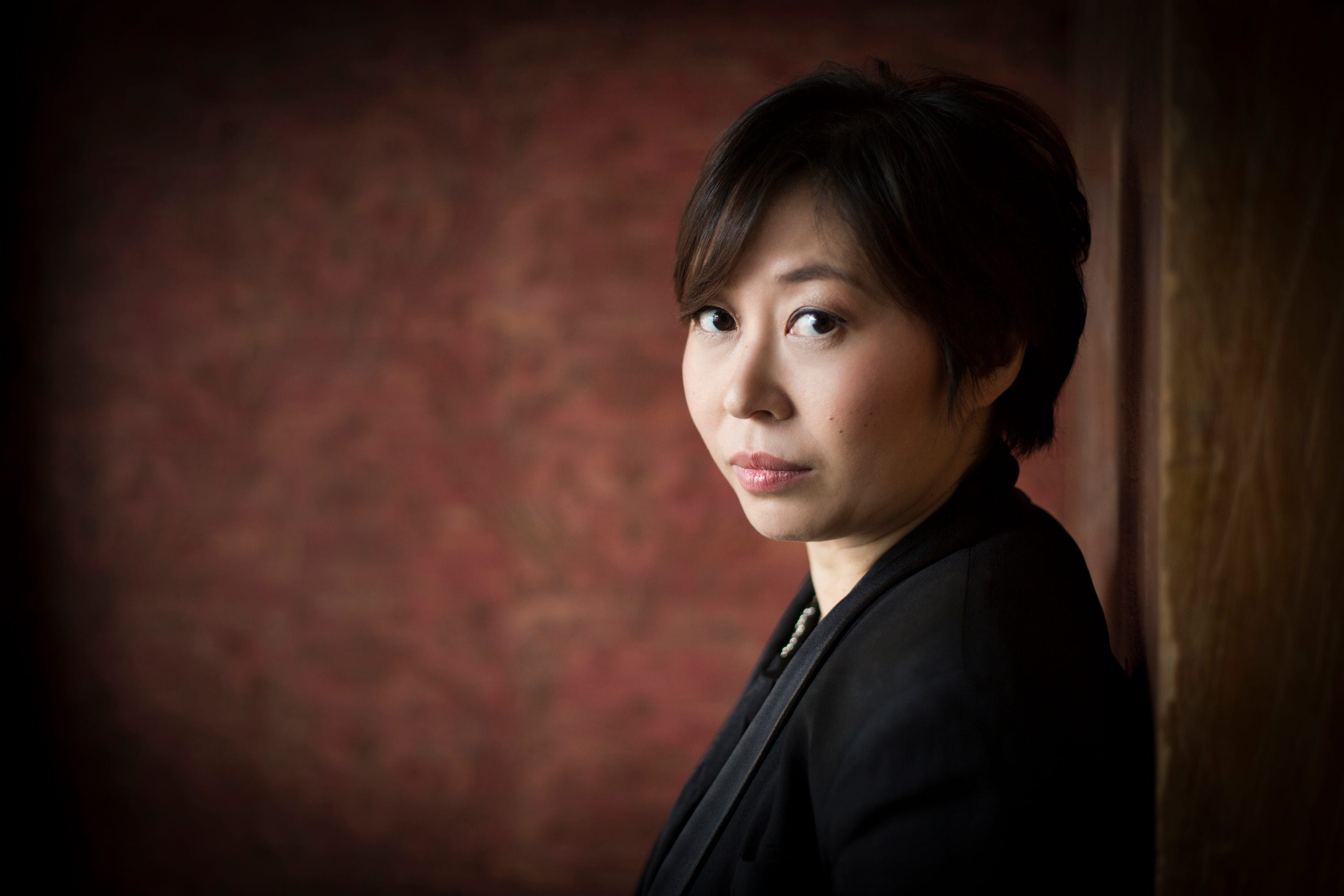
The most obviously exciting entry in the season is the return of Esa-Pekka Salonen in April 2027 to conduct the world premiere of Rene Orth’s commissioned Concerto for Harp and Percussion with Symphony principals Katherine Siochi and Jacob Nissly. (It’s also the most personally embarrassing development for the guy who pronounced a little too confidently, loudly, and frequently that Salonen would never be back after his acrimonious split with the organization.) I also wasn’t expecting to see the wonderful conductor Xian Zhang back any time soon since she was named music director of the Seattle Symphony. But she’s on the schedule, along with conductors David Afkham, who returns less than a year after his terrific debut last season, and Elim Chan, whose name seems to immediately arise whenever conversation turns to music-director rumors.
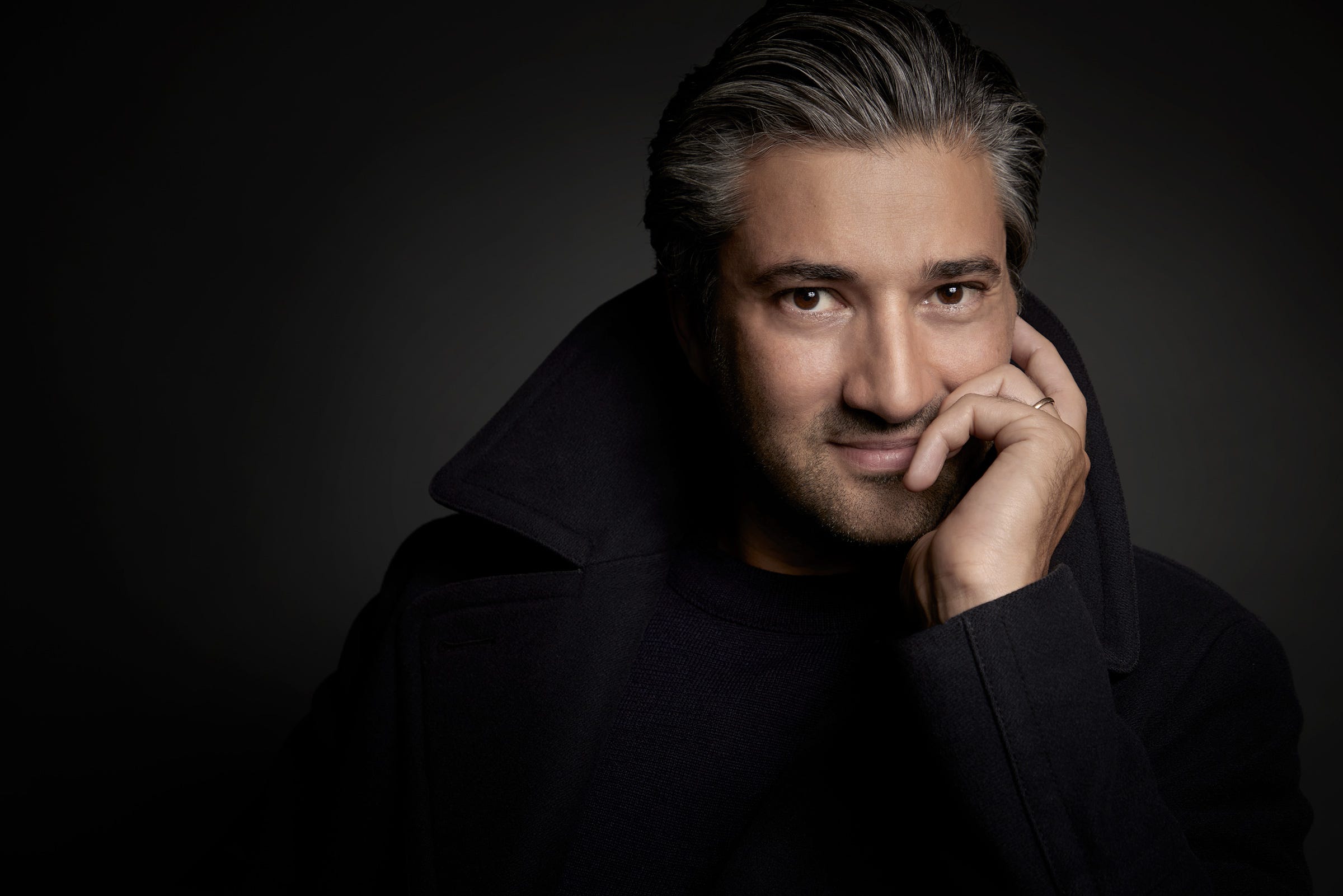
There’s more to look forward to. I retain fond memories of videographer Deborah O’Grady’s gorgeous visuals to accompany Messiaen’s From the Canyons to the Stars… a decade ago, so the prospect of seeing her work that magic again on The Dharma at Big Sur, the electric violin concerto by her husband John Adams, feels super-promising. So too do the promised collaboration with Alonzo King Lines Ballet and a puppet staging of Stravinsky’s Firebird, as well as commissions from composers Joe Hisaishi (the musical force behind Ghibli Studio), the highly lauded Reena Esmail, and Kyle Rivera, the latest artist to win a commission through the Emerging Black Composers Project.
You get the picture. It feels…what’s that word again? Hopeful? We could use a little of that around here, to be honest.
Elsewhere:
Lisa Hirsch, San Francisco Chronicle: “It seems the fall arts season signals a return to the exciting programming that characterized the Symphony for 30 years under Salonen and his predecessor Michael Tilson Thomas.”
Janos Gereben, SFCV: “San Francisco Symphony audiences who thrilled to dramatically staged, interdisciplinary, innovative presentations when Michael Tilson Thomas and Esa-Pekka Salonen were music directors are getting some good news.”
Cryptic clue of the week
From Out of Left Field #313 by Henri Picciotto and me, sent to subscribers last Thursday:
Rash (spots on your face, perhaps) doesn’t start small (8)
Last week’s clue:
Backup plan: loaner kitchen appliance (7)
Solution: BLENDER
Backup plan: B
loaner: LENDER
kitchen appliance: definition
Coming up
Schwabacher Recital Series: Two of the leading lights of the current crop of Adler Fellows — the powerful dramatic soprano Mary Hoskins and the vibrant, congenial baritone Olivier Zerouali — join forces to inaugurate the three-evening series. Together with pianist Ji Youn Lee, also an Adler, the two will make their way through Hugo Wolf’s Italienisches Liederbuch. April 1, Taube Atrium Theater. www.sfopera.com.
HenselPushers: HenselPushers is a project run by a scrupulously anonymous East Bay resident, which is devoted to editing, making available, and promoting the music of Felix Mendelssohn’s composer sister Fanny — Fanny Hensel, to use her married name. This lecture-concert is devoted to Hensel’s unfinished piano sonata and the string quartet that grew out of it, with performances by the Town Quartet and pianist Monica Chew. April 4, Berkeley Piano Club. www.henselpushers.org.
What a joy of an update! Greatly admire your sensitive, insightful take on the Albee—which I somehow was fortunate enough to see with Bill Pullman and Merecedes Reuhl on Broadway—and truly savored your enthusiasm about Kedrick Armstrong (who I’ve not yet encountered) and unexpected optimism in re: SFS. Hurrah!!
Seems very hopeful to me!