
Bible studly
A new production of Charpentier’s David and Jonathan at West Edge Opera leaned into the work’s erotic charms

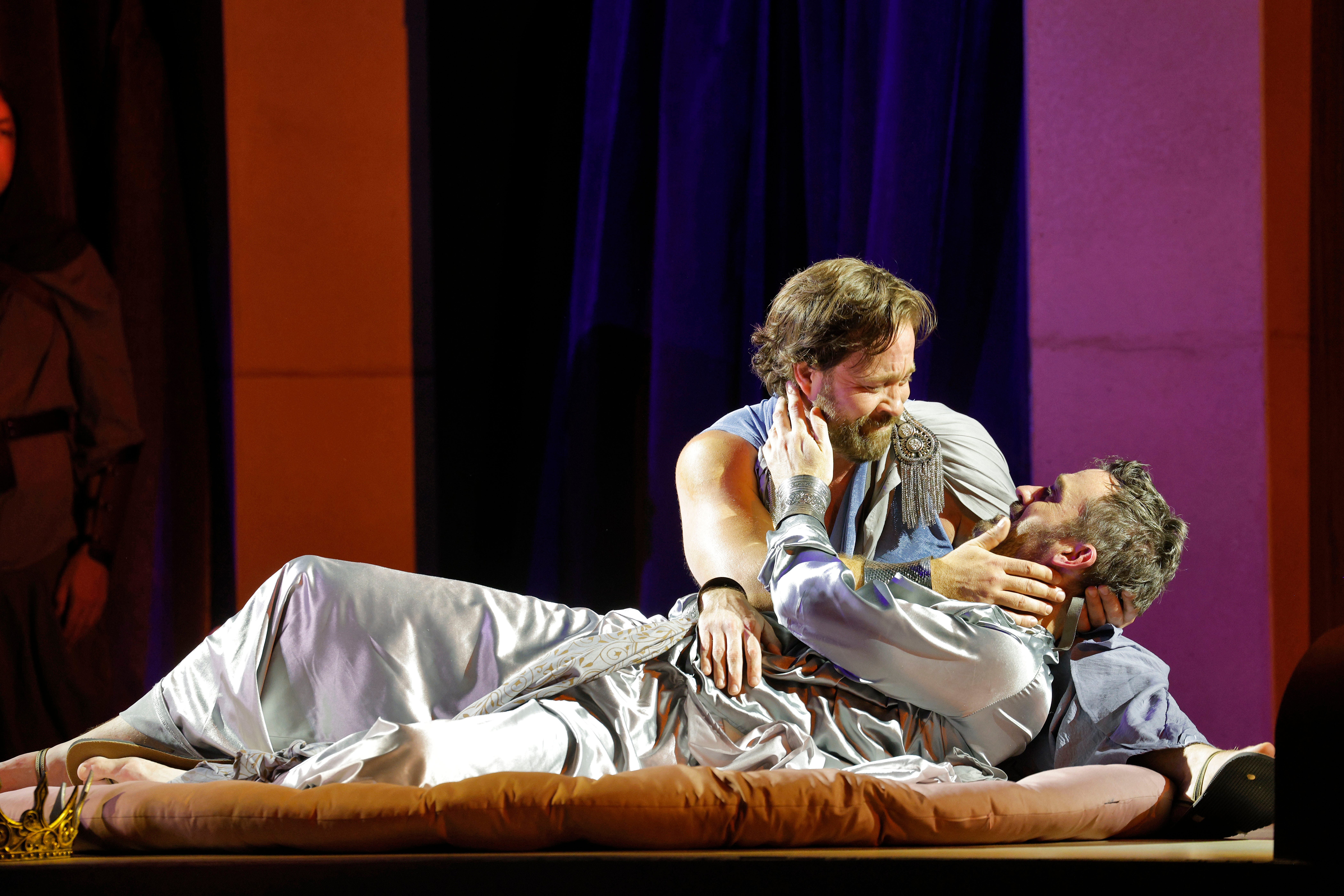
The intertwined stories of Saul and David, as laid out in 1 Samuel, are among the most poignant and evocative of the Hebrew Bible. On one side you have the first Israelite monarch, who goes out one day to chase down some stray livestock and suddenly finds himself anointed, Macbeth-like, to a position he would hardly have dreamed of aspiring to. And then there’s the golden boy, the giant-slayer, who snatches the crown away as soon as Jehovah decides to throw His weight behind someone younger and sexier.
These two are the main anchors of the drama, to my way of thinking. But the third point of the triangle is Jonathan, Saul’s son and David’s gay lover, who tries unsuccessfully to mediate the conflict. Among them, these three create a wondrous vortex of sex, love (both erotic and filial), political strife, and intergenerational conflict. It’s a doozy of a story, beautifully told in West Edge Opera’s stately but hot-blooded production of Marc-Antoine Charpentier’s 1688 opera David and Jonathan.
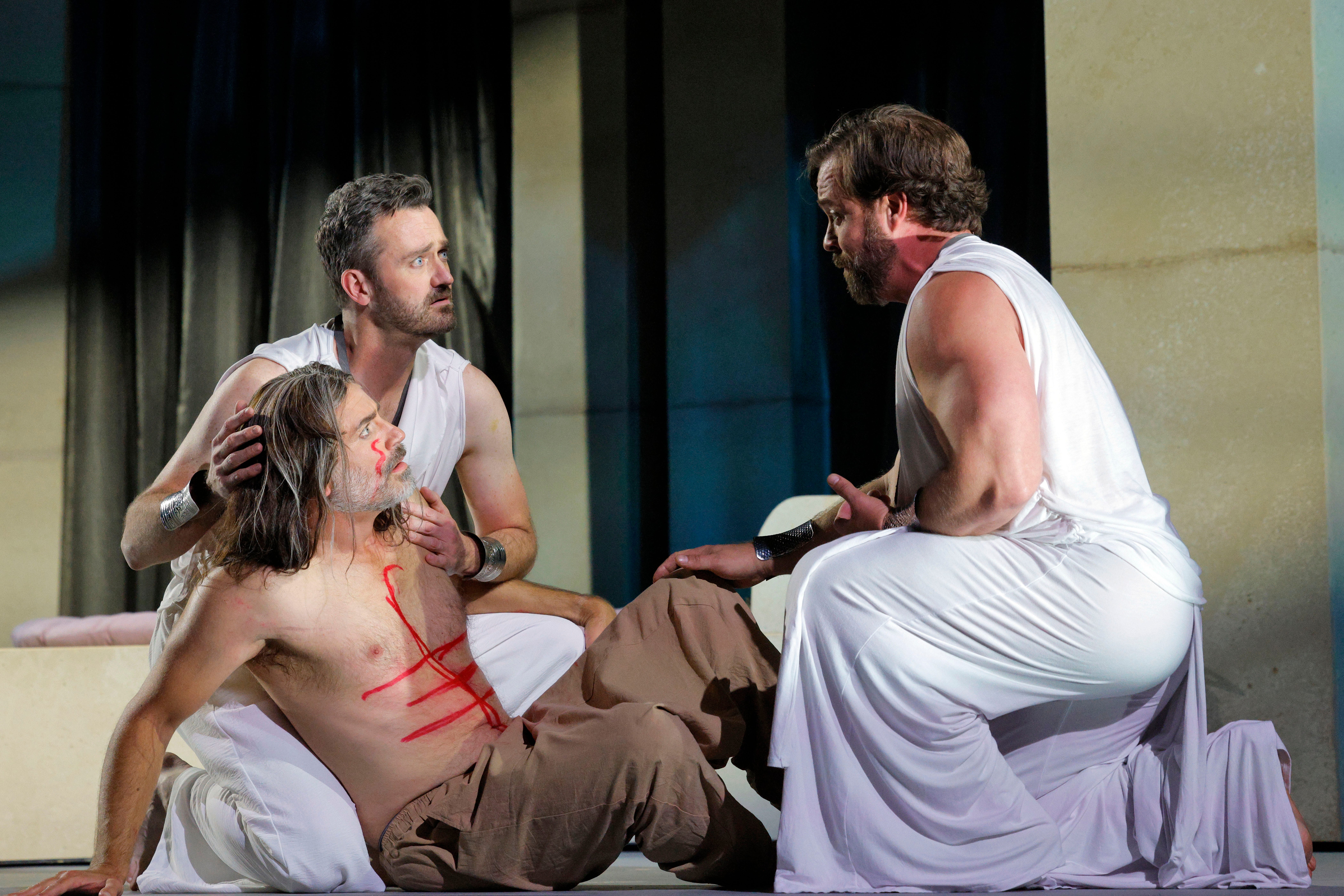
In truth, “production” undersells the transformation of the work that’s been undertaken by director Mark Streshinsky and music director Adam Pearl, because Charpentier’s score was never meant to stand on its own. It was originally part of a theatrical twofer presented by and for the Jesuits of Paris, in which acts of the score alternated with those of a spoken tragedy, Saul. The operatic story of David and Jonathan has to find room for Saul as well, but his importance fades in comparison to their love.
Streshinsky and Pearl have isolated the musical pieces of the work and stitched them into a seamless operatic experience, full of vocal grandeur and elegant orchestral writing. It’s not very dramatic; whatever action is involved seems to have been mostly confined to the now-jettisoned play. If you’re not familiar with the storyline going in, you might not be very much enlightened by the time of the final curtain.
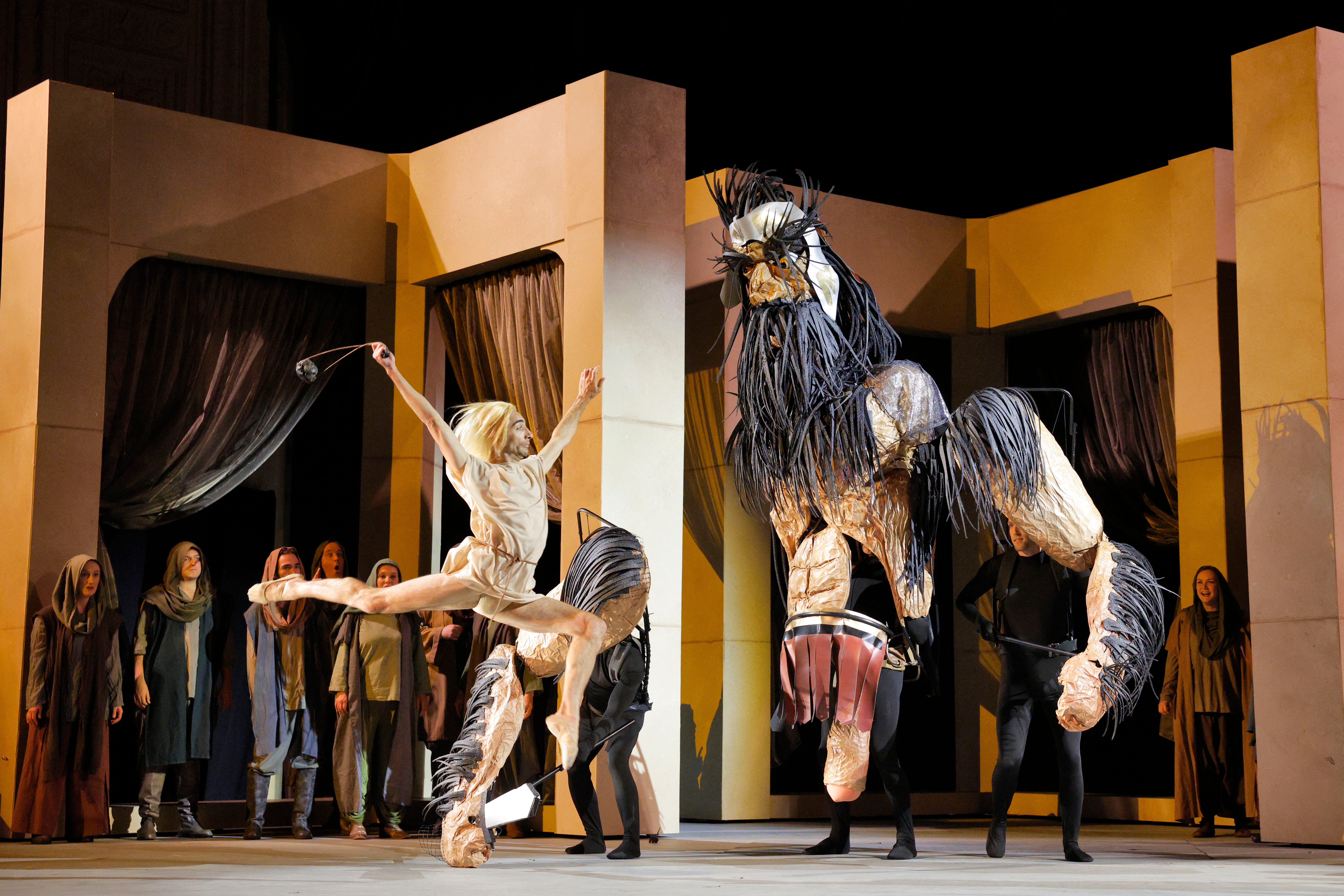
But there’s enough lively and inventive stage business to keep things going, including a few dexterously staged dance interludes by choreographer Benjamin Freedman and a magnificent puppet reenactment of David’s battle against Goliath that sets the tone for the entire evening. And in any case, the point of the exercise is the singing. Among the score’s treasures are a series of luminous arias and duets for the two title characters (tenors Derek Chester and Aaron Sheehan, respectively, each one tenderly eloquent in his own way), several explosive scenes for Saul (baritone Matthew Worth), and a single, all-too-brief appearance by the Witch of Endor, sung with extravagant depth and power by mezzo-soprano Laurel Semerdjian.
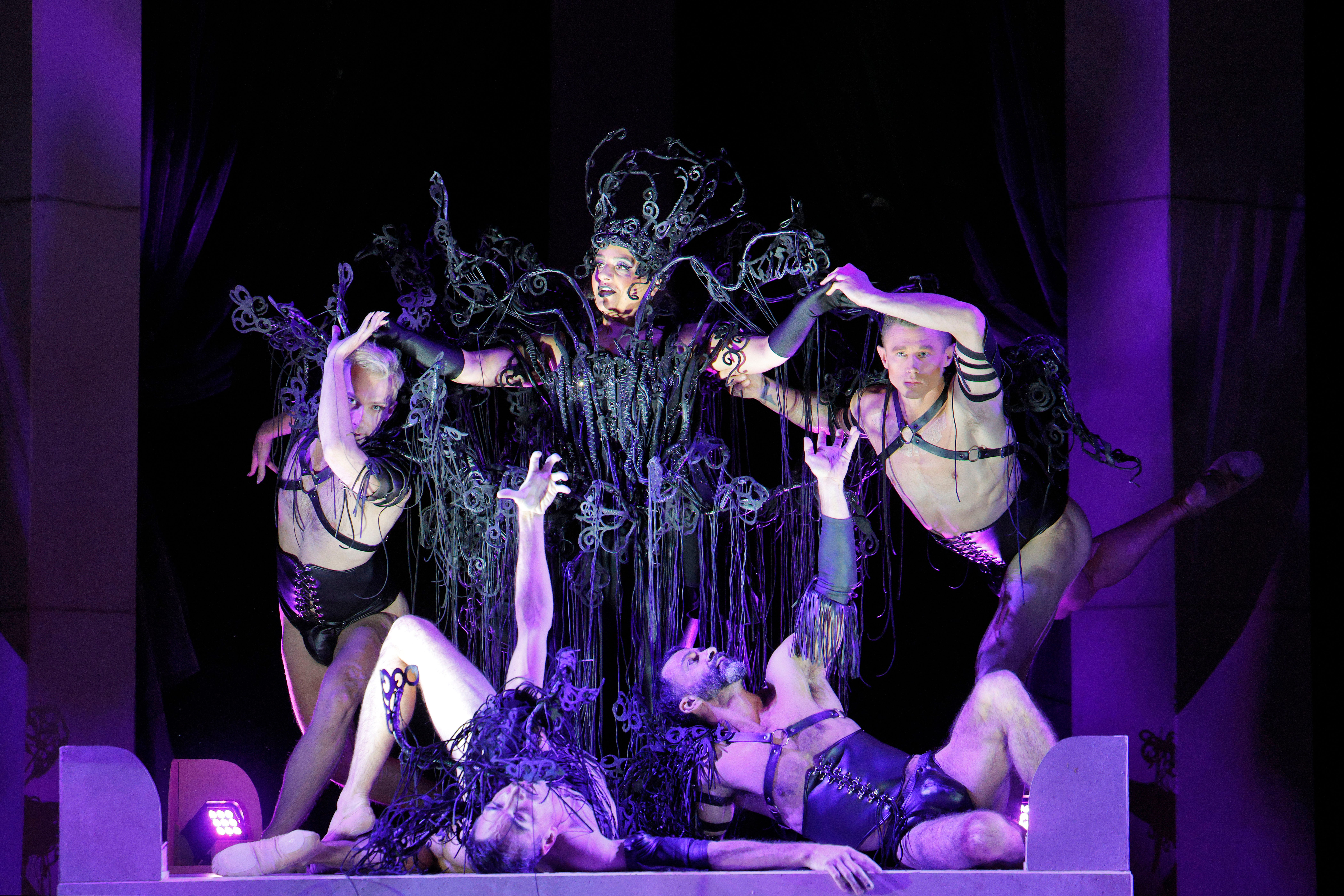
Well, the singing, and also the sex. Streshinsky, by his own testimony, was drawn to David and Jonathan by its apparently unapologetic focus on a gay love story. In the Bible, that vein is about as overt as it could be (“…the soul of Jonathan was knit with the soul of David, and Jonathan loved him as his own soul,” 1 Samuel 18:1). I don’t know how open the libretto to Charpentier’s score is on this subject, and how much has been brought to the surface by Streshinsky and Pearl. But the result is a gorgeous combination of expressive urgency and discretion. There’s a sex scene before the Act I curtain that is all the hotter for taking place behind a scrim. (Yes, I’m a one-man operatic Hays Code.) The pull of love and desire is felt throughout; David’s wrenching sobs over the corpse of Jonathan in the final tableau are enough to rip your heart out.
David and Jonathan: West Edge Opera. Oakland Scottish Rite Center, through Aug. 16. www.westedgeopera.org.
Elsewhere:
Nicholas Jones, San Francisco Chronicle/SFCV: “We might think of the time of Louis XIV as frozen in conventionality, but Charpentier’s music is passionate and full of life. The two title characters share their love, their sorrow and finally their grief in moving duets. Their bond is made even more emotional by West Edge’s reworking of both vocal lines into tenor range: The lovers share a single expressive language.”
Down for the Count
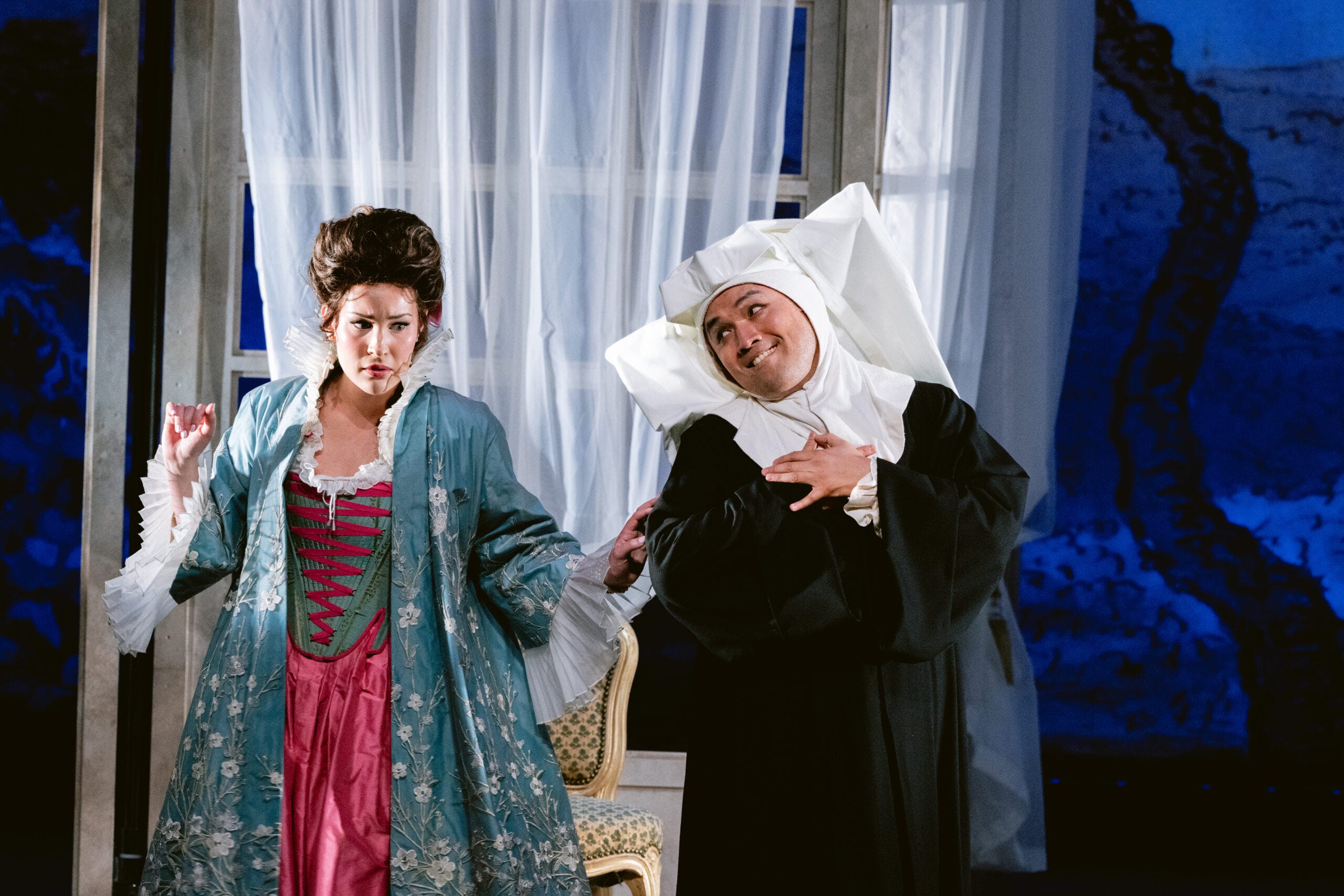
I understand why David and Jonathan is encountered so rarely; it’s a specialty item by definition. But someone owes me a damned good explanation for why Rossini’s magnificent comic opera Count Ory isn’t a repertory staple. Any opera this funny, this tuneful, this spectacularly inventive, should be one of those pieces you come across every few years.
Instead, when I went over to the San Francisco Conservatory of Music on Saturday afternoon for the second of two performances by the Merola Opera Program, it was my first encounter with Ory since a jolly production by Pocket Opera in 1986. I remembered almost nothing about the piece except that it has a chorus of men dressed as nuns, and that I’d absolutely loved it — so much so that nearly 40 years after the fact, I still recall what a kick it was.
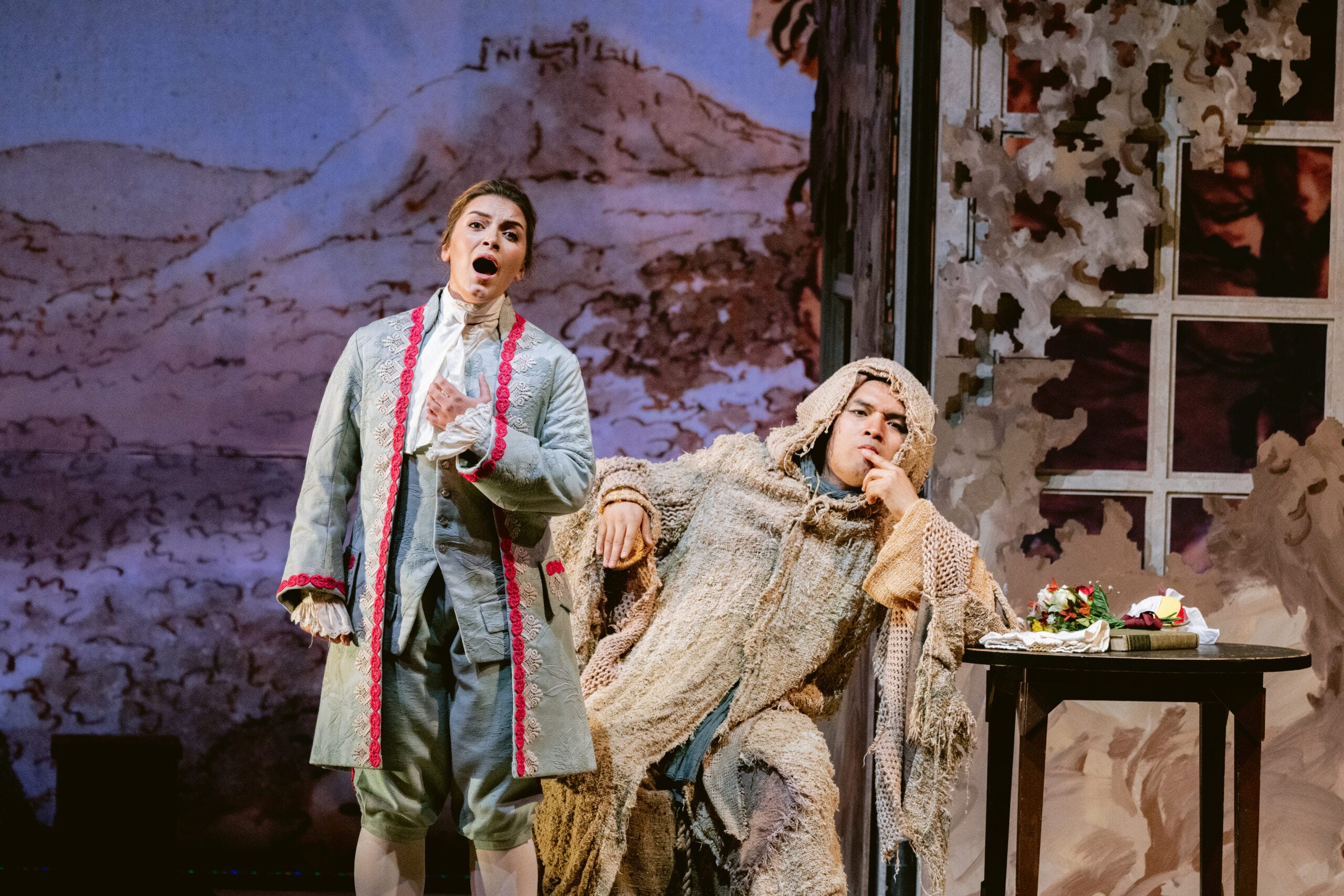
Now I know why. You can’t sit through 10 minutes of this piece — especially done as skillfully and joyously as the Merola artists rendered it — without falling in love, hard. It’s a comic opera that can actually make you laugh out loud; it has bursts of earnest lyricism that keep the characters from seeming pasteboard; and even though it hews to the demands of the genre, it’s constantly taking little zigs and zags, in both the plot and the music, that keep you on your toes throughout.
The title character of Count Ory is a roue and a scalawag intent on seducing the virtuous Countess Adèle; unfortunately for him, he’s competing for her love with his page Isolier, who has already captured the lady’s heart. I kept waiting to see how he was going to engineer a victory —he’s the title character, after all — before it dawned on me that this is one of those pieces in which the sex pest actually gets his comeuppance. It’s like Don Giovanni but with better jokes and no sexual violence. (Also, ten bucks says Gilbert and Sullivan knew this opera and its nuns-in-drag when they were writing Princess Ida.)
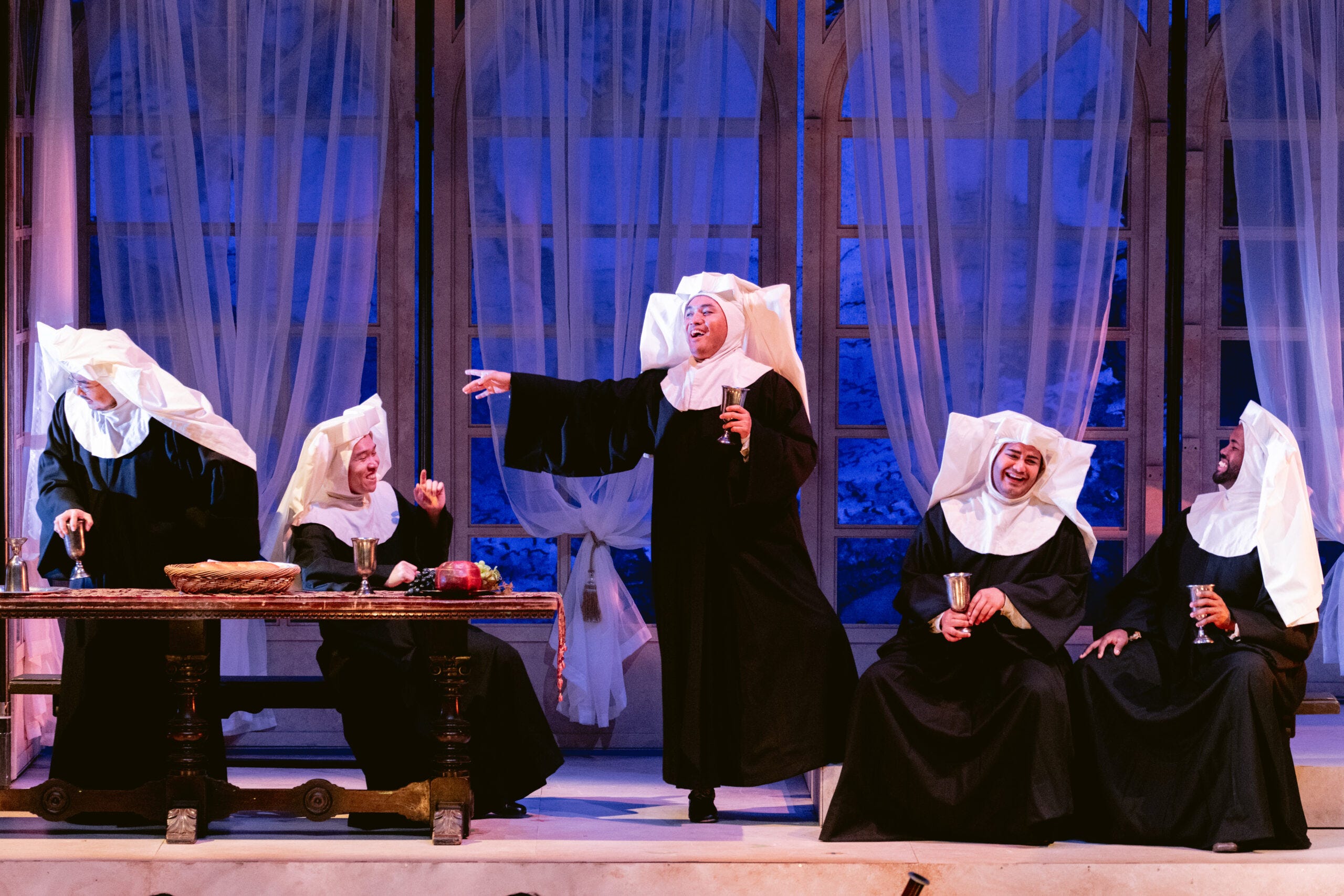
And although Rossini’s writing is never short of magic, the score for Count Ory is an absolute treasure house of creativity. The melodies start off tamely but quickly find their way to unanticipated places. The harmonies go far afield, then return safely home sounding fresh and reasonable. You never know when Rossini will suddenly decide to set an accompanimental figure in pizzicato strings, or to silence the orchestra entirely and leave the singers in a chorale-like texture. Still grumbling to myself about the imaginative poverty of Donizetti’s vocal writing after last month’s Merola program, I kept marveling at the way Rossini can take the tropes of bel canto opera — many of which he himself invented — and keep breathing new life into them at every turn.
The cast of Merolini, with helpful guidance from conductor Pierre Vallet and director Garnett Bruce, was clearly inspired by the assignment. In the title role, Minghao Liu proved himself a true Rossini tenor, with piercing, beautifully placed high notes and a gift for lyricism. Mezzo-soprano Meg Brilleslyper was a nimble, vocally adept Isolier, and bass-baritone Wanchun Liang made a fine contribution as Ory’s beleaguered tutor. But the radiant star of the cast was soprano Eva Rae Martinez, whose performance as Adèle was a glorious blend of long-breathed melodic phrases, pinpoint coloratura, and burnished tone, all in the service of a dramatic performance of grace and charisma. In a just world — one in which Count Ory comes off the shelf far more often — these singers will have plenty of opportunities to put this experience to use.
Elsewhere:
Rebecca Wishnia, San Francisco Chronicle/SFCV: “Director Garnett Bruce made the most of this modest space. A simple set of panels effectively framed the action, and sleight of hand with stairs worked wonders in elevating the slight Isolier to the Countess’ eye level. The choreography was masterful, especially in Act 2’s slippery bedroom trio.”
Michael Strickland, Civic Center: “Though the music is Rossini at his best, it's easy to see why the opera is rarely performed. The plot is both blasphemous and risqué, set in a 12th century French town where most of the men are away fighting in the Crusades.”
Cryptic clue of the week
From Out of Left Field #279 by Henri Picciotto and me, sent to subscribers last Thursday:
Wilder allotment for X, perhaps? (10)
Last week’s month’s clue:
Delicacy from German city, if looking west (7)
Solution: FINESSE
Delicacy: definition
German city: ESSEN
if: IF
looking west: all of it read backwards
Coming up
Wozzeck: West Edge Opera’s summer festival, which has already opened with the world premiere of Dolores, concludes with a production of Alban Berg’s Expressionist masterpiece. Baritone Hadleigh Adams, a longtime treasure of the Bay Area’s musical scene, sings the title role, and soprano Emma McNairy, still remembered for her incendiary 2015 appearance with the company in the title role of Berg’s Lulu, sings his common-law wife, Marie. Aug. 9-17. Oakland Scottish Rite Center. www.westedgeopera.org.
I, too, was really surprised you’d never seen the Met production. Here’s just a bit: https://youtu.be/dwJ3FD_3dKg?si=ynPsVF_kDKbUVnKg
Wait, you didn't see the 2011 Met HD broadcast of "Le comte Ory," with Joyce Di Donato, Diana Damrau, and Juan Diego Florez? It is the reason I tell people never mind the big four Rossini comedies, give me "Le comte Ory"!
I must toot Emma McNairy's horn as well; read all about her here: https://www.sfcv.org/articles/artist-spotlight/emma-mcnairy-armed-new-voice-and-ready-wozzeck