
Boom! Bam! Pow!
A comic-book production at West Edge Opera brought out the beauty and humor in Handel’s music

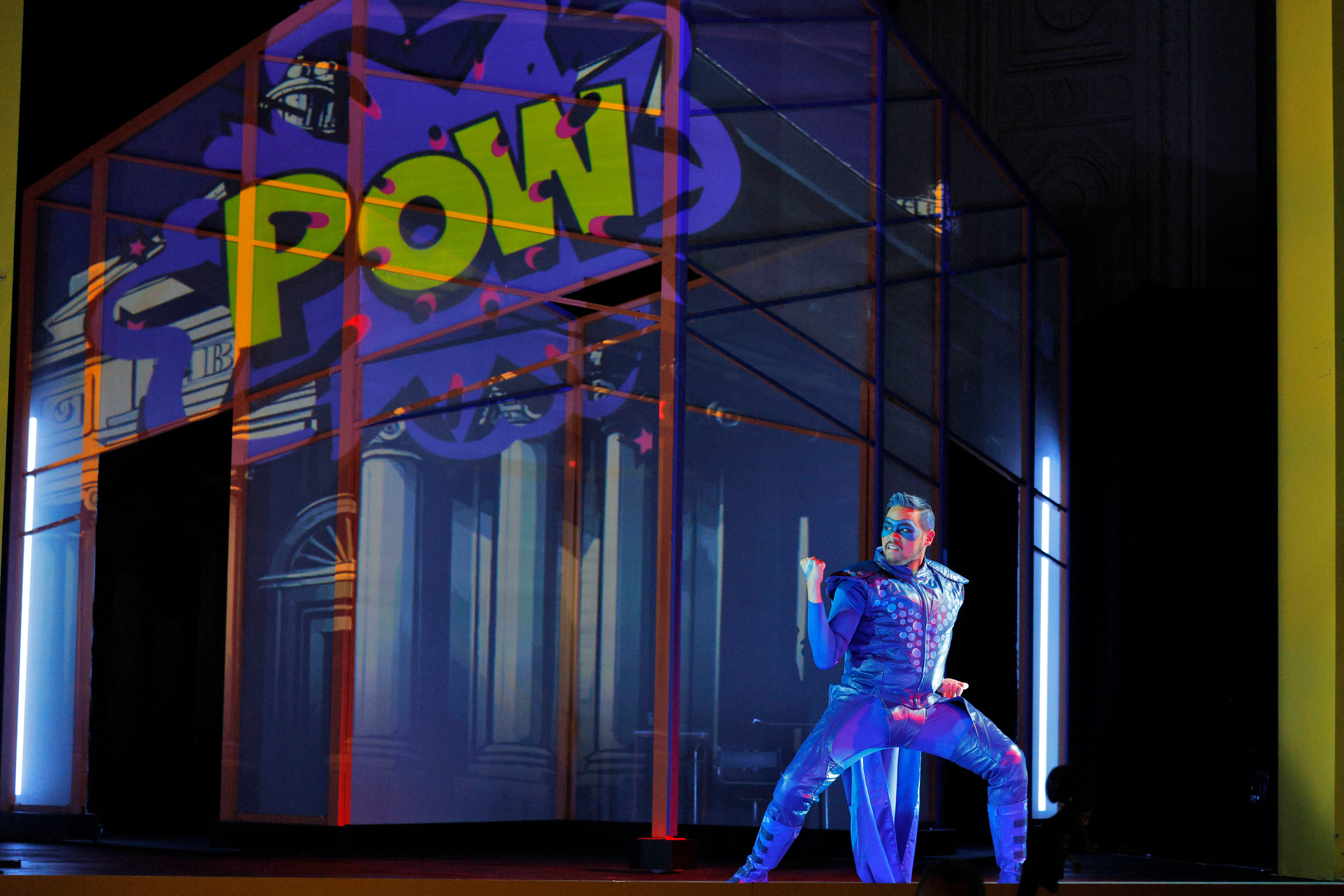
Director Keturah Stickann’s delightfully entertaining new production of Handel’s Rinaldo for West Edge Opera turns on a simple but probing observation. The opera’s libretto, drawn like so many Baroque plots from the epic poetry of Torquato Tasso, features opposing teams of Good Guys (Crusaders) and Bad Guys (Saracens). The title character is a heroic lunkhead, his opposite number is a nefarious creep, and there’s a bunch of fighting and witchcraft and babes-in-chains.
What we’ve got here, in other words, is a superhero comic-book story.
Armed with that basic premise, Stickann and a top-notch cast under the deft musical leadership of conductor Emily Senturia have gone to work to turn Handel’s opera into both a musical and comedic feast. The singing is splendid from top to bottom, and Senturia gives the score plenty of stateliness and vigor. There’s nothing here that would allow skeptics to start getting shirty on Handel’s behalf; the entire production is done with a palpable love for its source.
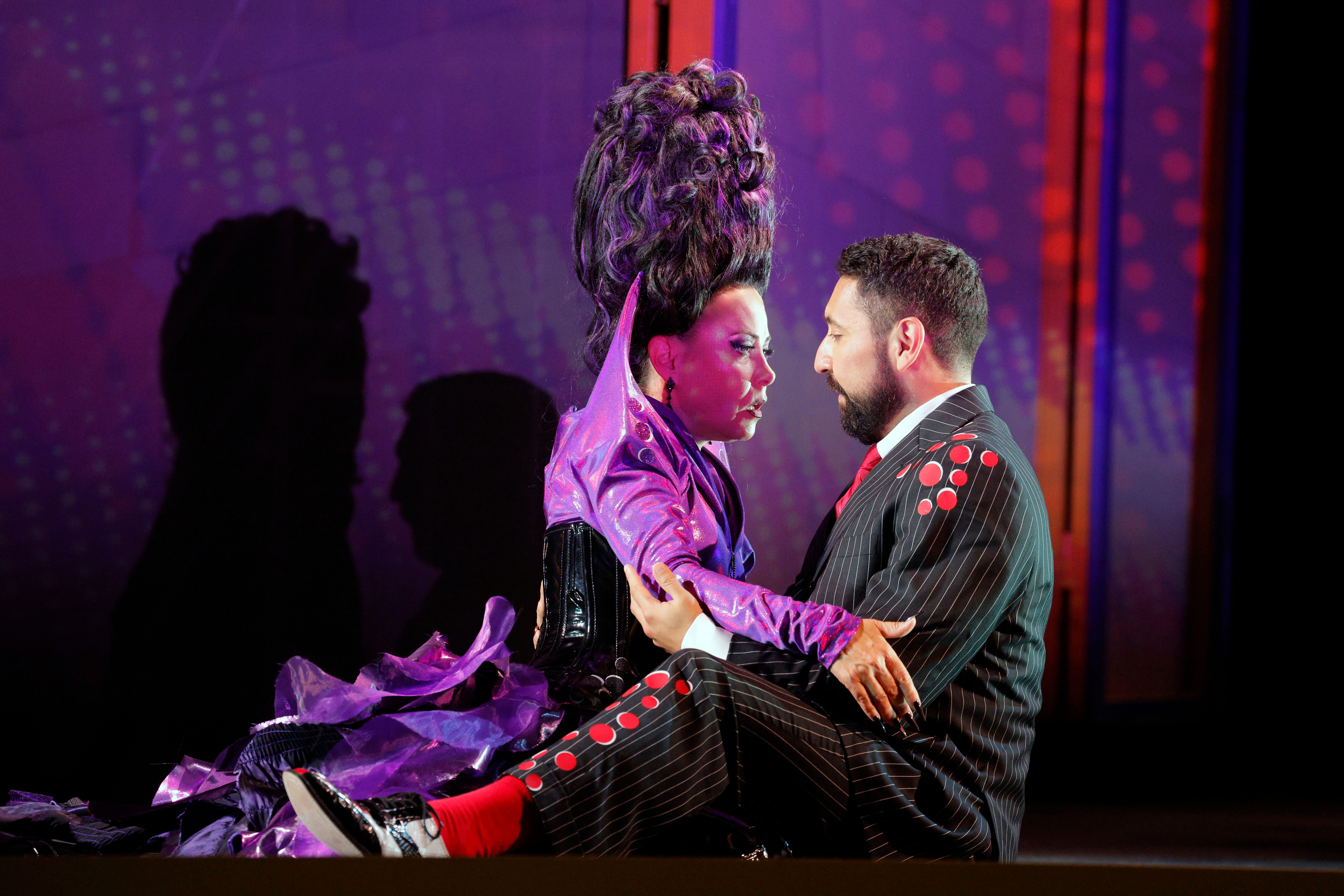
But irreverent? Absolutely. Designer Yuki Izumihara’s production is a feast of Ben Day dots and cotton candy colors, for both the costumes and the backdrops. Video projections are splattered with word balloons proclaiming “Pow!” and “Wham!”, as if the pop artist Roy Lichtenstein, like his colleague David Hackney, had taken up a sideline in operatic stage design. The words of the libretto remain intact but the supertitles have a field day; the aria “Abbrugio, avampo e fremo” (“I burn, I blaze, and I tremble”) to take just one example, is rendered as “I’m freaking out.”
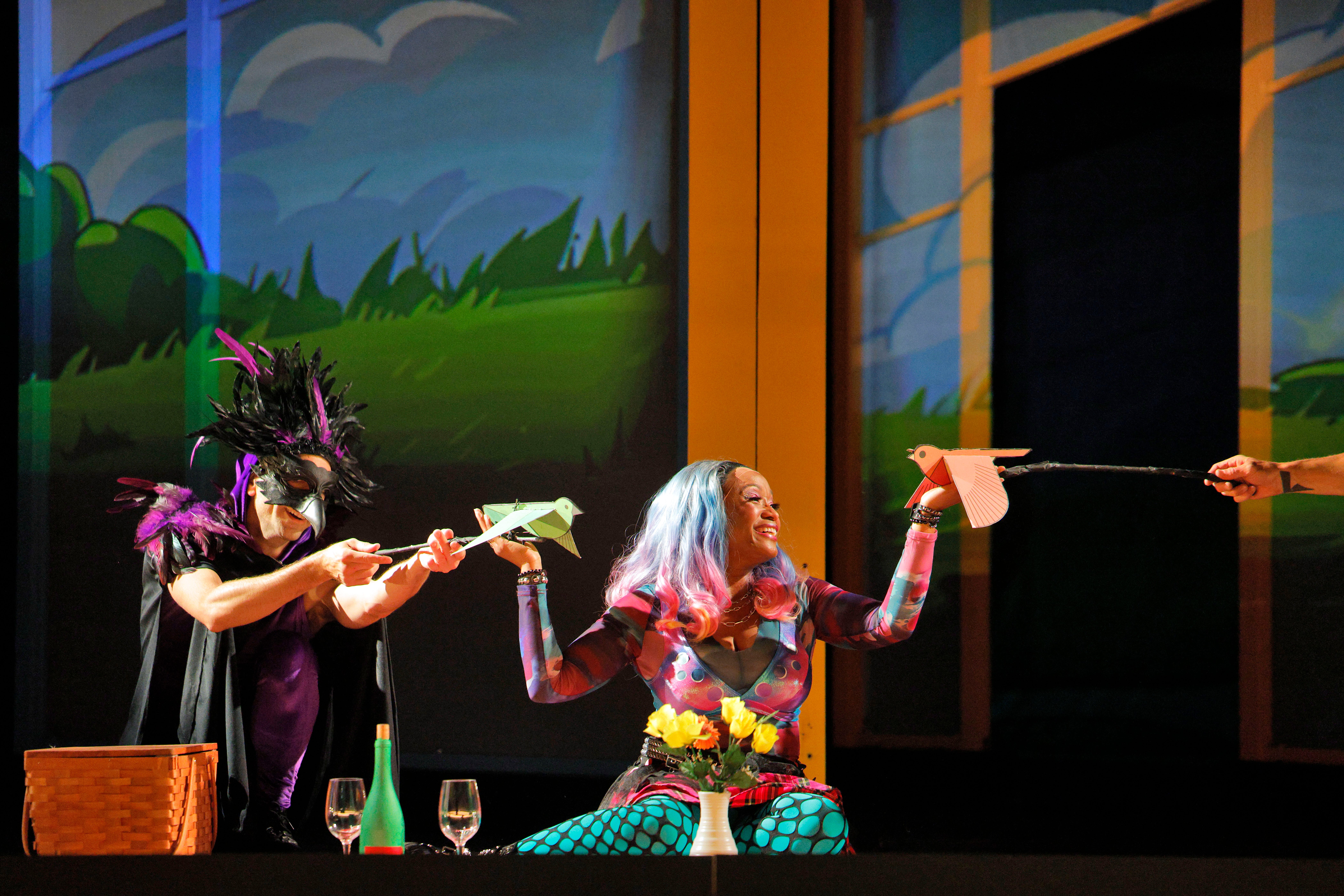
Most beguiling, perhaps, is the dexterity with which Stickann matches the characters and situations to their pop-culture archetypes. Rinaldo (countertenor Kyle Tingzon, in sleek and resplendent voice) is a superhero in mask and cape, his physical heroism accompanied by a blend of cheery good will and near-complete cluelessness (in her program note, Stickann cites The Tick as the chief model, and it’s a perfect choice). As Goffredo, the Crusade leader, contralto Sara Couden is our old friend Commissioner Gordon in all but name, while baritone Efraín Solís revels in the vocal rumblings of Argante, the Saracen chieftain — which is to say, the supervillain. The fact that Almirena, the principal female love interest, is the daughter of the Commissioner Gordon figure even in the original libretto feels like a stroke of serendipity. Soprano Shawnette Sulker brought her trademark vocal incisiveness to the role, and soprano Nikki Einfeld contributed a gloriously robust and insinuating turn as the sorceress Armida.
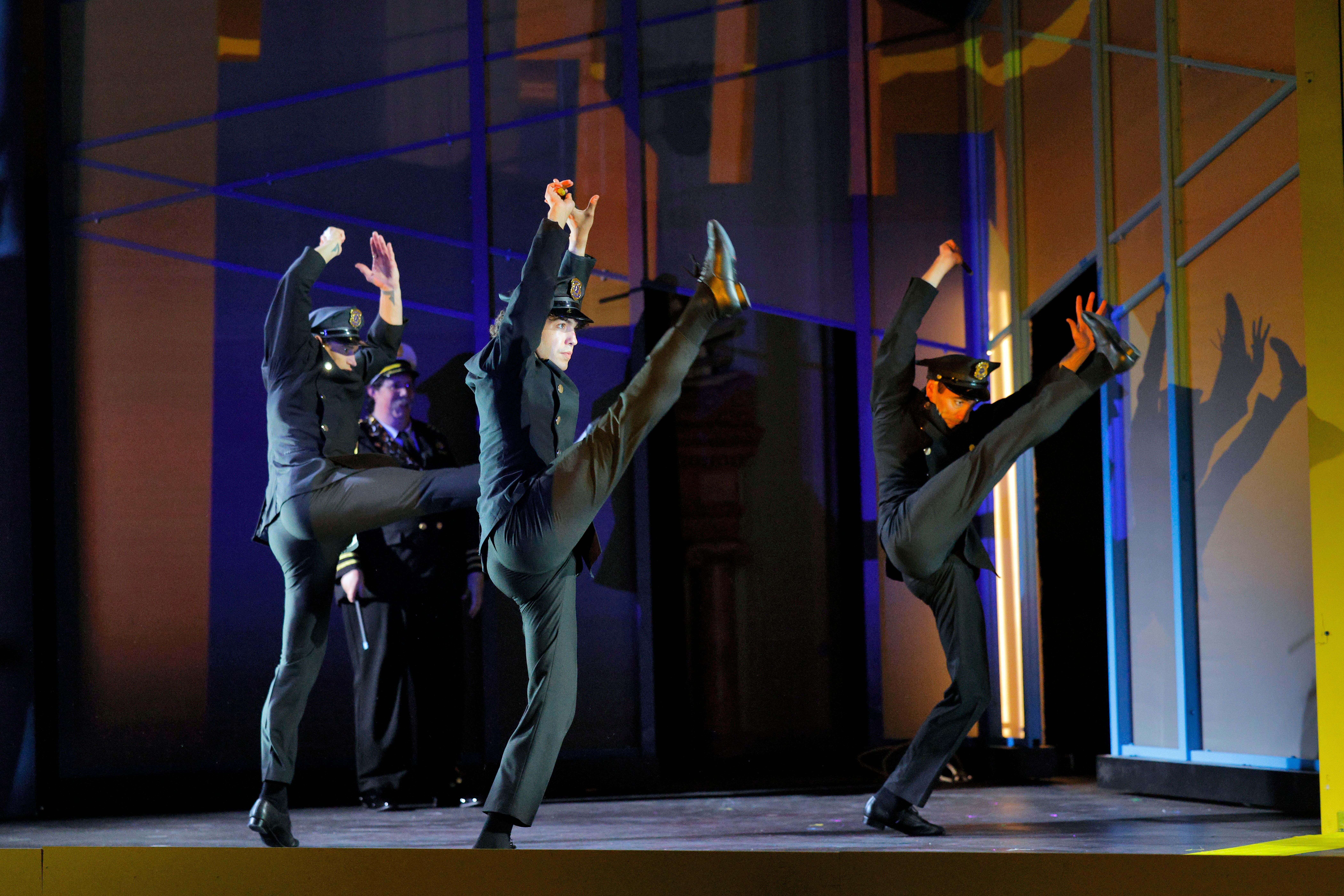
The parallelisms go beyond individual characters, though, to embrace the entire dramatic situation. The forces of Good and Evil are equally cartoonish in both versions of the story, and the premise of Rinaldo’s military prowess isn’t far from a superhero’s physical invincibility; he spends a lot of time flexing and smooching his biceps, and there’s a funny running gag about how even the mildest physical interaction with Goffredo is painful for the older man. In the opening scene, a trio of sinuous bank robbers try to pull off a heist, only to be thwarted — first ineffectually by members of the city’s bumbling force, then decisively by Rinaldo himself. Whatever the historical realities of the Crusades may have been, this production captures perfectly the way those narratives were put to use in Baroque opera.
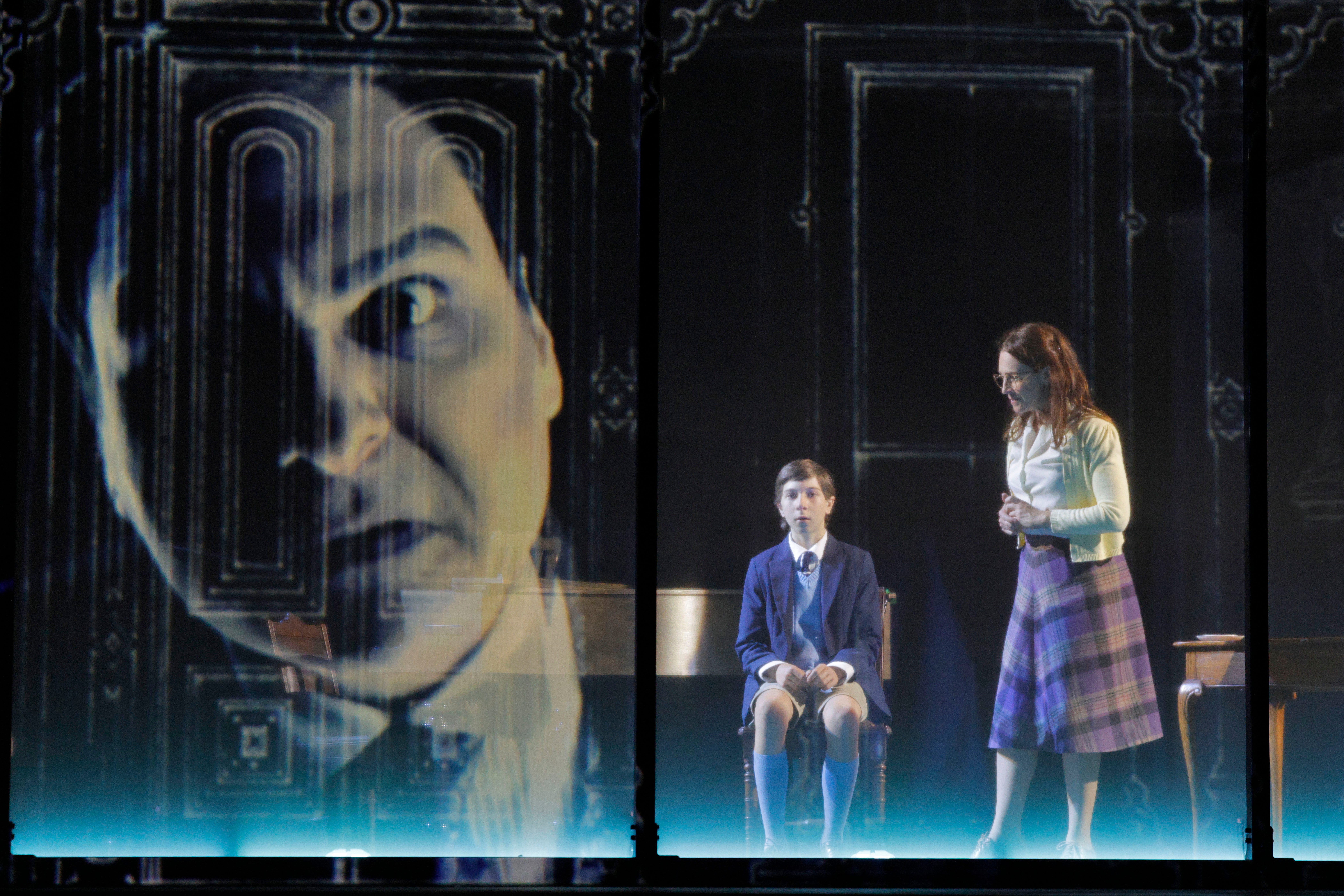
The other offering in West Edge’s opening weekend at the Scottish Rite Temple in Oakland was Britten’s wonderfully elusive chamber opera The Turn of the Screw. (American Apollo, Demian Geter and Lila Palmer’s opera about the painter John Singer Sargent and his model Thomas McKeller, opens Saturday to complete the company’s summer schedule.) Like the Henry James novella that serves at its source, this is a piece steeped in ambiguity and uncertainty. Are there ghosts? Are children truly innocent, or is that a fiction that adults impose? How much does anyone know about what has and hasn’t transpired in the lives of others? James, and Britten after him, refuse to answer any questions.
The West Edge production, directed by the company’s general director Mark Streshinsky and conducted by music director Jonathan Khuner, takes these themes and runs with them to a self-defeating extent. The shadows are everywhere: in Izumihara’s production design, which is all scrims and flickery projections and low-wattage lighting; in the evasive physical action devised for the characters; and even in the grayish musical atmosphere, through which only an occasional burst of instrumental color or vocal clarity can be detected.
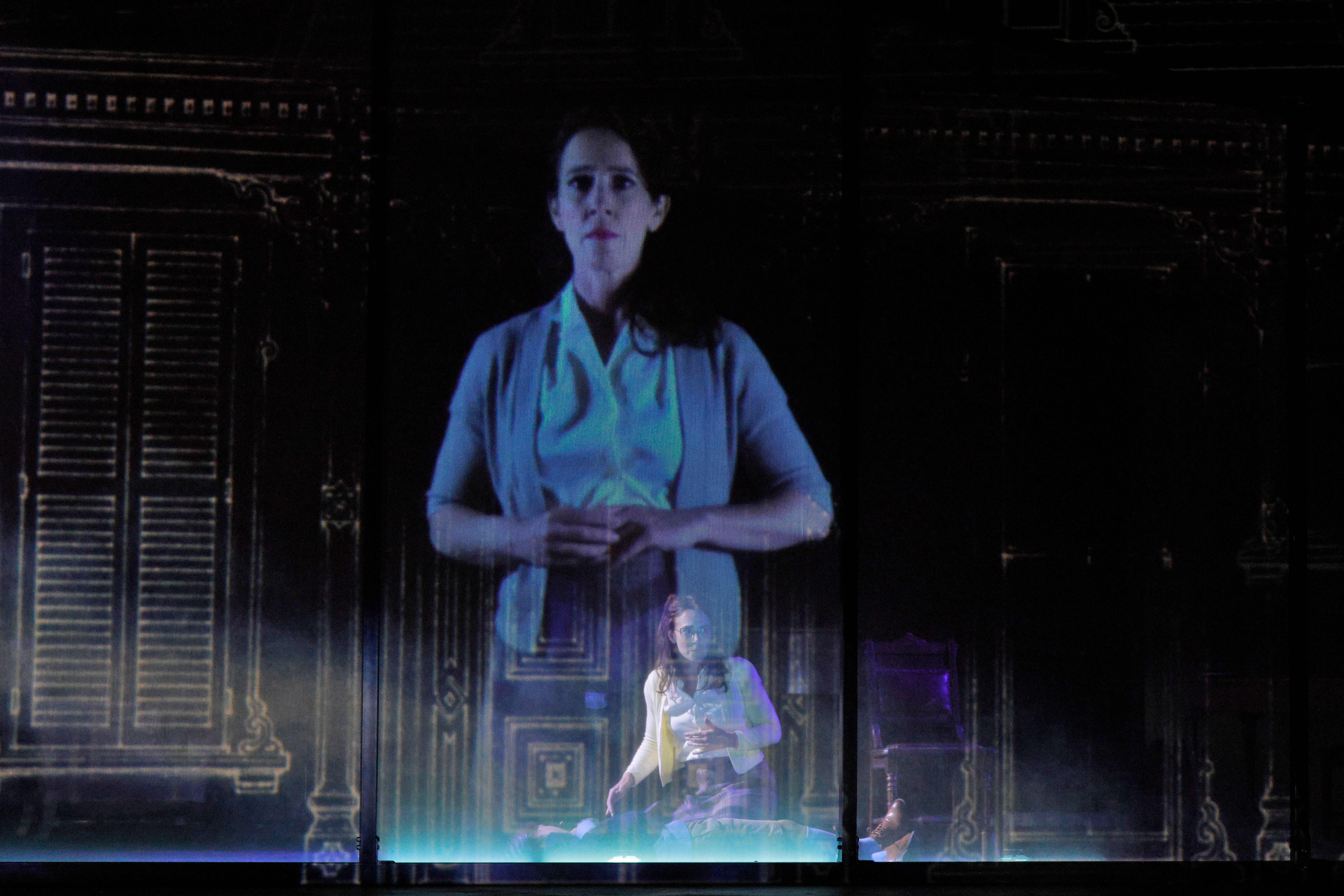
As I say, these are more or less the colorations the opera calls for, and sometimes the effect is bracing. When Peter Quint, the demonic former valet who seems to have fatally corrupted the two young children being looked over by a new governess, first appears, tenor Alex Boyer sings from a mysterious offstage location while his face is projected on stage — a brilliantly eerie effect that makes his presence seem all the more spectral.
But too much of the action is simply steeped in obscurity, creating questions as basic as Wait, who was that? and What is she actually doing back there? The cast, led by soprano Laura Bohn in a vividly etched performance as the Governess, does what it can to shed just the right amount of light on the proceedings, but it’s hard going.
Rinaldo and The Turn of the Screw: West Edge Opera, through Aug. 15. http://www.westedgeopera.org/
Elsewhere:
Steven Winn, San Francisco Chronicle/SFCV: “While Baroque operas have long been fertile ground for high-concept stagings, this one by director and choreographer Keturah Stickann is choice. Not only does she mine her superhero-versus-supervillain storyboard for both comic and moving effects, Stickann also uses it to grin at the whipsaw plotting. Nothing is impossible, including instant love affairs, a conniving witch who can change her identity and a bike-riding siren.”
Michael Zwiebach, San Francisco Chronicle/SFCV: “The art of the thriller lies in managing its escalating sense of dread while ensuring the payoff is still a surprise. Few operas pull it off. But Benjamin Britten’s The Turn of the Screw stands at the top of that short list, and Mark Streshinsky’s current version for West Edge Opera ranks among its most compelling realizations.”
Wailing in Wales
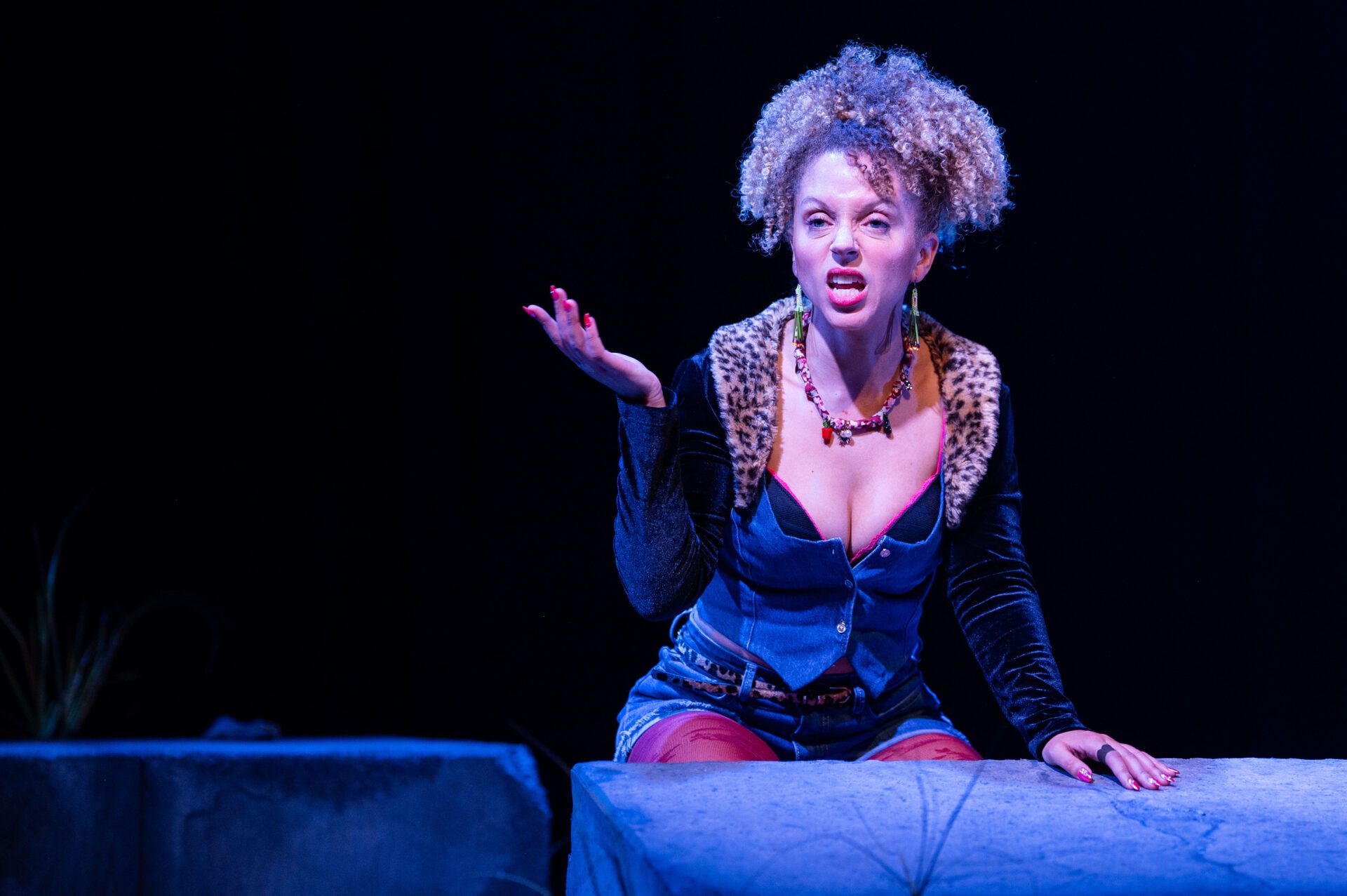
Gary Owen’s 2015 play Iphigenia in Splott is an 80-minute monologue that calls for extraordinary theatrical virtuosity from its lone cast member, and Alicia Mason, currently inhabiting the work in a lacerating production directed by Michelle Talgarow at Shotgun Players, is just the virtuoso the piece requires. As Effie, a working-class girl in a run-down district of Cardiff, Mason comes out with both guns blazing in a fierce display of pride, hurt, and fearless antagonism.
Her life is built around multi-day drinking sprees — half the week devoted to binging, the other half to recovering — and she doesn’t give a fuck what you or her gran think about those life choices. She’s shagging some dickhead who lives on her block and whom she holds in well-merited contempt, presumably because it allows her to feel something at all. But that doesn’t preclude regular sex safaris to the local pub, where she is, in her own telling, a “goddess.” Her foul-mouthed vocabulary isn’t just a function of the way she talks; it embodies her rage at the world that has offered her and those like her so little. Mason captures all of it — the seductiveness, the scarifying prickliness, the self-confidence and the wounding inner void it’s designed to hide — with a magician’s dexterity. You can’t take your eyes off her.
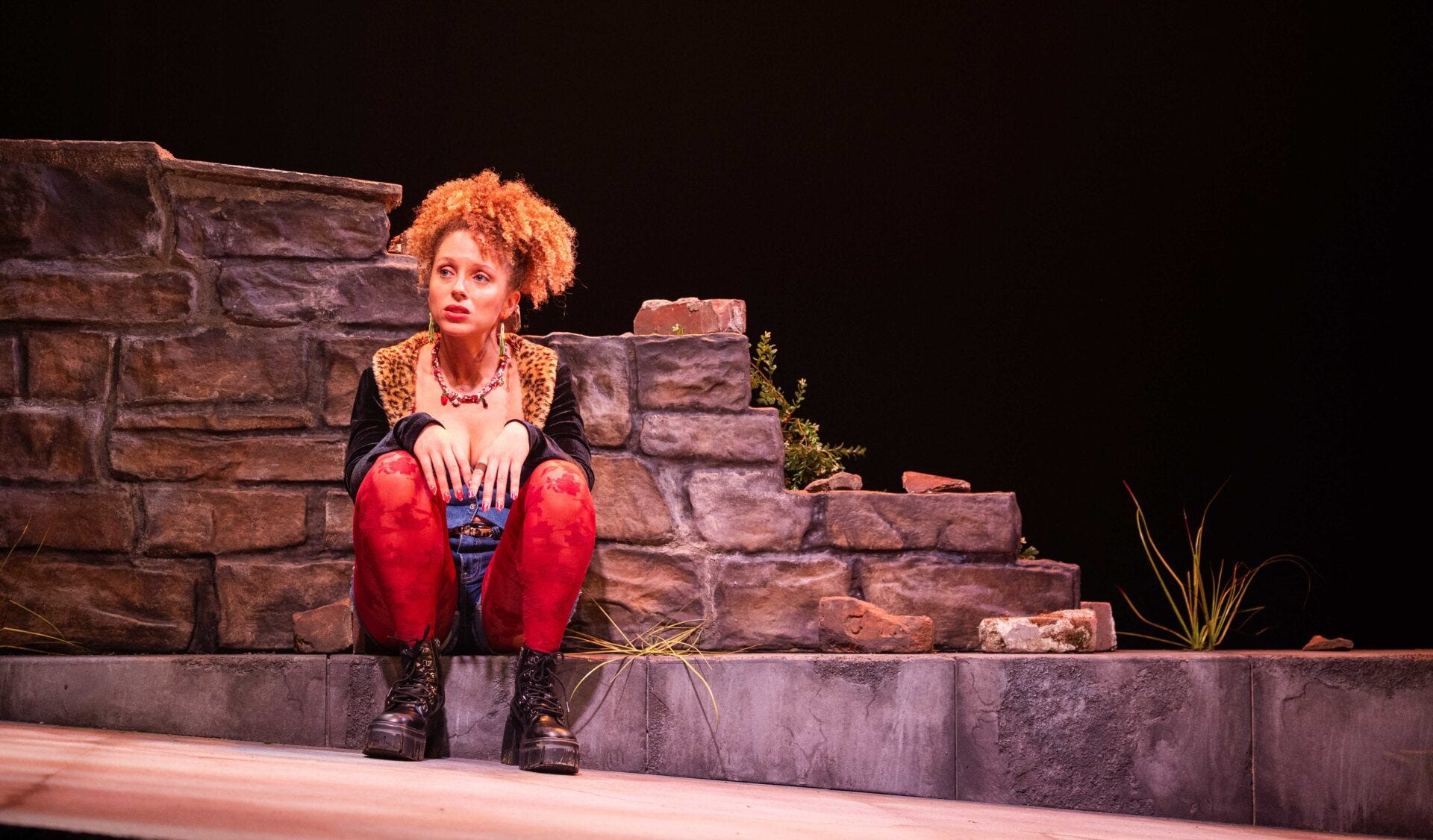
I’m less convinced than other observers have been, though, that the story Effie has to tell quite bears the weight of Owen’s aspirations to social critique (or that it has much to tell us about the Greek myth invoked in the title). The narration itself is mesmerizing, because it spirals ever more widely from the mundane to the grand, thanks to Effie’s use of the narrative present. What begins as a simple description of her life soon solidifies into the tale of a particular night at the pub, which leads to more and more ramifications until it dawns on us that we’ve been drawn without realizing it into an extended saga, one that covers the past year or so of Effie’s hardscrabble existence.

But in the final moments of the play, Owen suddenly broadens his focus too far to be effective, putting a series of rhetorical questions into Effie’s mouth that ultimately don’t amount to much more than, “And so, in conclusion, fuck capitalism.” It’s a message too vast and too generic to be supported on the stilts of a one-character, one-act play. More to the point, Effie is such a vivid, unforgettable character in Mason’s performance — so full of piss and vinegar, so resistant to being pigeonholed — that she simply refuses to become a textbook example of some sociopolitical viewpoint. I can only imagine her reaction to being reduced to a poster child.
Iphigenia in Splott: Shotgun Players, through Aug. 23. www.shotgunplayers.org.
Elsewhere:
Lily Janiak, San Francisco Chronicle: “Crouching in an alleyway, her spleen curbed by neither drunkenness nor a hangover, [Effie] can only unleash it on the next passerby, who will inevitably do something to pique her. Like exist.”
The young and the stressless
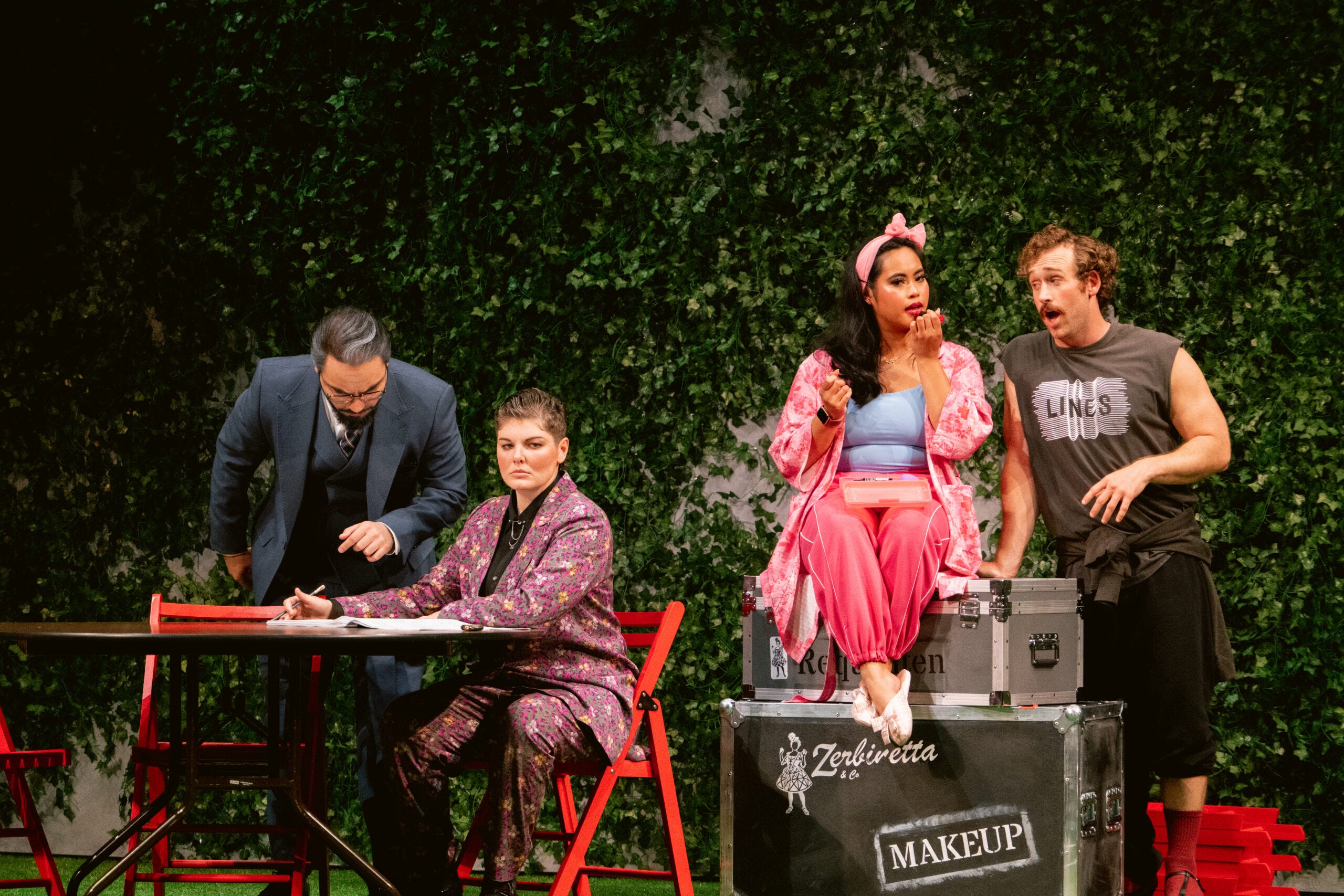
One of the highlights of the 2024 Merola Opera Program was a concert in which two terrific young singers — soprano Mary Hoskins and tenor Samuel White, both of them now Adler Fellows — joined forces for a fearless and potent account of the final duet from Strauss’s Ariadne auf Naxos. Merolini typically focus on more middle-of-the-road fare — Mozart, Donizetti, Massenet, and so forth — but here were two young artists ready and able to tackle the steeper demands of Strauss’s vocal palette.
Fast forward two years, and suddenly there’s an entire cast’s worth of Ariadne singers among the Merola ranks. I for one would not have believed it possible.
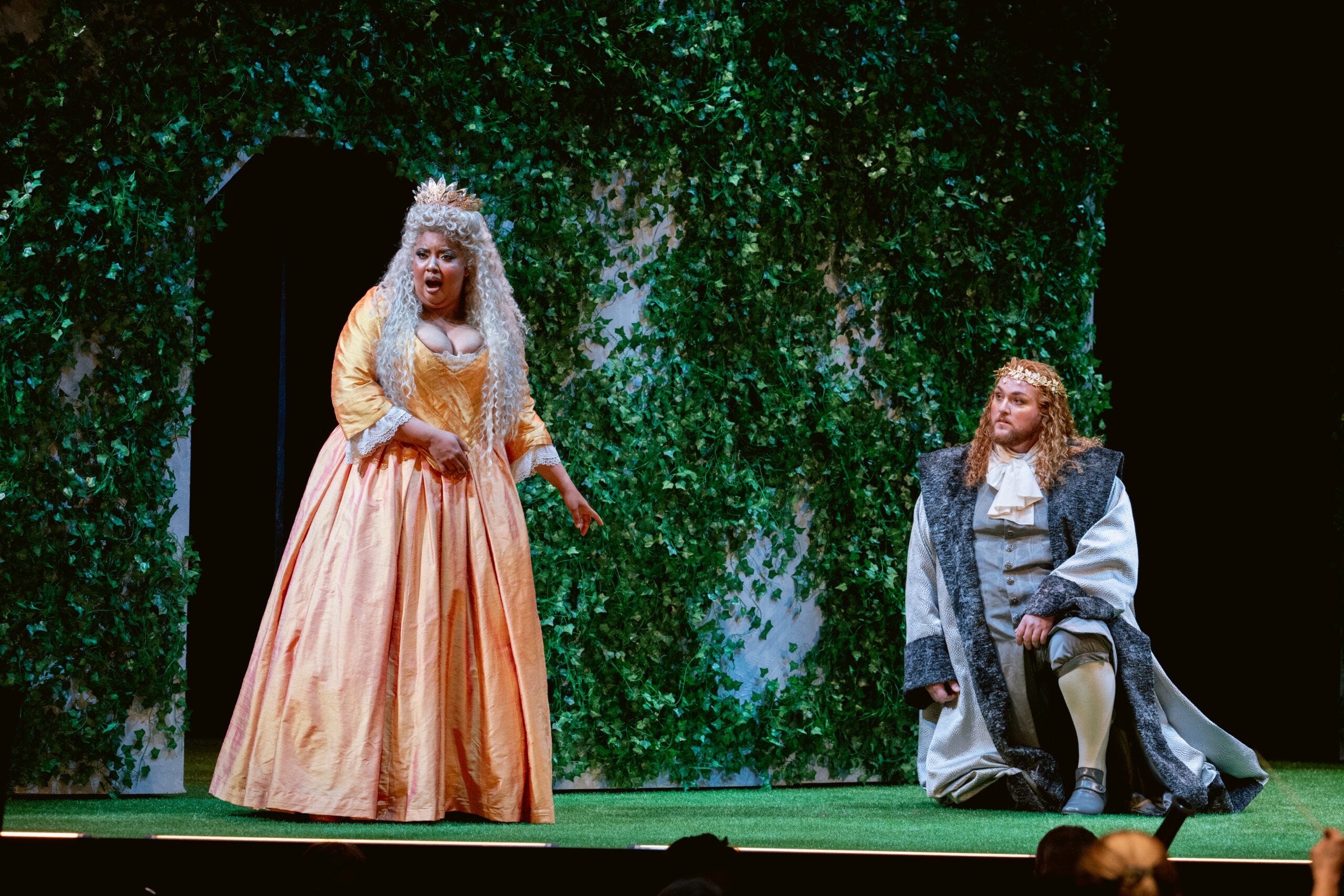
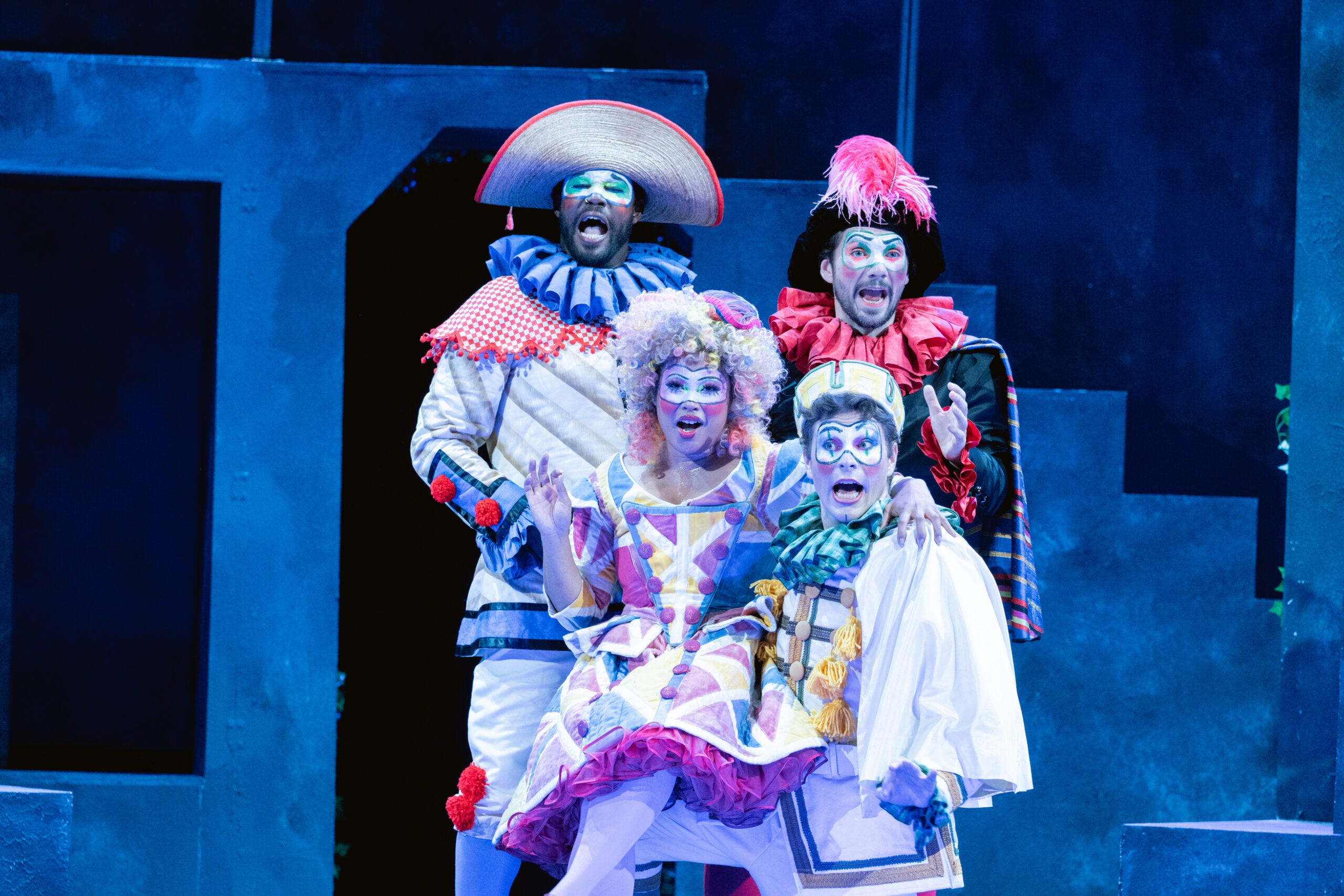
But Thursday’s thrillingly fine production of Ariadne at the San Francisco Conservatory of Music was all the proof anyone needed. For a work in which even the smaller roles in a large ensemble have special requirements, this was a showcase for one astonishing young voice after another, all working in harmony under the understated leadership of the conductor Ann-Katrin Stöcker.
Theo Claveles, an extravagantly gifted mezzo-soprano from Lebanon, CT, more or less stole the show with a muscular, tender performance as the Composer, a virtuoso display of ripe, soaring vocal phrases and pinpoint precision. Not far behind, though, was soprano Adia Evans, whose singing in the title role was big and gleaming and full of nobility. As Zerbinetta, soprano Emilie Kealani scattered glittering strands of coloratura all over the stage, and tenor Matthew Sink made a sonorous, tireless Bacchus.
I enjoyed director Omer Ben Seadia’s treatment of the piece, as well, casting it in the home of some tech plutocrat (the “wealthiest man in Vienna” has become even more of a recognizable type than he was a century ago), and turning the Major-Domo into a supercilious “Chief of Staff” replete with headset and iPad. But the biggest excitement came from watching Merola’s artistic bosses set the difficulty level at high, and seeing these young artists rise fearlessly to the challenge. Before you know it we’re going to get a Merola production of Die Walküre.
Elsewhere:
Steven Winn, San Francisco Chronicle/SFCV: “The show features bravura singing, a vibrantly colorful and responsive orchestra under the direction of Ann-Katrin Stöcker, inventive stage direction by Omer Ben Seadia, and expert, evocative design.”
Cryptic clue of the week
From Out of Left Field #331 by Henri Picciotto and me, sent to subscribers last Thursday:
Silence communist rag (5)
Last week’s clue:
Observing contest with fly (7)
Solution: VIEWING
Observing: definition
contest: VIE (verb)
fly: WING (verb)
Coming up
• American Bach Soloists: The esteemed Bay Area Baroque ensemble offers its traditional summer festival, a compact string of five concerts devoted to music by Bach, Vivaldi, and others. Under the leadership of conductor Jeffrey Thomas, the schedule begins with a program of Bach’s chamber music and concludes with Handel’s sublime Ode for St. Cecilia’s Day. Aug. 5-9, San Francisco Conservatory of Music. www.americanbach.org.