
Champagne flute
In his first solo turn with the S.F. Symphony, Yubeen Kim brought the house down

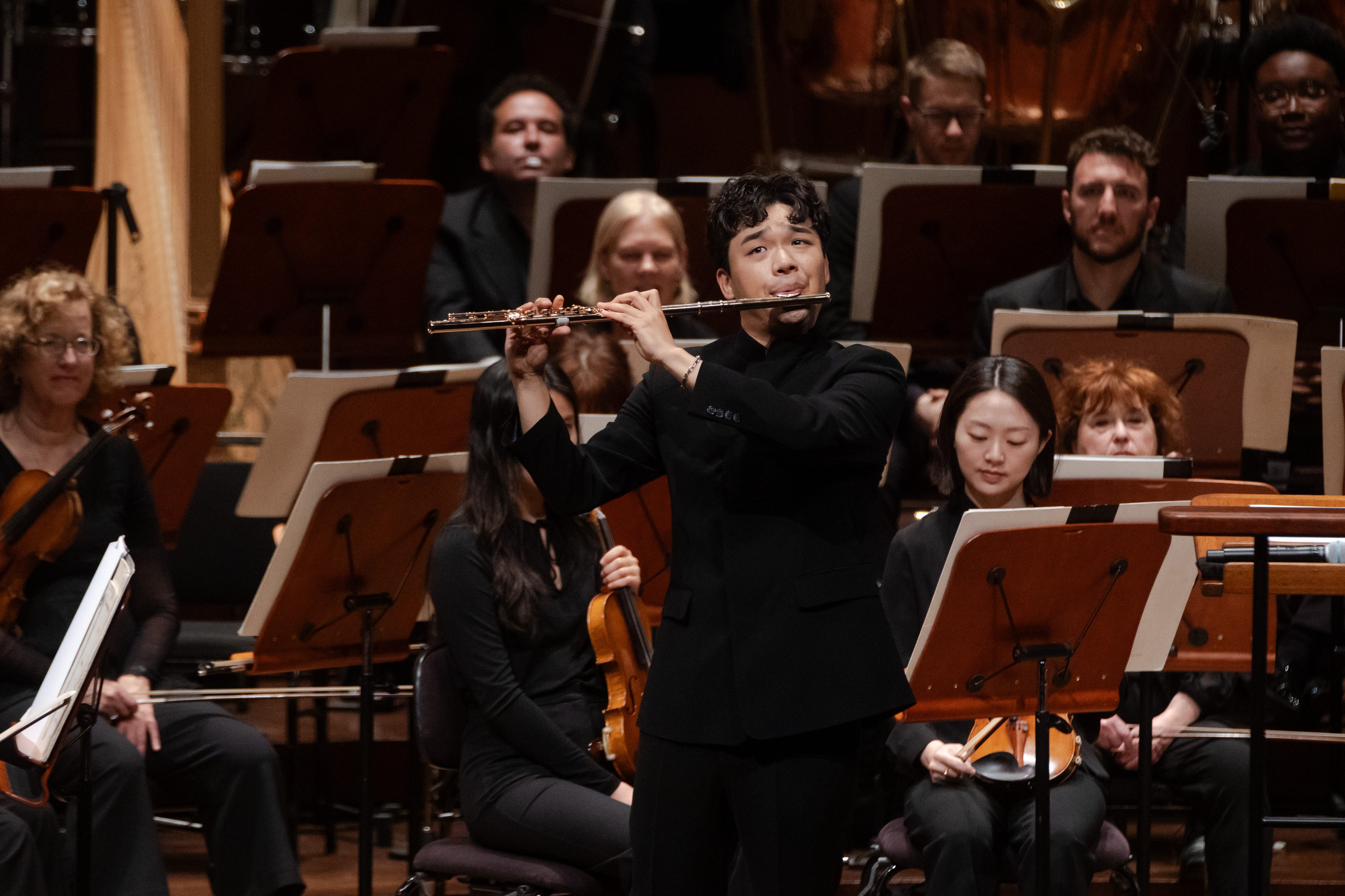
Conductor Dima Slobodeniouk began his guest appearance with the San Francisco Symphony on Saturday night by offering his thoughts on the program, which included Henri Dutilleux’s Métaboles of 1964 and the Tchaikovsky Fourth Symphony. He also described the Symphony’s Yubeen Kim, who was about to serve as the soloist in Jacques Ibert’s 1934 Flute Concerto as “one of the best flutists I’ve ever heard.”
It was a peculiar thing for a guest conductor to say — I’m pretty sure it’s the first time I’ve ever heard a conductor hype a soloist before a performance —but I’m sure it resonated with most of the patrons in the hall that night. It certainly did with me. Since his arrival in San Francisco 2½ years ago, Kim’s artistry has been a never-ending source of amazement and delight. It’s gobsmacking to discover that the flute can be played at all with the vividness and tonal beauty that Kim elicits from his instrument, but to have such a virtuoso make his home here, and favor us with his playing week after week, feels like an incomparable bounty.
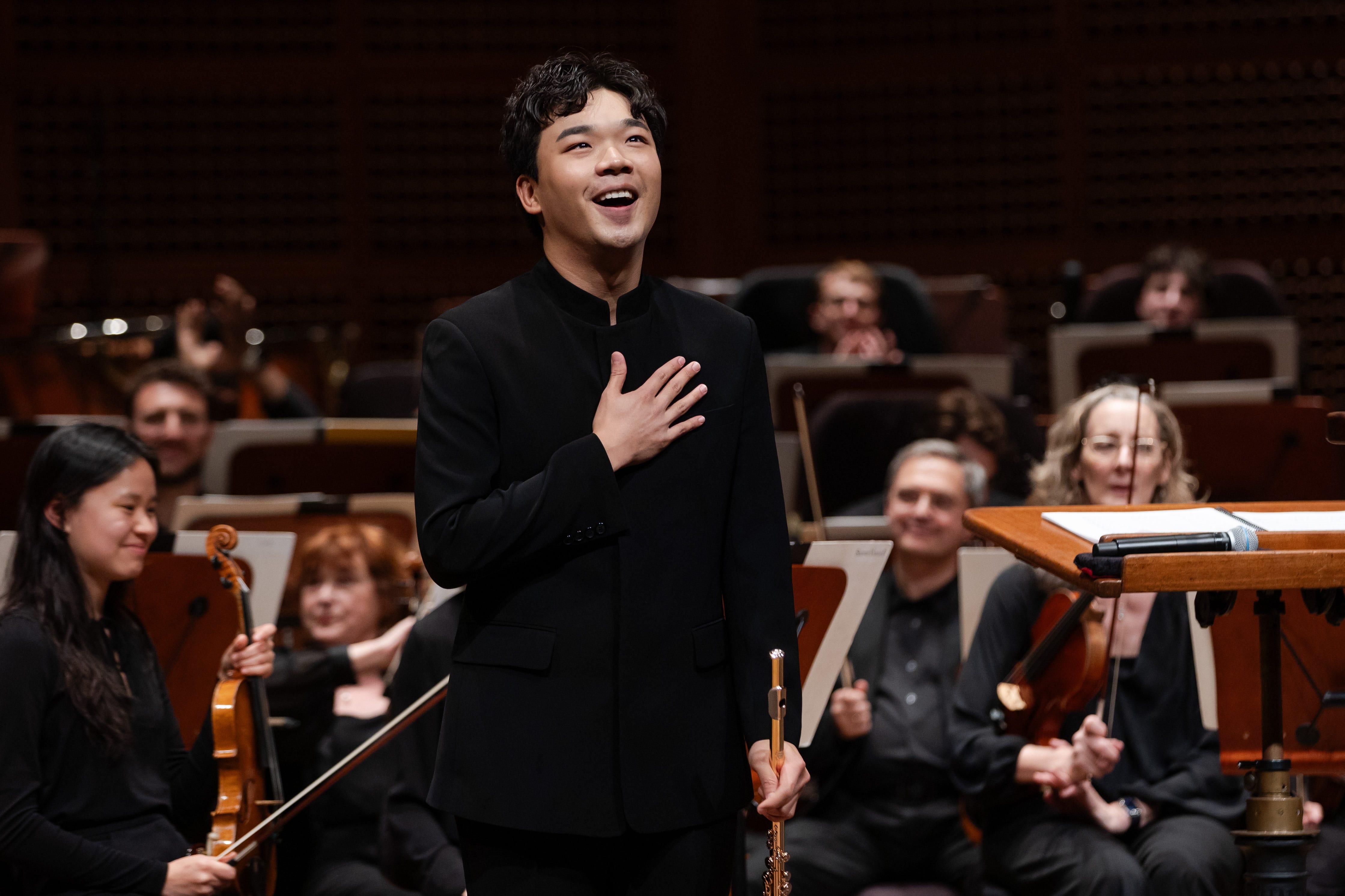
This was Kim’s first solo turn with the orchestra, and he made the most of it. The Ibert concerto, like all concertos except for the occasional self-conscious attempt at genre contrarianism, is expressly designed to let the soloist show off. So it’s full of finger-busting passagework — graceful and fluid in the first movement, breathlessly mercurial in the finale. In between comes a slow movement that allows the soloist to spin out a long melodic line marked by sinuous turns and a deep well of fantasy. It’s music that rewards warmth of tone and impeccable breath control, both of which are among the leading resources at Kim’s command.
None of which is to say that the piece felt quite worthy of its hero. Ibert’s concerto has not been heard in Davies Symphony Hall in more than 40 years (James Galway undertook it here in 1983) and its absence is not really a mystery. Slobodeniouk suggested that the piece is rarely programmed because it’s so damn hard, and nobody but a virtuoso on Kim’s level can play it. Yeah, but really though? It struck at least one listener as a fairly standard virtuoso showpiece; it’s not at the level of, I dunno, the Busoni Piano Concerto. (At intermission, a flutist I know who shares my admiration for Kim remarked that any flutist who can land a principal position with a first-tier orchestra can play this piece, which certainly tallied with my experience.)
What if the Ibert concerto is rarely programmed because it’s a charming but paper-thin score, full of whimsy and beauty and burbly fireworks that vanish from the listener’s memory as soon as the last chord has sounded? I’m betting on that theory — and yet it hardly mattered. To hear Kim in any repertoire at all, howsoever lightweight, is to exult in the combination of elegance and heft he brings to everything he plays. I can’t get enough.
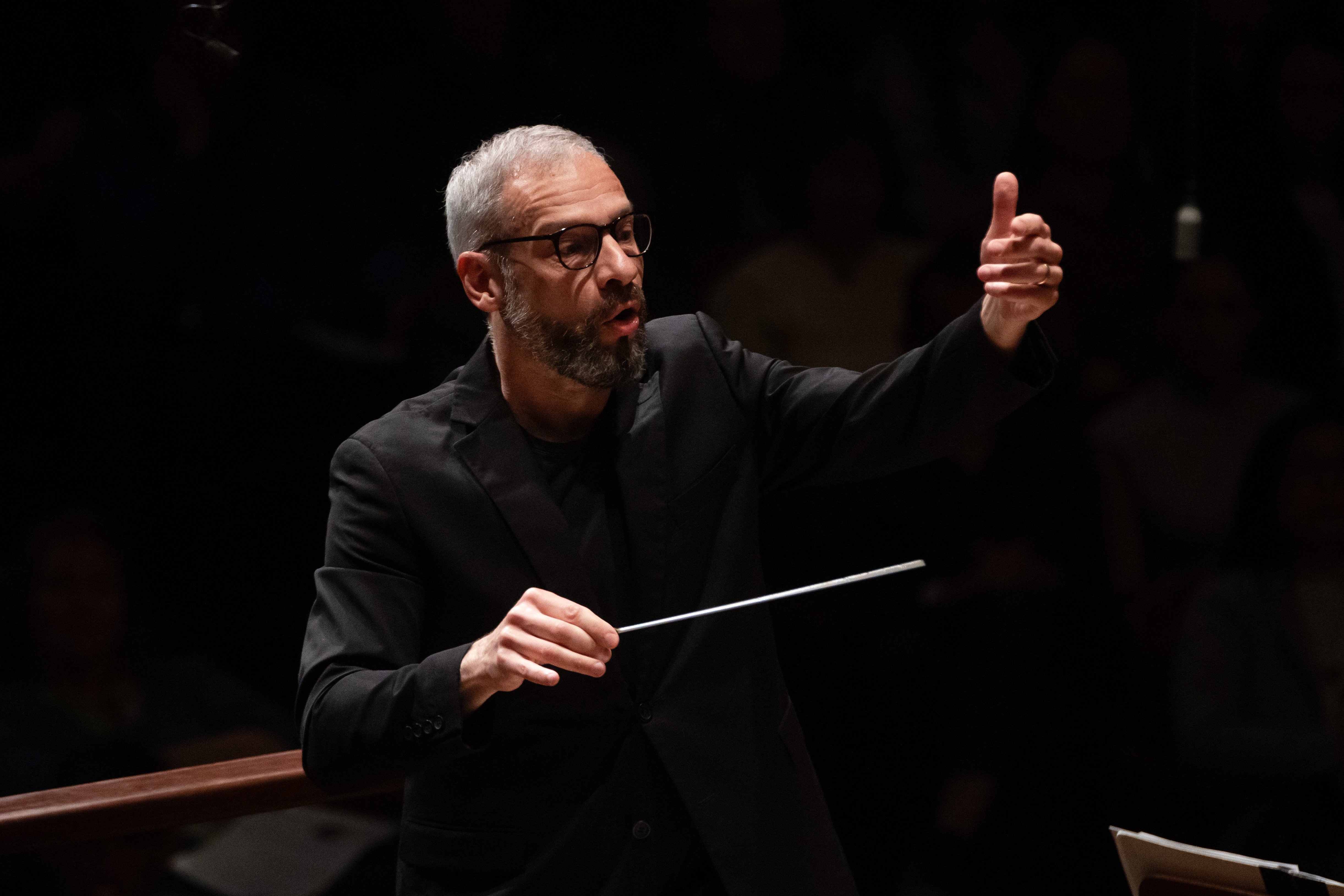
Slobodeniouk, the Russian-born Finnish conductor who made an impressive Symphony debut in 2020 — less than two months before the Covid shutdown — devoted the evening’s second half to a richly expressive account of Tchaikovsky’s Fourth Symphony, with the languorous strains of the first movement consolidating in the implacable charge of the finale. He showed his mettle even more forcefully, though, in the opening selection, Henri Dutilleux’s 1964 opus Métaboles. This is a broad, episodic work in which the composer’s trademark mastery of instrumental color takes on a brawny, hard-edged aspect that contrasts with the more ethereal style of his chamber music. Slobodeniouk and the orchestra kept things taut and propulsive, driving the performance toward an emphatic conclusion. He’s a firm-handed and often persuasive interpreter; I hope we hear more from him.
Elsewhere:
Steven Winn, SFCV: “Maybe nobody planned it this way, but the performance of Tchaikovsky’s Fourth came a day after the 186th anniversary of the composer’s birth. The music was fully alive and electrically present from the work’s blazing, ominous opening. The horns deserve special mention for their brilliant early measures, as bright and dramatic as the instruments themselves.”
Coming in blind
How much advance knowledge do audience members owe a work of art? Must we — should we — enter the theater or concert hall fully familiar with a piece’s premises and sources? Or can we find the liberty to simply take what’s offered us, enjoying and understanding only as much (or as little) as we do?
These are genuine, not rhetorical questions; I’ve been pondering them for more than 40 years without finding a satisfactory answer. On the one hand, not knowing where a work springs from or what it’s attempting can often cut you off from a fairly basic understanding.

But on the other hand, a piece of theater or music or literature should presumably be able to stand on its own, welcoming even ignoramuses into its embrace. Also, there are certain kinds of artistic flaws to which advance knowledge can blind you. I often think about the time I readied myself to review an operatic world premiere by conscientiously reading the novel it was based on — only to learn much later that viewers who hadn’t done that kind of prep work had struggled to follow the basics of the opera’s plot, while I was unconsciously connecting the dots in the patchy libretto based on my outside knowledge.
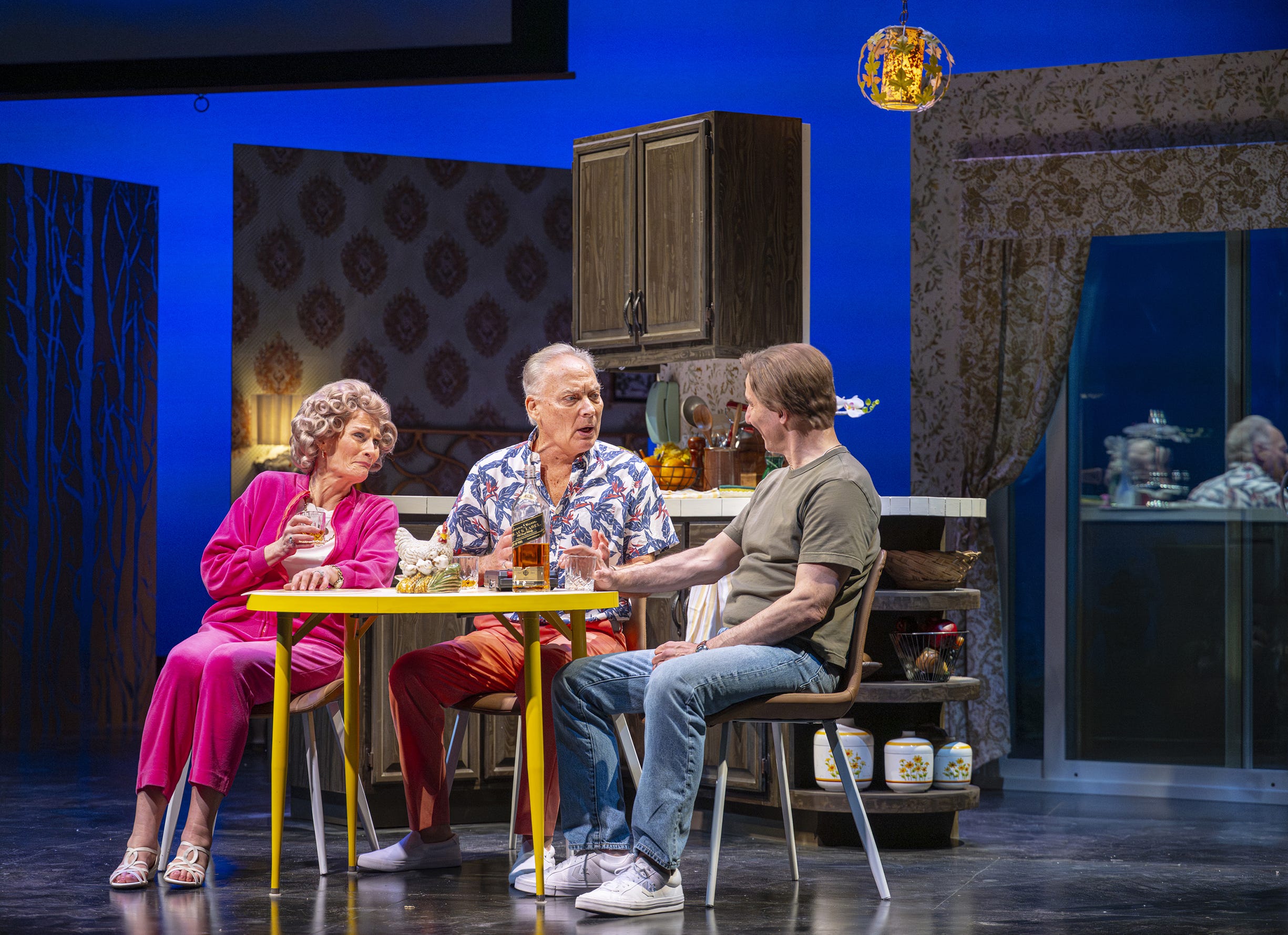
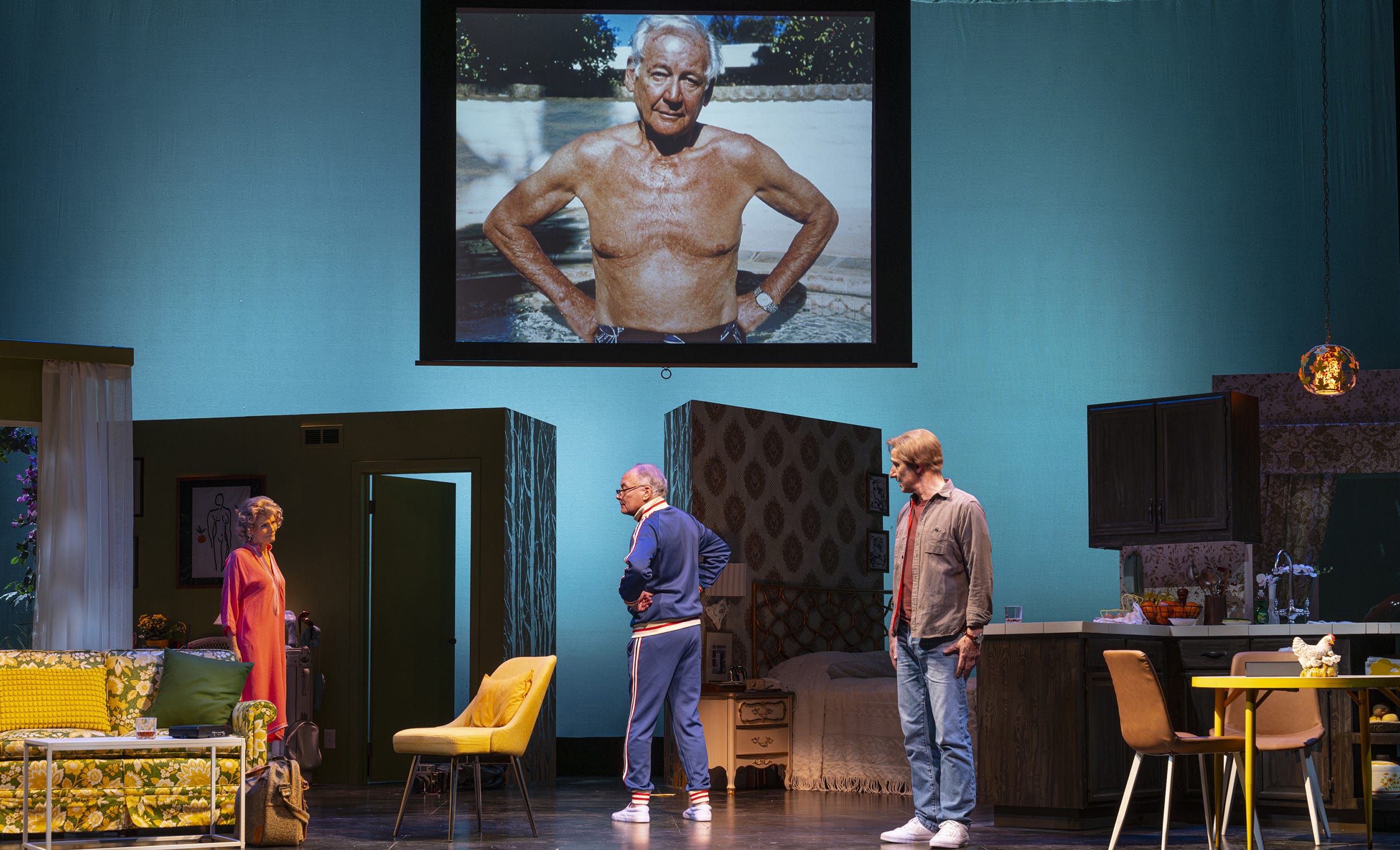
Sharr White’s play Pictures From Home, which opened Tuesday night at the Marin Theatre in a taut, delectable staging by director Jonathan Moscone, is based on the late Larry Sultan’s photo memoir of the same name. Compiled over a decade’s worth of the Bay Area photographer’s visits to his parents’ home in the San Fernando Valley, the book can evidently be read as a multipart meditation on a range of subject matter: midcentury American life, self-presentation, the meaning of success, theories of manhood, mortality, the depredations of capitalism, and much more. It’s all in there, apparently, if you know where to look.
I don’t know nuthin’ about any of it, because until this week I had been blithely unaware of Sultan or his work. That made my perspective on the play — an elaborately imagined fiction about the making of Sultan’s book, replete with photographic excerpts projected for the audience when relevant — markedly different from those of more knowledgeable observers. Critic Jesse Green, writing in the New York Times about the play’s 2023 world premiere, tut-tutted about White’s unfair treatment of the real-life figures behind the story: Sultan; his father Irving, an intermittently successful sales executive for the Schick razor company; and his mother Jean, who took up real estate late in life to help the family finances and found a calling. The Chronicle’s Lily Janiak, in a characteristically illuminating review, compares the play to its source material and finds it wanting.
I’m happy to stipulate that these critiques are well-founded. But I can attest that there’s also a more rewarding piece of theater to be found here through the magic of ignorance. In the version of Pictures From Home that I saw, the Sultan family and Larry’s photographs might as well have been fictional; doing justice to either the people or the underlying artwork was of no concern. And in that play, the psychological pyrotechnics were a source of endless excitement and drama — as well as being deeply, often unexpectedly funny.
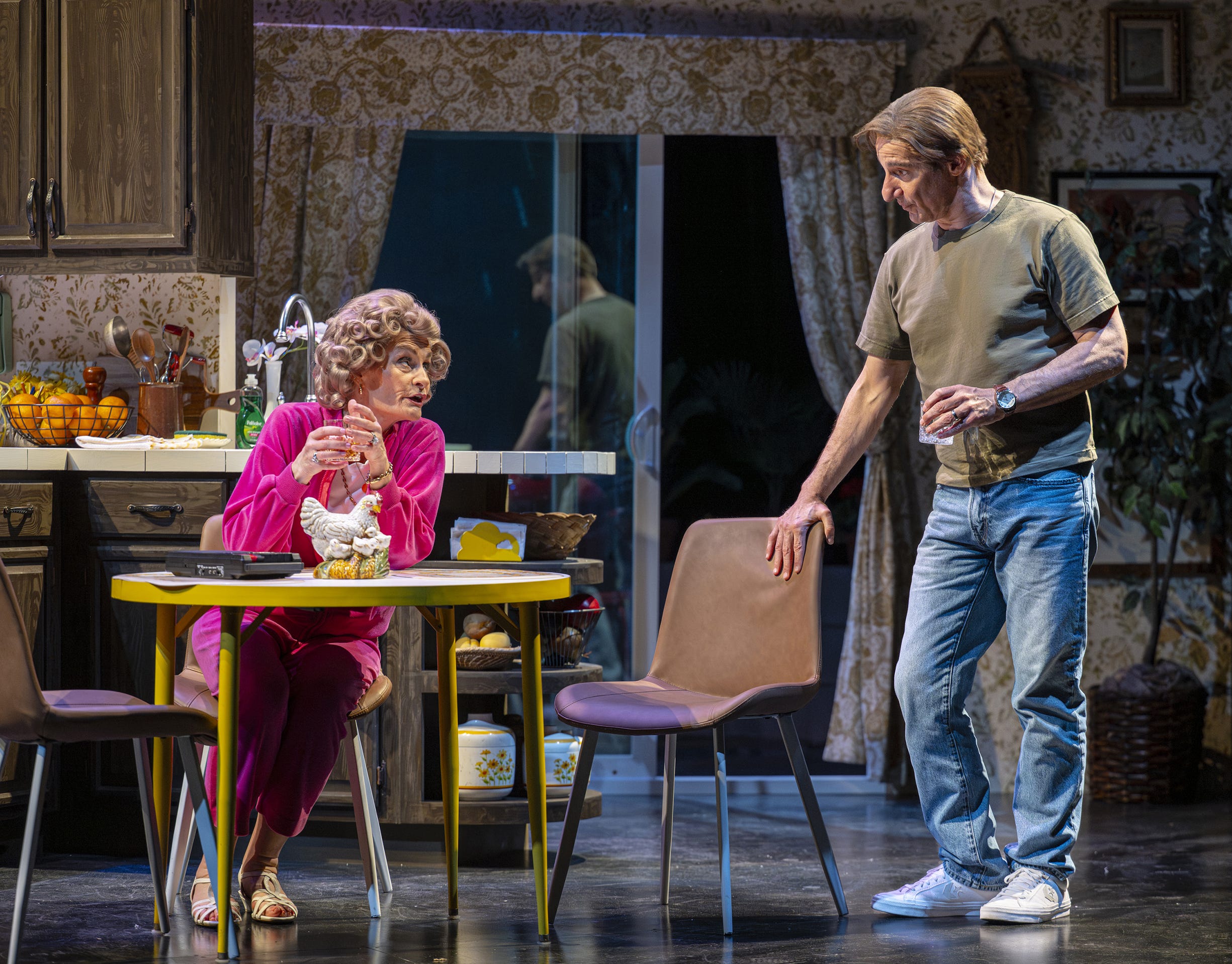
Irving (the astonishingly virtuosic Victor Talmadge) is a bundle of aggression and insecurity, committed to a vision of himself as an American success story but always aware that the gaps in the façade are showing. Jean (Susan Koozin) is a caricature of an upper-middle-class housewife — until she isn’t, belatedly showing her hand in a series of quick power plays. And Larry (Daniel Cantor) is a wonderfully ambiguous blend of pretension and vulnerability; you know his father’s scorn about his artistic ambitions is wounding and unfair, but you also can’t ignore the evidence that Larry is somewhat full of shit. (Again, this is probably a calumny against a dead artist. Again, I don’t care.)
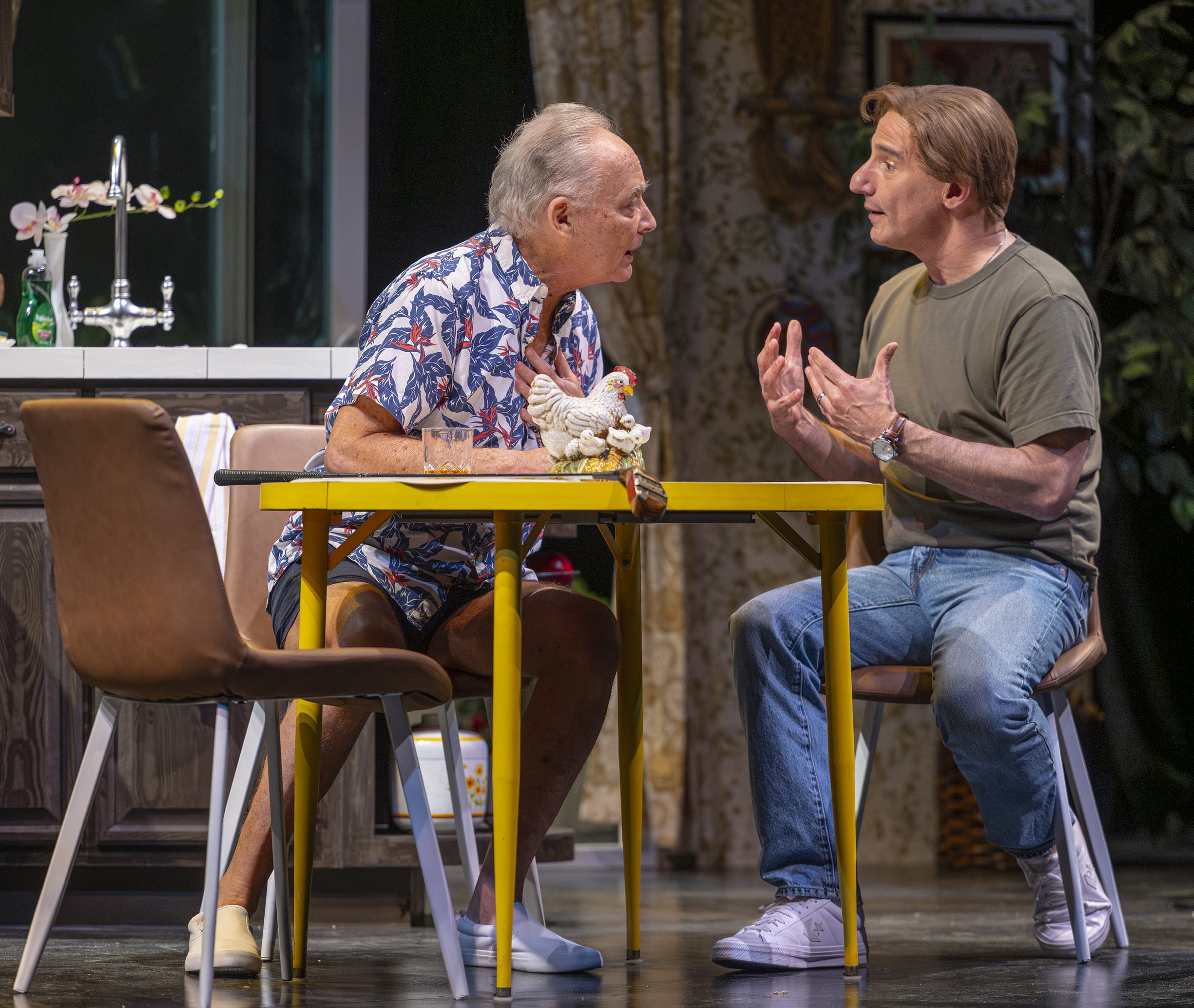
There is, admittedly, a degree of circularity about the whole thing. You can tell that the arguments — rendered in big, blustery squalls that come bouncing off the stage with electrifying force — are not about to change, and that the only endpoint will be death. Which is also not fair, but that’s the hand we’re dealt.
Pictures From Home: Marin Theatre, through May 31. www.marintheatre.org.
Elsewhere:
Lily Janiak, San Francisco Chronicle: “Some individual set pieces transcend. When Irving contrasts his own ‘rigor’ in the way he watches The Price of Right with, as he sees it, his son’s aimlessness, the dramatic irony is as juicy as the burgers Irving and Larry are squabbling over on the charcoal grill in the backyard. Talmadge inflates his character into a puffy little morsel of pomposity.”
Cryptic clue of the week
From Out of Left Field #317 by Henri Picciotto and me, sent to subscribers last Thursday:
Sunni tribe discombobulated pianist (10)
Last week’s Previous clue:
Pear gene mutates into vegetable (5,3)
Solution: GREEN PEA
Pear gene: anagram fodder
mutates: anagram indicator
vegetable: definition
Coming up
• Oakland Symphony: For the orchestra’s season finale, music director Kedrick Armstrong has programmed an intriguing work from the history of African American concert music: the 1937 oratorio The Ordering of Moses by the Canadian-born composer R. Nathaniel Dett. Soloists Shawnette Sulker, Krysty Swann, Terrence Chin-Loy, and Kenneth Kellogg join the orchestra along with the Oakland Symphony Chorus, and Beethoven’s Eroica Symphony takes up the concert’s first half. May 15, Paramount Theatre, Oakland. www.oaklandsymphony.org.
• San Francisco Symphony: Former music director Herbert Blomstedt, tireless and strong at 98, returns to Davies Symphony Hall to conduct Mahler’s Ninth Symphony. For 25 years, Michael Tilson Thomas had exclusive rights to this composer’s music in San Francisco, so this promises to be a new musical adventure with an old friend. May 15-17, Davies Symphony Hall. www.sfsymphony.org.
I stumbled across Larry Sultan photos at SFMOMA some years ago and was startled and amused. "The Valley," his pictures of a porno shoot in a big suburban house in the San Fernando Valley near his parents' home is some weird kind of masterpiece.
Blomstedt conducted very little Mahler when he was music director, so I am particularly interested in hearing his approach, after the different approaches of MTT and Salonen.