
Crrrritic!
A few words in defense of my profession and its practitioners

What do we even need music critics for, anyway? Do they add anything of importance to the musical landscape, or are they just arrogant, carping malcontents who exist to take potshots at the great artists of the day? Wouldn’t things be better if the entire enterprise were to simply disappear?
These rhetorical questions, and the embittered perspective underlying them, have been around for a very long time — for all I know, since the modern practice of music criticism began in the early 19th century. They live on, I think, because they tap into a common impulse that we all have now and again when faced with opinions that are at variance with our own — namely, the urge to yell shut up shut up shut up until the sounds of the offenders’ voices have been subdued into silence.
It’s an understandable sentiment, but perhaps not very salubrious. It should come as no surprise not only that I have a profound love for music criticism, having devoted my entire life to it, but that I believe it’s a fundamental part of any healthy musical ecosphere. It places conversation about the arts into the public square, where everyone can partake. It helps make clear that the arts matter, that they’re worth our time and attention. It ensures that the arts remain a communal enterprise, rather than (OK, in addition to) a solitary pursuit involving one person and a pair of earbuds.
Not everyone cares to take part in that communal conversation, which is fine. In my experience, the people most openly scornful of criticism and critics are the artists themselves, whose feelings can be hurt; snobs (those who maintain that the acuity of their own opinions and ears obviate the need for input from anyone else); and listeners who resist any reaction to a musical experience more probing than well that was nice. For anyone else, though, the pleasures of thinking, talking, writing, and reading about what we’ve heard with their fellow audience members (which is what a music critic is, by definition) can be indispensable.
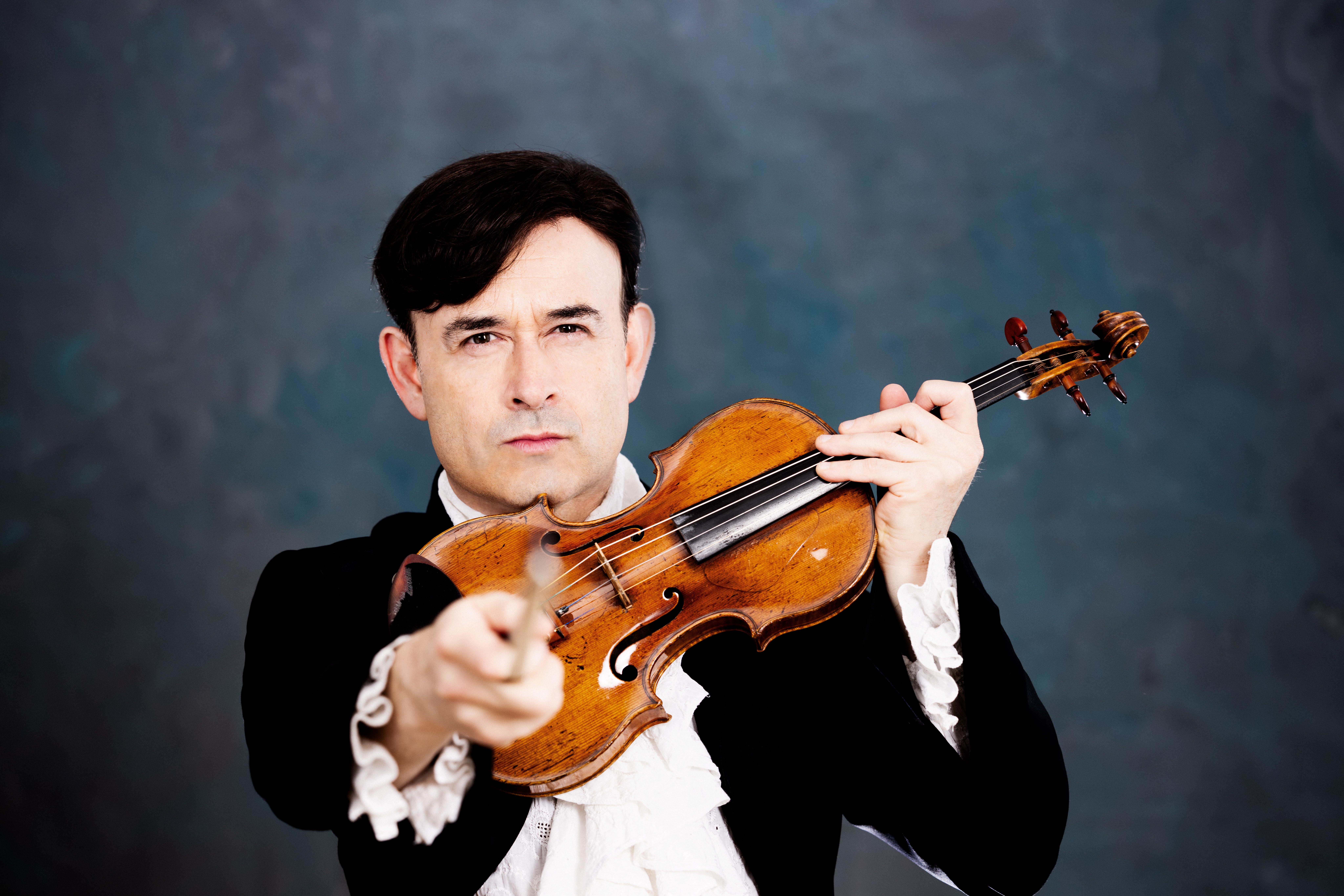
These issues were on my mind last Friday night, when the San Francisco Symphony presented The Music Critic, a deeply foolish musical entertainment created by the violinist, conductor, and comedian Aleksey Igudesman. As Igudesman led the orchestra in familiar selections by Brahms, Debussy, and others, John Malkovich — embodying the Eternal Critic — strode the stage of Davies Symphony Hall declaiming one nasty dig and full-on assault after another, all of them drawn from actual reviews of the composers in question. The parade of vitriol was occasionally amusing but mostly just tedious; at intermission I slipped away, feeling confident that if anything more interesting were to take place in my absence I would be able to bear the loss.
For one thing, there was something cowardly about the way Igudesman and Malkovich held up critics of the past to ridicule. Of course Beethoven’s contemporaries didn’t know what to make of the Fifth Symphony! It was strange, it was incomprehensible, it was like nothing they’d heard before. To imply that they were buffoons for not understanding that music on first hearing is craven nonsense.
More importantly, though, I’d heard it all before. The Music Critic owes everything from its basic conception to its specific choice of quotations to The Lexicon of Musical Invective, a collection of acerbic critical excerpts first published in 1952 by the Russian-American musicologist Nicolas Slonimsky. No credit was given, but this was essentially the live-music version of Slonimsky’s book.
Now, the Lexicon has long been popular among music-loving types. But it’s also somewhat problematic. It’s rooted in the philosophies of late Romanticism and modernism, and in particular the idea that the listeners of the future are the only true arbiters of artistic value. And although Slonimsky is correct to highlight the difficulties of encountering new music for the first time, chalking up critical antipathy to what he calls “non-acceptance of the unfamiliar,” this kind of thinking can all too easily be misdirected. Not a few composers have sought solace in the faulty syllogism that goes: Beethoven’s Ninth was decried in its own day and is now regarded as a masterpiece. Therefore my symphony, similarly decried in my lifetime, will one day be understood as a masterpiece.
Still, the Lexicon is a serious work of scholarship, with an underlying thesis. The Music Critic, by contrast, has no pretensions to seriousness of any kind, merely the trappings of public mockery. The giveaway is that in addition to Brahms and the rest of the canonical composers, the wrongly criticized artists now include Igudesman himself. In his world view, the critic of the Boston Herald who excoriated Tchaikovsky was no greater a villain than the internet commenter who wrote “this sucks” on one of Igudesman’s YouTube videos (and only the latter gets called out by name).
Earlier this year, a prominent local musician posted an essay on social media calling for a literal end to music criticism. The proximate cause was a review that included a factual error, which had been quickly caught and corrected with an editor’s note that still appears there today. But there was obviously a deeper animus at work, leading the writer to advocate a shutdown of any and all public discussion about music.
It seems perfectly evident to me that if the existence of music criticism pains you, a better option is not to read it. But there’s a darker irony here, one that also makes The Music Critic feel so inconsequential: The shutdown this writer yearns for is already well advanced.

Look around you. Right now, as we speak, classical music criticism has practically vanished from the landscape. The number of American writers and thinkers who make a living commenting on the world of music can be counted on the fingers of one hand, and outlets for their efforts drop off the map every day. The title character of The Music Critic no longer exists in any true sense; he’s a vestigial figure from the lost cultural world of the 19th and 20th centuries. A small cadre of us hang on anyway, whether because of doggedness, or a sense of idealism, or the sheer lack of any other useful life skills. But the time when every musical event, every world premiere, every opera opening, was the spark for a lively public discussion is gone. In its place we have, or soon will have, silence.
Our peevish performer has already got what he hoped for. I wish him joy of it.
Elsewhere:
Stephen Smoliar, The Rehearsal Studio: “SFS did justice to most of the music, which was played straight. They were attentive to Igudesman’s leadership, and he knew how to maintain that attention.”
Out of the pit
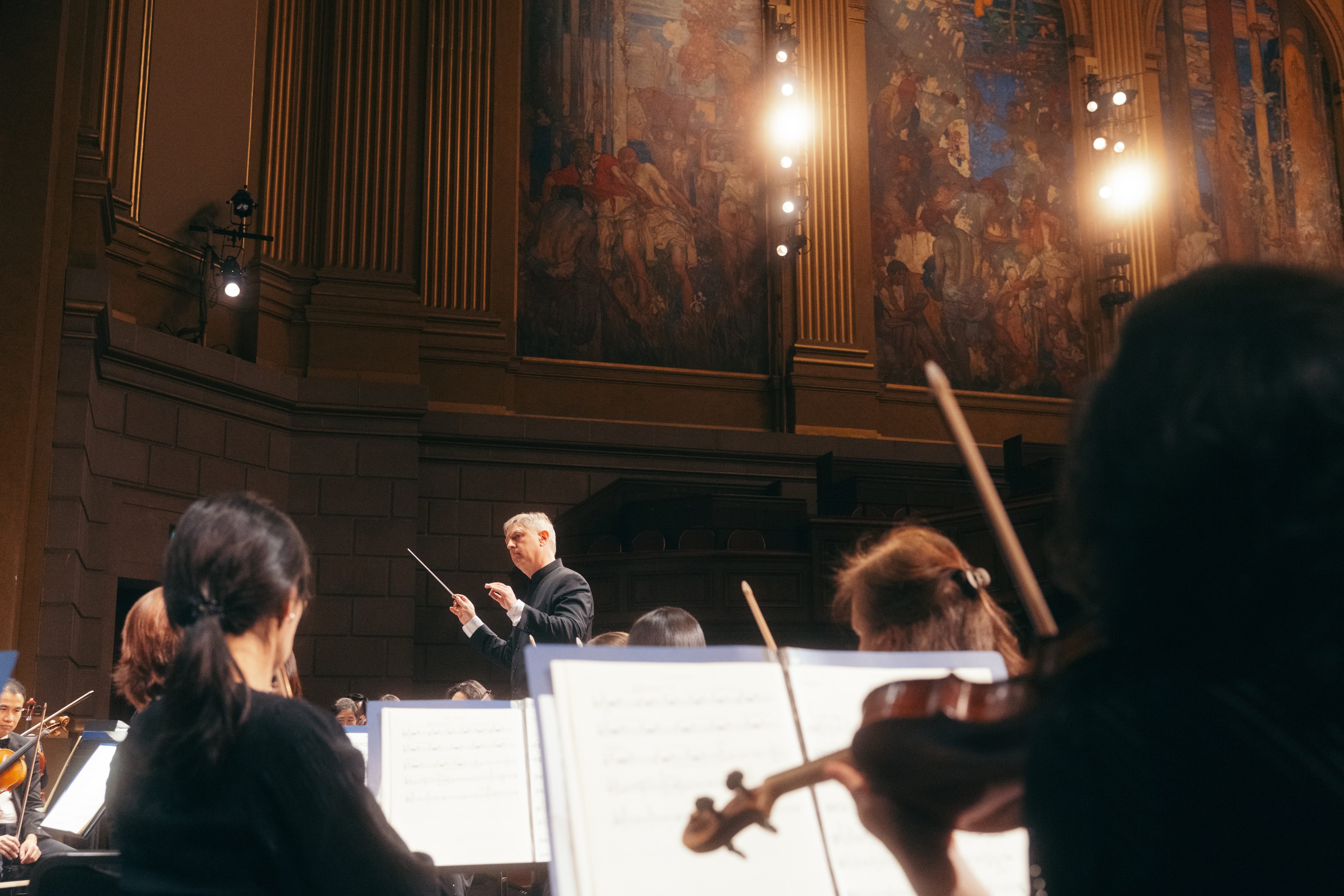
For half a century now, the San Francisco Ballet Orchestra has been a central component of the company’s artistic offerings, rendering the sumptuous Romanticism of Tchaikovsky and Delibes one night and the turbulent contemporary strains of Lowell Liebermann another. But like its companion ensemble at the San Francisco Opera, the orchestra labors in the dark, cramped pit at the War Memorial Opera House, rarely getting a chance at the spotlight.
Sunday’s superb program at Herbst Theatre offered a welcome chance to redress that inequity. Under the sharp-eyed and masterly leadership of conductor Martin West, the orchestra’s music director of 20 years, the group ran through familiar scores of Rimsky-Korsakov and Prokofiev, as well as more recent creations from such musical luminaries as Björk. The event was an eloquent reminder of how much musical excellence undergirds the company’s performances, week in and week out.

Perhaps the evening’s most heartening aspect was the chance to hear the first winner of the Legacy Orchestral Composition Contest, the company’s initiative to promote and commission emerging composers. This was an exciting new Violin Concerto by the young Chinese-American composer Bobby Ge, and the two movements the orchestra played (out of three) proved both accessible and wondrously subtle. One movement offered a brisk motoric dance, with a burbling pulse that sounded regular but seemed to add and drop beats almost at will; the second was slow, atmospheric and shimmeringly lovely. Because the prize had been so recently announced, there was no time for a single violinist to learn both movements. So the soloist duties were shared, prompting splendid turns from concertmaster Cordula Merks (who had previous shone in Rimsky-Korsakov’s Scheherazade) and associate concertmaster Heeguen Song. It’s a piece I can’t wait to hear again — hopefully next time from the pit, accompanying a new ballet.
Labors and love

Handel’s music drama Hercules, which got a thrillingly great performance Sunday afternoon at Cal Performances from Harry Bicket and the English Concert, is one of the composer’s more fiery and volatile creations. Although the libretto is in English, the piece doesn’t quite sit comfortably among his oratorios, which tend to be churchly and relatively restrained. This is a work in which strong emotions — jealousy chief among them — course through Handel’s score like liquid fire.
The mythological strongman famous for his twelve labors is the title character, but the drama is focused on two women in his life: his wife Dejanira, who switches suddenly from a loving partner to a coiled ball of envious fury, and the captive princess Iole, whose irresistible charms are what give Dejanira the idea that Hercules might have other things on his mind than military conquest. (He doesn’t.) The vocal contrast between these two characters — with Dejanira sung by mezzo-soprano Ann Hallenberg in lacerating cascades of impeccable coloratura while soprano Hilary Cronin countered with broad, placid melodies of unearthly beauty — delineated the conflict in musical terms.
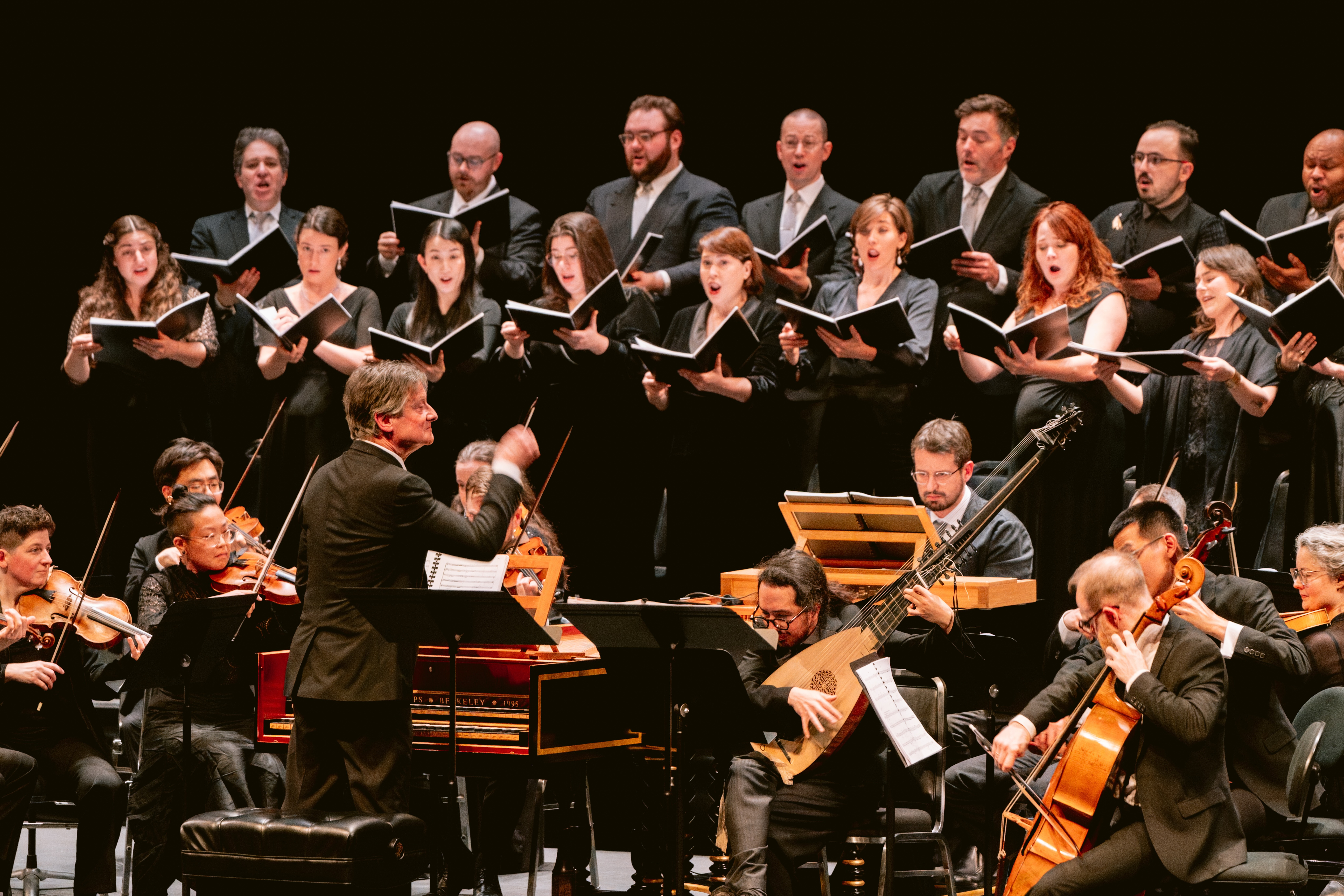
Bicket has sometimes sounded a bit staid during his previous visits here with the English Concert, but Hercules found him in elegant form, balancing vigor with clarity. The rest of the cast was equally strong, with bass William Guanbo Su as a rich-toned, robust Hercules, tenor David Portillo as his son Hyllus (who winds up getting the girl), and above all countertenor Alexander Chance as Lichas, a court functionary whose duties seem to include hanging around and letting loose skeins of ethereal melody when nothing else is going on.
Elsewhere:
Collin Ziegler, SFCV: “Despite its many showstoppers, Hercules proves that there really can be too much of a good thing. Take the inauspicious opening: after four back-to-back lukewarm arias with no sign of action, one would be forgiven for thinking, like Handel’s audiences did, that Hercules is a bust.”
Michael Strickland, Civic Center: “Artists, have hope! Sometimes it only takes three centuries for your failures to turn into successes. Such is the case with Hercules, Handel’s 1744 oratorio that bombed at its London premiere and then was revived to wondrous acclaim in the 20th century.”
Cryptic clue of the week
From Out of Left Field #310 by Henri Picciotto and me, sent to subscribers last Thursday:
Advance vocalist’s solo (4)
Last week’s clue:
In a concert hall, brass (for instance) shows strength of spirit (6)
Solution: METTLE
In a concert hall: homophone indicator
brass (for instance): “metal”
strength of spirit: definition
Coming up
• La Belle et la Bête: Philip Glass’s operatic treatment of the Jean Cocteau film classic returns to the Bay Area in Opera Parallèle’s brilliantly conceived production. I wrote about it for the Chronicle here. March 13-14, Zellerbach Hall, UC Berkeley. www.calperformances.org.
• New Century Chamber Orchestra: Music director Daniel Hope and the venerable string ensemble use their latest concert program to celebrate local voices, with commissioned works by Jake Heggie and Nat Stookey — the latter a world premiere. Hope is also in the lineup as the soloist for the Violin Concerto in A of Joseph Bologne, Chevalier de Saint-Georges. March 13, First Congregational Church, Berkeley. March 14, Presidio Theatre. March 15, St. Stephen’s Episcopal Church, Belvedere. www.ncco.org.
• Nadine Sierra: Local opera buffs will remember soprano Nadine Sierra from her days as an Adler Fellow at the San Francisco Opera, before she won the prestigious Richard Tucker Award and became an international star. Together with pianist Bryan Wagorn, she comes to Stanford with a recital program featuring music of Mozart, Puccini, Villa-Lobos, and more. March 13, Bing Concert Hall, Stanford. live.stanford.edu.
• Jack Quartet: This wizardly contemporary music ensemble makes an overdue debut at Cal Performances with a mouth-watering program headed by a world premiere by Berkeley native Gabriella Smith. Established contemporary European masters are represented on the program by Hans Abrahamsen and the late Wolfgang Rihm, and the recital includes music by composer-in-residence Keir Gogwilt and quartet violinist Austin Wulliman. March 15, Hertz Hall, UC Berkeley. www.calperformances.org.
hear, hear! Also, critics are the first draft of history. Historians mine reviews for all sorts of information about past performances and performance practice.
Correction: in Hercules, Alexander Chance played the role of Lichas, not Hyllus.