
Double stuffed
In its Berkeley premiere, a new concerto sounded rewarding but overextended

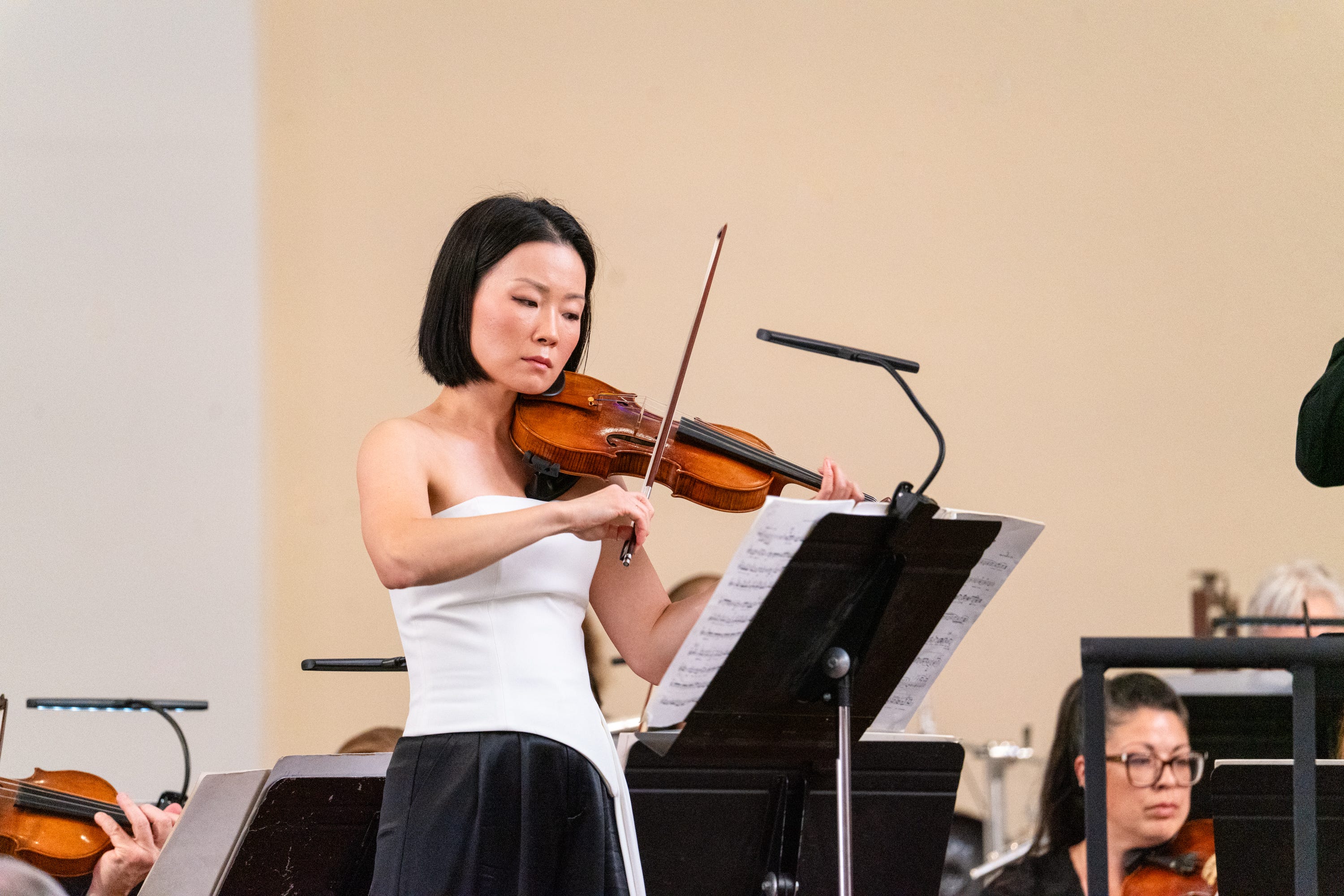
Samuel Adams’ Chamber Concerto, premiered in 2018 by the Chicago Symphony under Esa-Pekka Salonen, is packed full of fascinating ideas. Textural twists, melodic building blocks, formal innovation – it’s all there, and then some. The piece, led by guest conductor Edwin Outwater and featuring Helen Kim as the eloquent violin soloist, served as the centerpiece of Sunday afternoon’s concert by the Berkeley Symphony, and it kept a listener constantly engaged from moment to moment.
But the concerto is also, I think, insufficiently distilled. It goes on at length — five extended movements running nearly 35 minutes — and says everything it has to say in less time than that. The music lacks tautness. I couldn’t help comparing it to “No Such Spring,” the gleamingly inventive piano concerto by Adams that the San Francisco Symphony premiered in 2023, and marveling at the increased efficiency he’d evidently acquired since composing this earlier work.
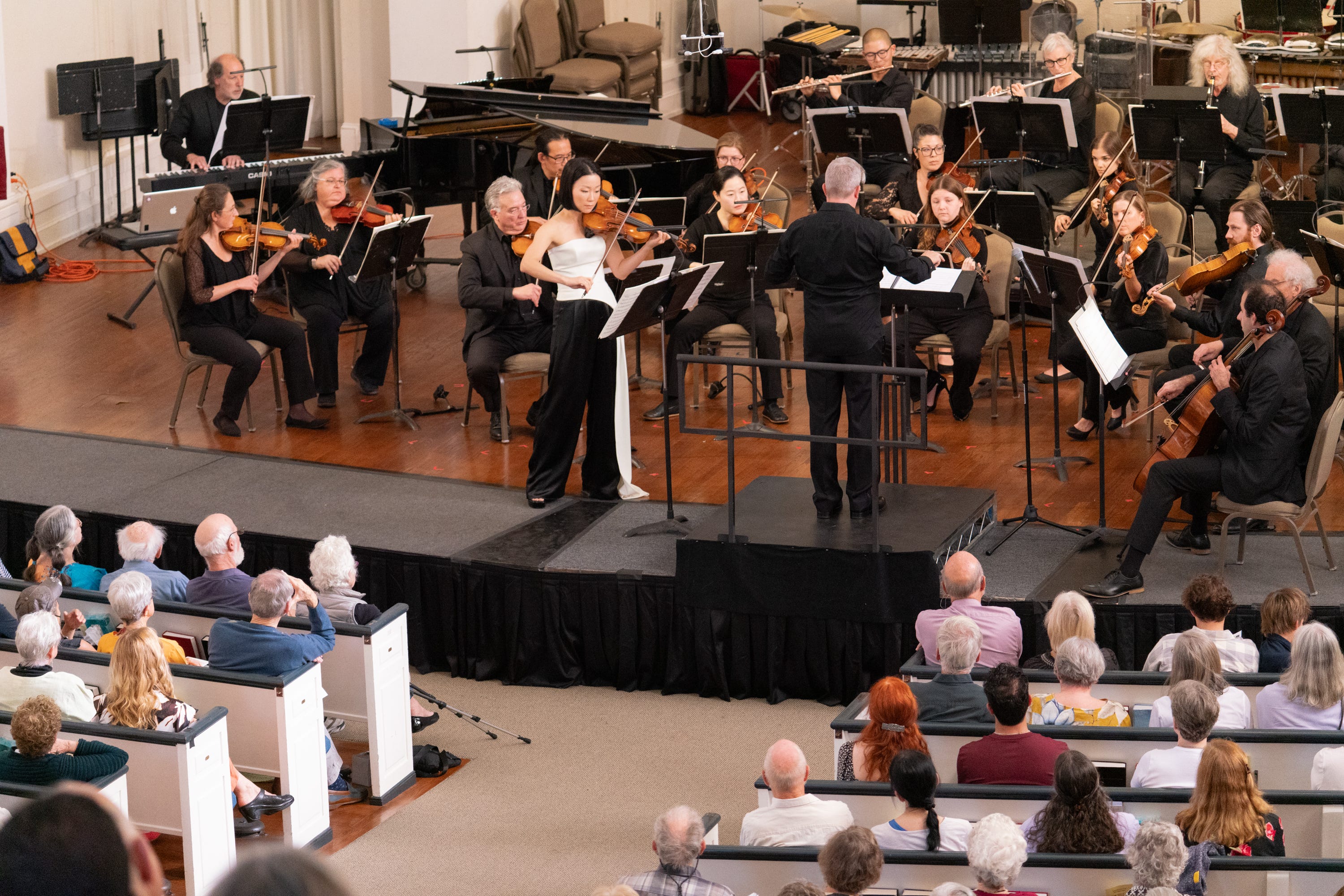
Still, if Adams’ score teeters at times, it does so atop solid foundations. The concerto is predicated on a double conception of the genre: The soloist stands in the spotlight like the confrontational protagonist in a 19th-century showpiece, but collaborates supportively with the orchestra as if taking part in a Baroque concerto grosso. That gives Adams opportunities to create both abstract musical landscapes, as in the slow, almost ghostly third movement, and to craft bursts of solo oratory for the violinist, as in the repetitive but delicately pointed final Postlude.
I was particularly smitten by the opening, in which Adams nods to Berg’s Violin Concerto by having the violinist announce the open fifths of the instrument. But then, instead of pursuing that melody, Adams begins shading in the spaces between the notes with little smears of instrumental and harmonic color. Before long, he’s created the sonic equivalent of a stained-glass window, with the violin’s theme acting as the lead framing.
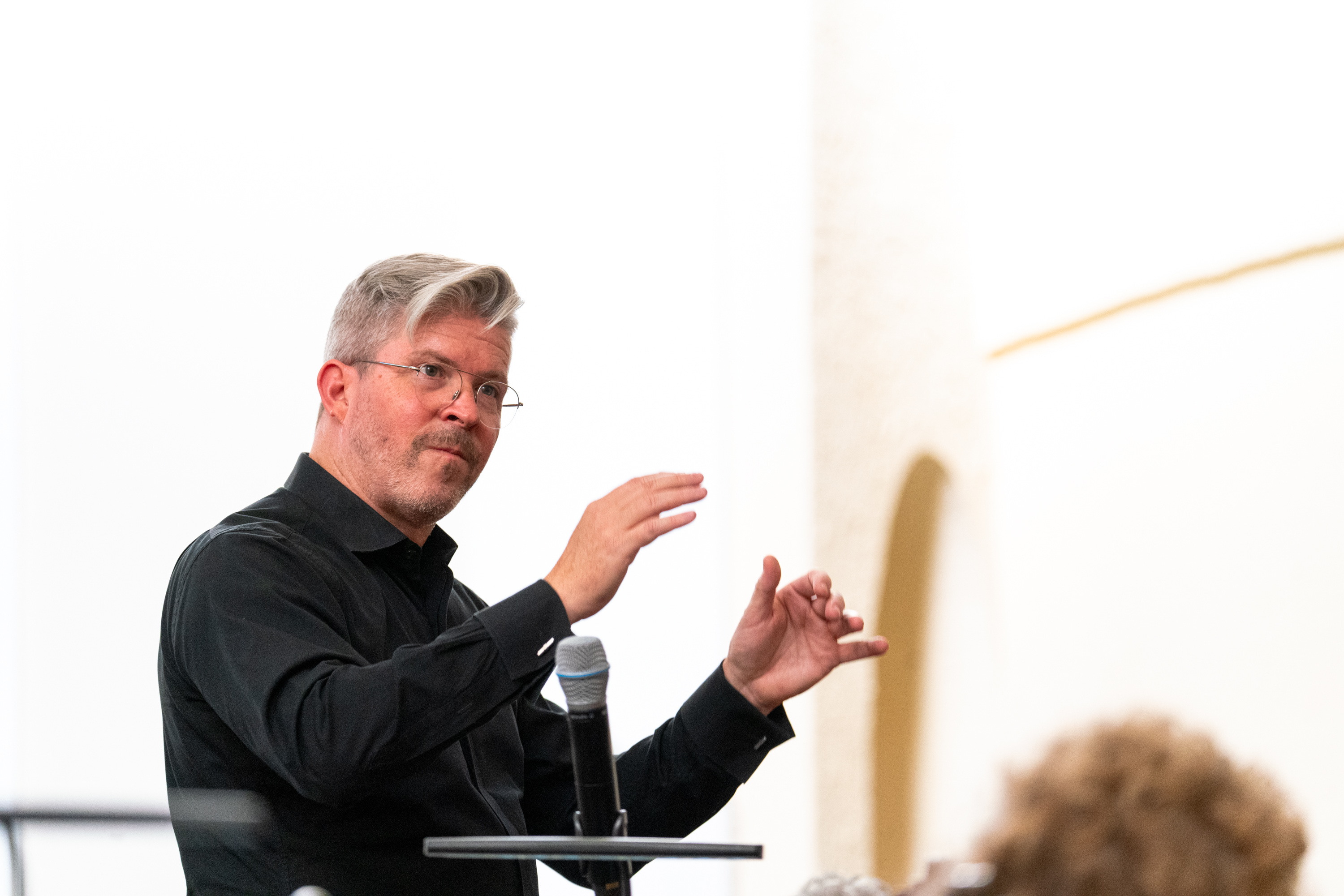
Helen Kim, who was all too briefly a luminary of the San Francisco Symphony’s second violin section before decamping to become the Seattle Symphony’s associate concertmaster, gave a characteristically sleek account of the solo part, tender yet uncompromisingly direct. (She’s also Adams’ life partner, and presumably knows well where the score’s secrets are to be found.) Outwater was a canny leader in both the concerto and Yaz Lancaster’s brief Steve Reichian curtain-raiser Gender Envy, but he proved most inspiring in the witty, shapely account of Haydn’s “Military” Symphony that took up the concert’s second half. Not every conductor gets the jokes in Haydn — many conductors are oblivious to humor in any form — but Outwater made the whole thing sparkle.
Street fighting
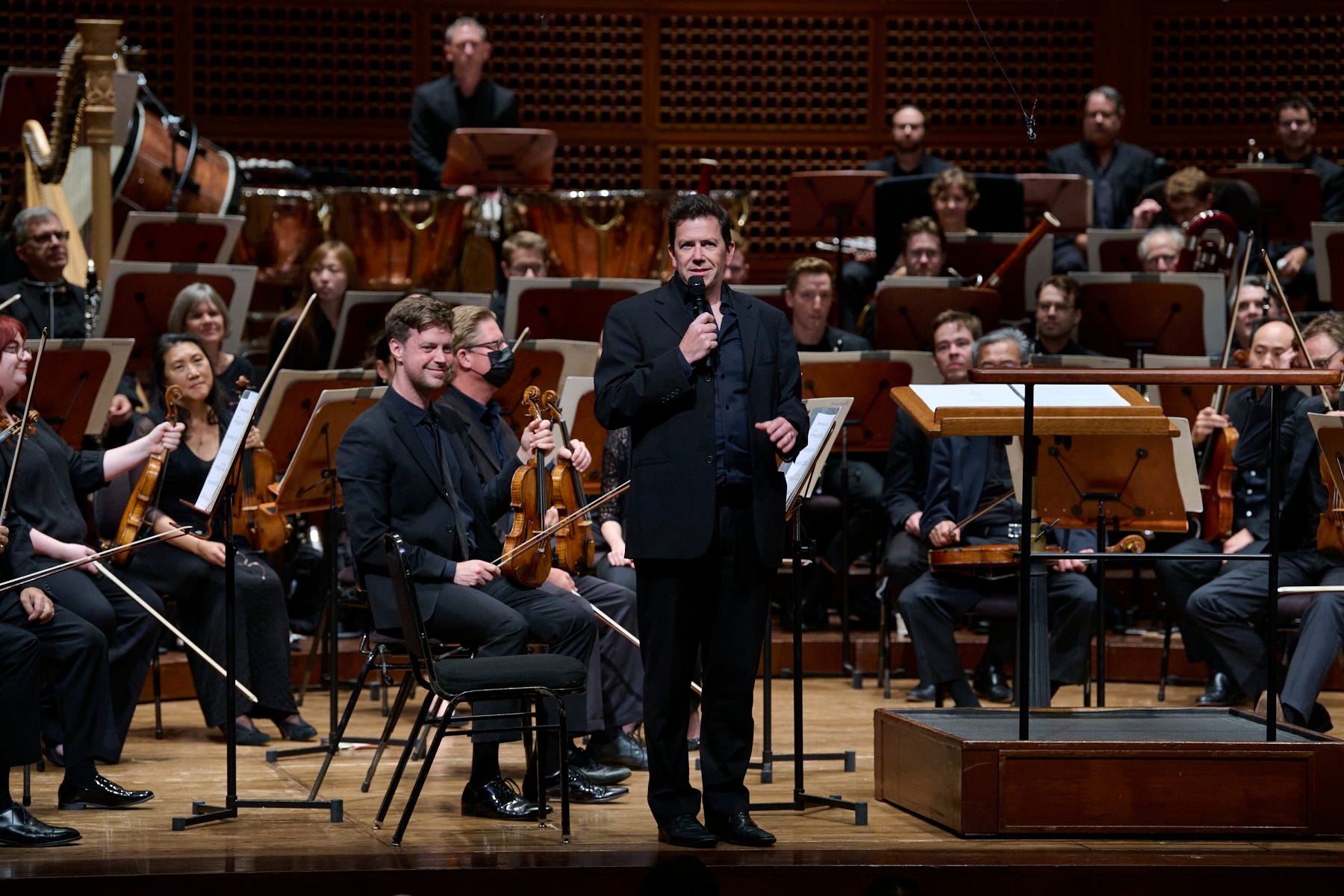
In contrast to Adams’ overstuffed opus, a concise, zippy orchestral showpiece opened the San Francisco Symphony’s program in Davies Symphony Hall this weekend. Market Street, 1920s, by Timothy Higgins, was commissioned and premiered by the Symphony under the baton of guest conductor Gustavo Gimeno, and it went down like a cool, bubbly drink on a hot summer day.
Until recently, Higgins was the orchestra’s principal trombonist, but he’s now gone off to rejoin his former horn colleague Mark Almond among the brass principals of the Chicago Symphony. The last time his music was heard in Davies was in 2021, when he was soloist in the world premiere of his own robust Trombone Concerto. Market Street, 1920s, which clocks in at about seven minutes, is necessarily a slimmer entertainment, but it’s still full of energy and excitement. That’s the underlying narrative: Two main themes, one briskly jazzy and the other stately and reserved, get into a dustup in downtown San Francisco for no good reason, then saunter off to get a beer.
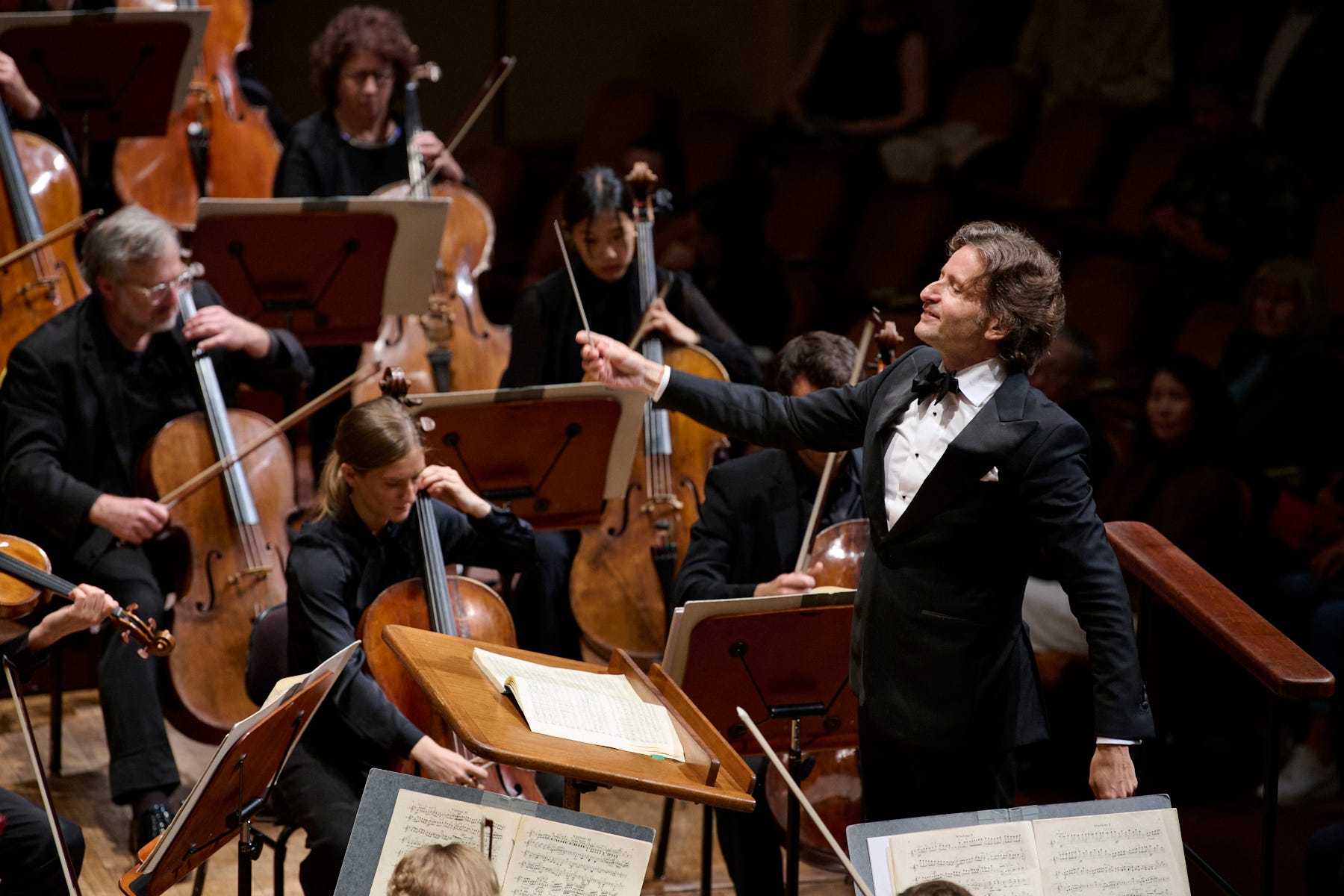
The evening’s more expansive offerings followed, including a vivid but sometimes blustery rendition of Grieg’s Piano Concerto with the Spanish virtuoso Javier Perianes as soloist. Gimeno was at his most impressive after intermission with a performance of Tchaikovsky’s Fifth Symphony that was by turns fluid and emphatic, graceful and imposing. Michael Stevens, the orchestra’s acting principal horn, brought gorgeous round tones and a nocturnal shimmer to the famous second-movement solo. Perhaps the most striking aspect of the performance was the sureness with which Gimeno marshalled the music’s flow, letting it surge to climaxes and then recede to begin gathering momentum for the next ascent. I could have listened to it for longer.
Elsewhere:
Steven Winn, San Francisco Chronicle/SFCV: “The eight-minute work came off as a leap of madcap invention, the themes cunningly overlaid and interlocked in volleys of cacophonous counterpoint. A large percussion ensemble of multiple drums, cymbals, a ratchet, xylophone and more drove home the pulsing polyrhythms.”
Stephen Smoliar, San Francisco Chronicle/SFCV: “One thing is certain: Market Street… was the freshest offering on the program. The remainder of the program consisted of what are sometimes politely called ‘chestnuts.’”
Brute farce
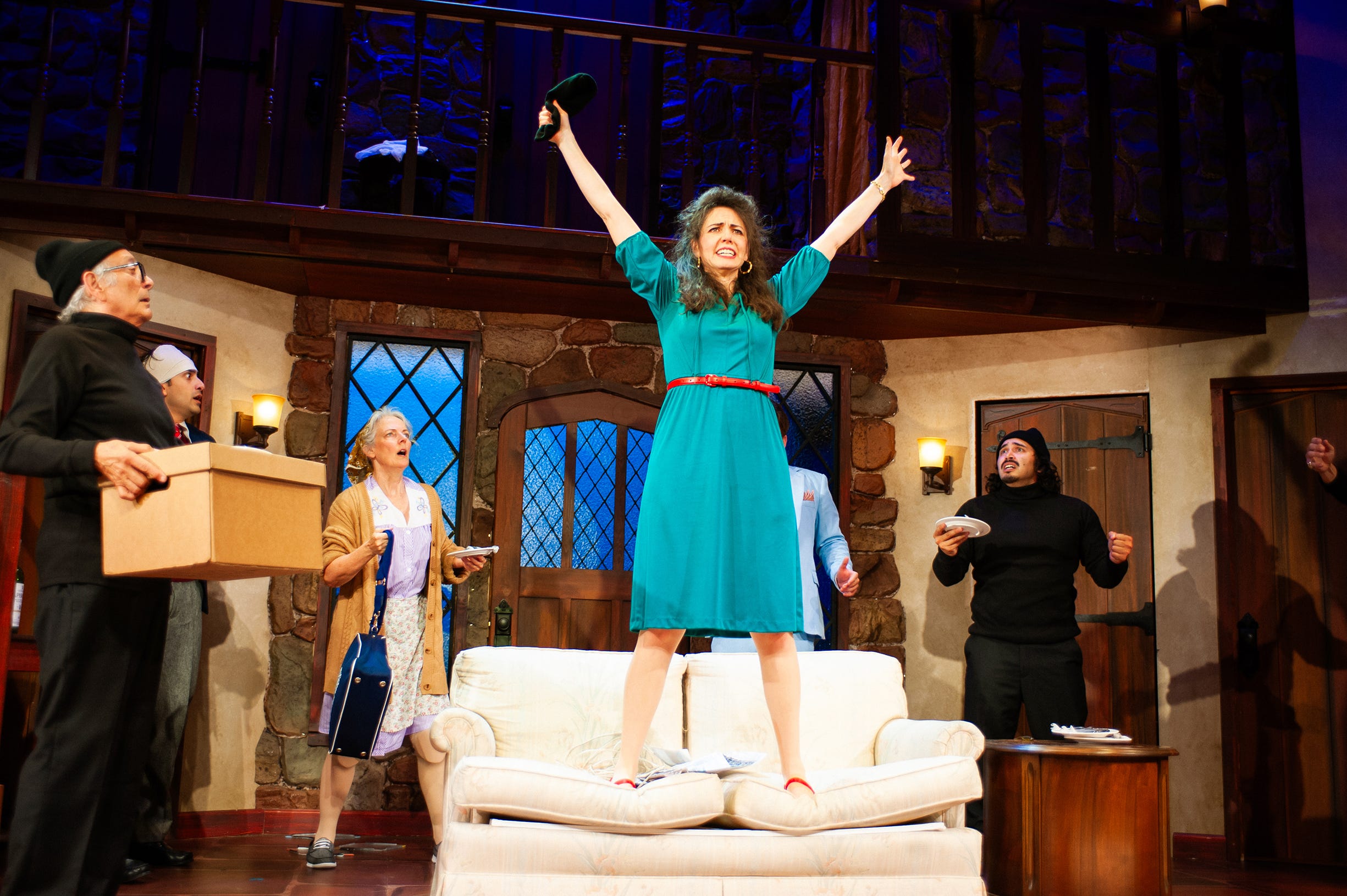
I left the Saturday matinee of Noises Off at San Francisco Playhouse full of irritation bordering on fury. I understand that Michael Frayn’s 1982 farce, in which a small theatrical company rehearses and then performs (twice!) a dopey British sex comedy, has established itself over the decades as a perennial crowd-pleaser. And there was no denying the busy dexterity that director Bill English and a terrifically gifted ensemble of comic actors had devoted to the task.
But even under these ideal circumstances, the play struck me as it has in the past: as witless, hectoring tripe. There are many complaints to be made against it, but perhaps the principal one is: Where is the humor to be found in this self-styled comedy?
Sure, there’s a lot of putative physical comedy, but most of that involves a kind of frenetic running around, hitting marks and placing props as if that were the point of the exercise. Also, there are gags of a sort. An actor loses her contact lens. Another hides whiskey bottles around the theater. The director gets a cactus in the ass. Mrs. Clackett is referred to as Mrs. Crotchet, or Mrs. Spigot, or Mrs. Crockett.
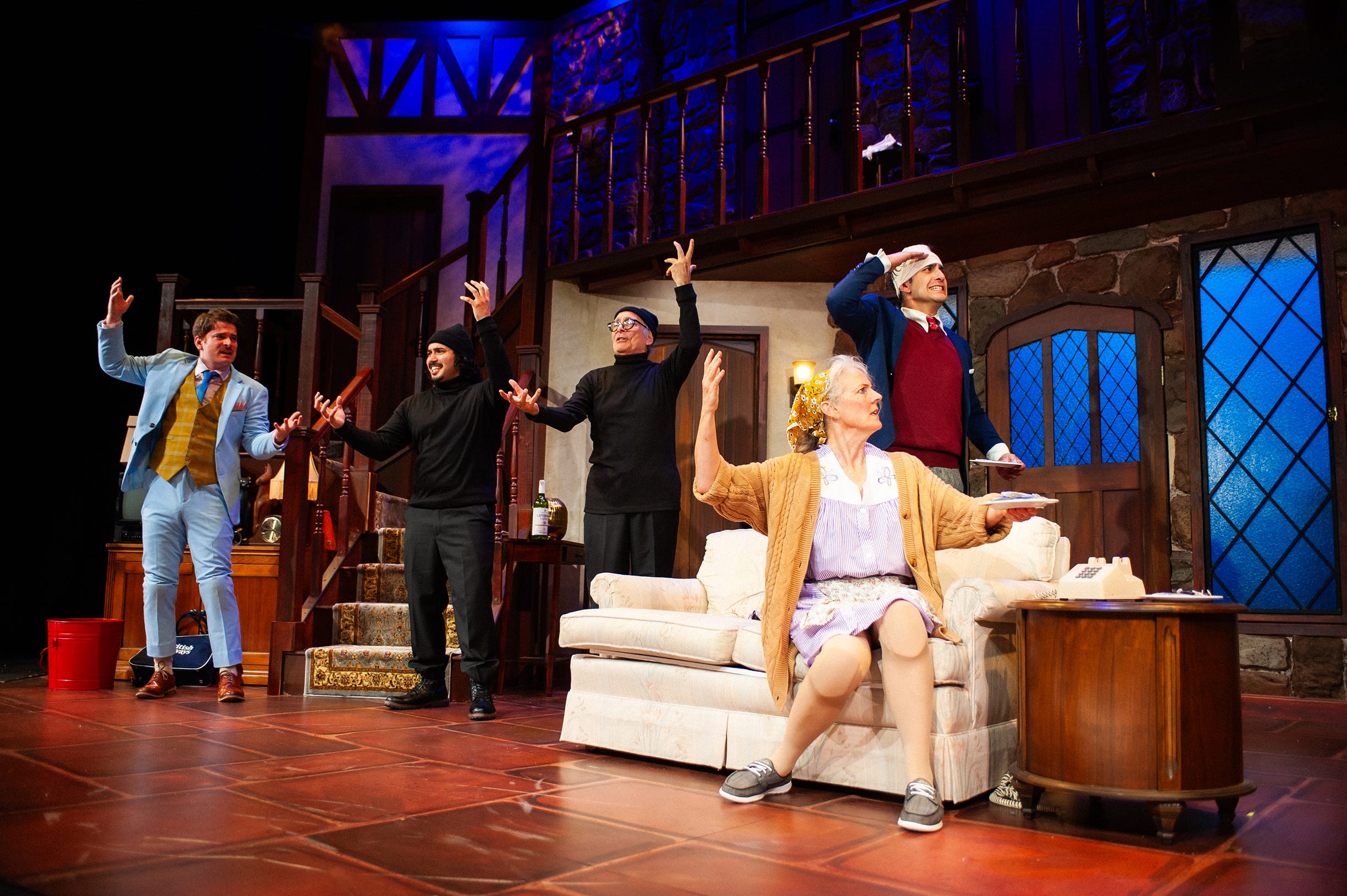
Whether any of these japes could be funny once remains an untested hypothesis, because Frayn’s modus operandi enshrines repetition above every other theatrical virtue, so nothing is ever done once. Most of the bits are repeated at least half a dozen times. I suppose there is a world in which such repetition adds to the humor, but I don’t live in that world, and I doubt you do either. This is a play that grabs you ferociously by the lapels and practically screams in your face, “Laugh, goddam you! Why won’t you laugh?”
Noises Off: San Francisco Playhouse, through Nov. 8. www.sfplayhouse.org.
Elsewhere:
Lily Janiak, San Francisco Chronicle: “Farce is supposed to be heightened past the point of reality, which is why we can guffaw when characters give their groins chemical burns or tumble down a flight of stairs. But in 2025, the most startling quality of Noises Off is that it feels downright relatable. Which of us doesn’t feel like a pawn in the game of cruel gods, slapped around according to rules we don’t understand?”
Caroline Crawford, Bay City News: “Onstage, the actors muff their lines, trip over each other and make dozens of breathless exits and entrances while proclaiming their affection for each other…Offstage it is a different matter: envy, jealousy and downright loathing present a darker side, all of it richly comical to a high degree. Even if you don’t want to laugh you just can’t help it; at a recent performance, there wasn’t a stiff upper lip in the house.”
Cryptic clue of the week
From Out of Left Field #288 by Henri Picciotto and me, sent to subscribers last Thursday:
Say “H” like “Hook,” perhaps (8)
Last week’s clue:
Foul material for writing in pen (6)
Solution: STINKY
Foul: definition
material for writing: INK
in: contained by
pen: STY
Coming up
• Kronos Quartet: As it moves into its second half-century, the influential new-music string quartet has undergone an almost complete lineup shuffle. But founder, artistic director and first violinist David Harrington remains at the helm, guiding his new colleagues through the endlessly eclectic musical world the ensemble has charted for so long. This weekend’s program includes word premieres by Victoria Shen, Dai Wai, and Lei Liang, along with music by Angélica Negrón, Philip Glass, and others. Oct. 11, Zellerbach Hall, UC Berkeley. www.calperformances.org.
• Samson et Dalila: Saint-Saëns’ treatment of this famous Biblical episode is as kitschy an entertainment as 19th-century opera has to offer, an extravaganza of tawdry romantic betrayal and sinuous belly-dancing. But the melodic writing is fragrant and often irresistible, and the piece boasts a dramatic charge that can overcome all obstacles. The production by West Bay Opera is both conducted and directed by José Luis Moscovich, the company’s general director, and features tenor John Kun Park and mezzo-soprano Kim Stanish in the title roles. Oct. 10-19, Lucie Stern Theatre, Palo Alto. www.wbopera.org.