
Joy to the world
Beethoven’s Ninth was the basis for a satisfying two-city musical double-header

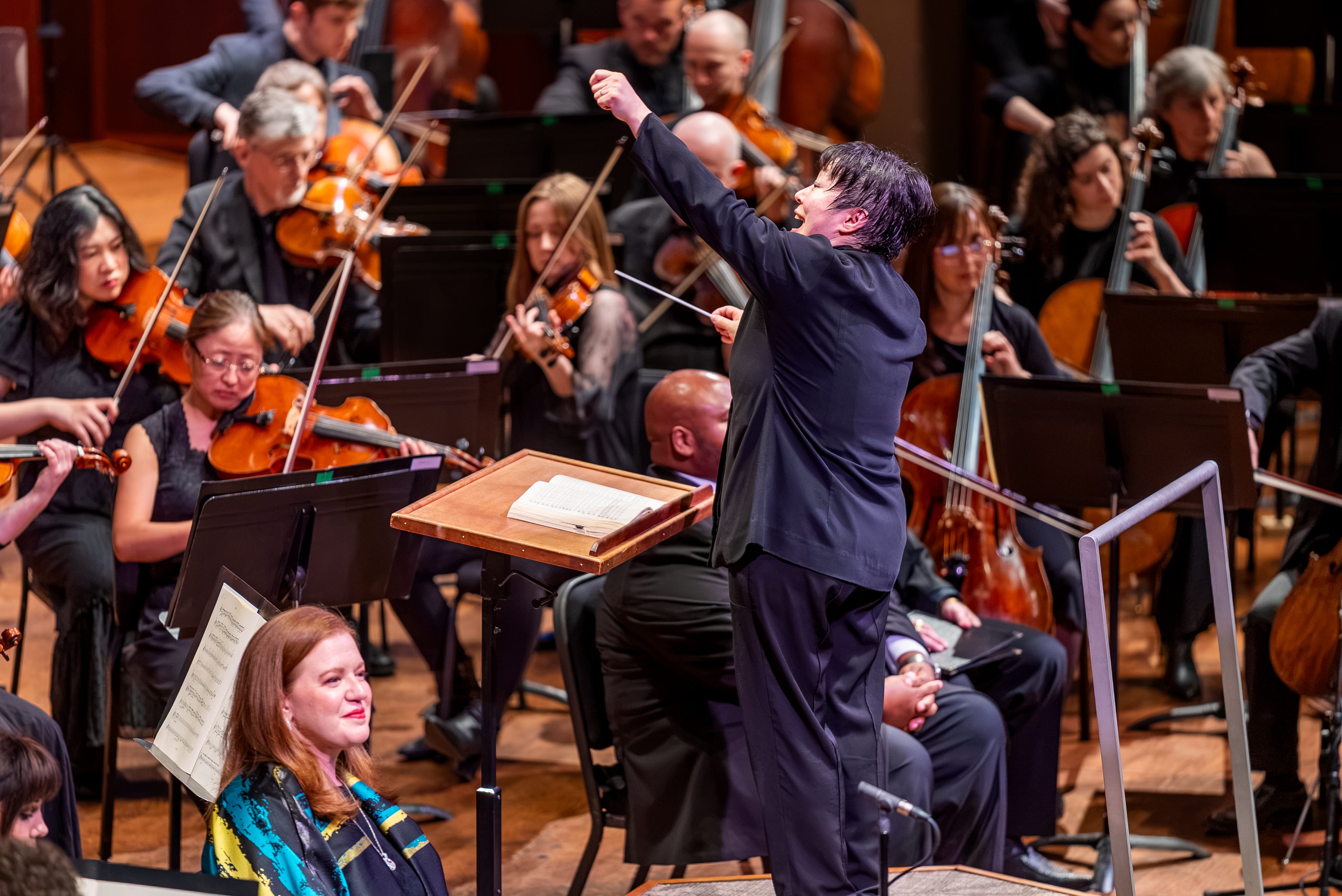
This turned out to be a good week for listening to and thinking about Beethoven’s Ninth Symphony. Those opportunities arise regularly, of course — the classical music canon is unfortunately not renowned for its range or variety — but perhaps not always in such a concentrated dose. On Thursday, James Gaffigan conducted the San Francisco Symphony in a concert dedicated to the memory of Michael Tilson Thomas, with the Ninth as the headliner. Two nights later I was in Seattle, where Xian Zhang was concluding her first season as music director of the Seattle Symphony, also with the Ninth.
Comparisons are invidious, and head-to-head matchups are almost never illuminating. So here instead are some loosely connected reflections on this juxtaposition, more or less in chronological order.
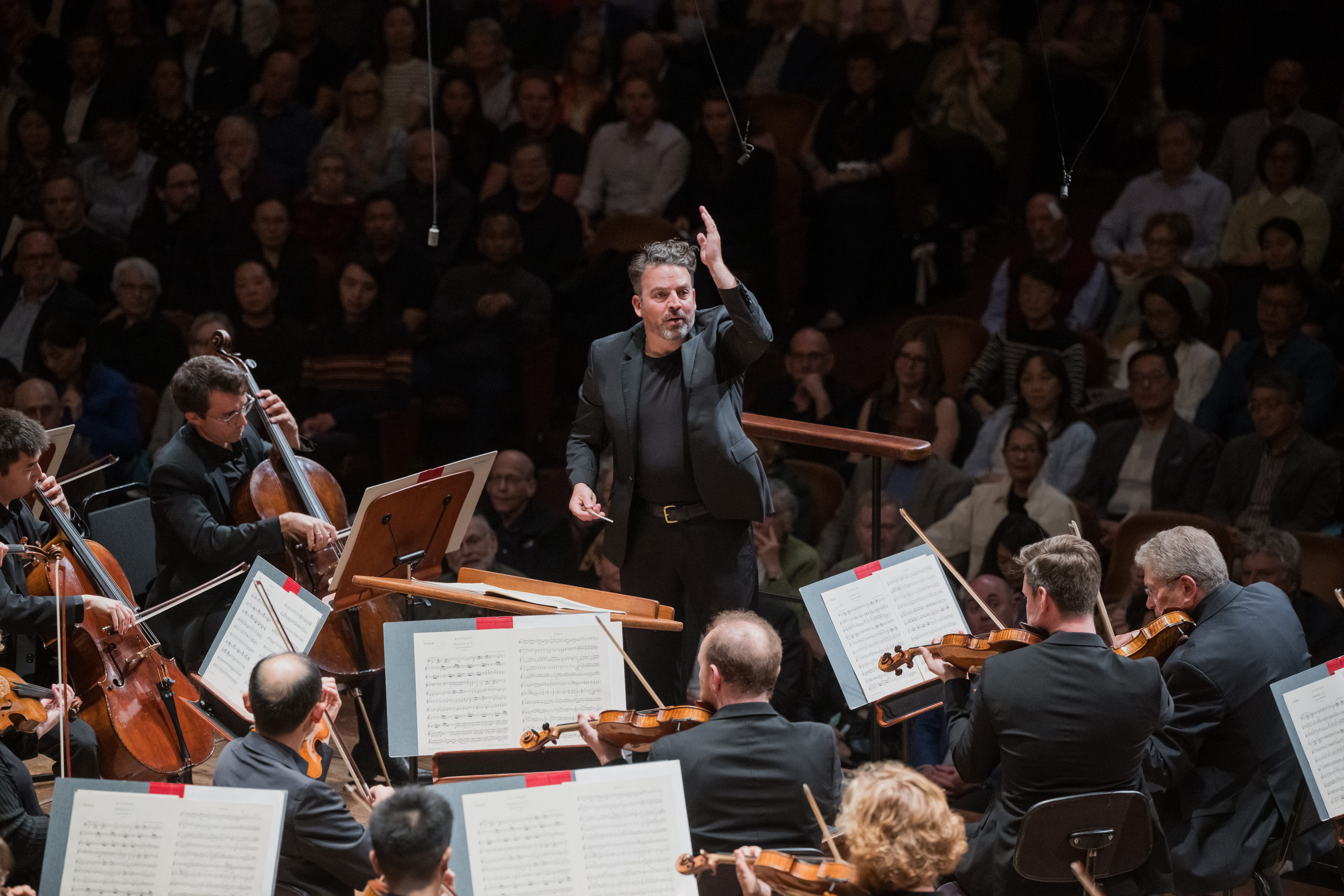
• The San Francisco concert was handsomely conceived as a tribute to MTT, who died in April. There were fond, brief speeches from members of the board of governors (chair Priscilla Geeslin), the San Francisco Symphony Chorus (alto Corty Fengler), and the orchestra (violinist Melissa Kleinbart). The performers were bedecked with subtle but visible blue accoutrements (ties, handkerchiefs, shoes) in recognition of the late conductor’s favorite color. The accompanying pieces were programmed with an eye to thematics: a brief, elegiac excerpt from Brahms’ German Requiem, Ives’ The Unanswered Question, and MTT’s ebullient 1998 party piece Agnegram.
It conjured up memories of Michael’s first subscription program as music director, back in 1995. Beethoven’s Ninth was the headliner, along with music by Ives and (of all people) Schoenberg. The program was like a little puzzle — why have I chosen these particular pieces to accompany the Ninth? what’s the secret thread? — and I knew right then that the ensuing years were going to entail a lot of thinking as well as listening. I wasn’t wrong.
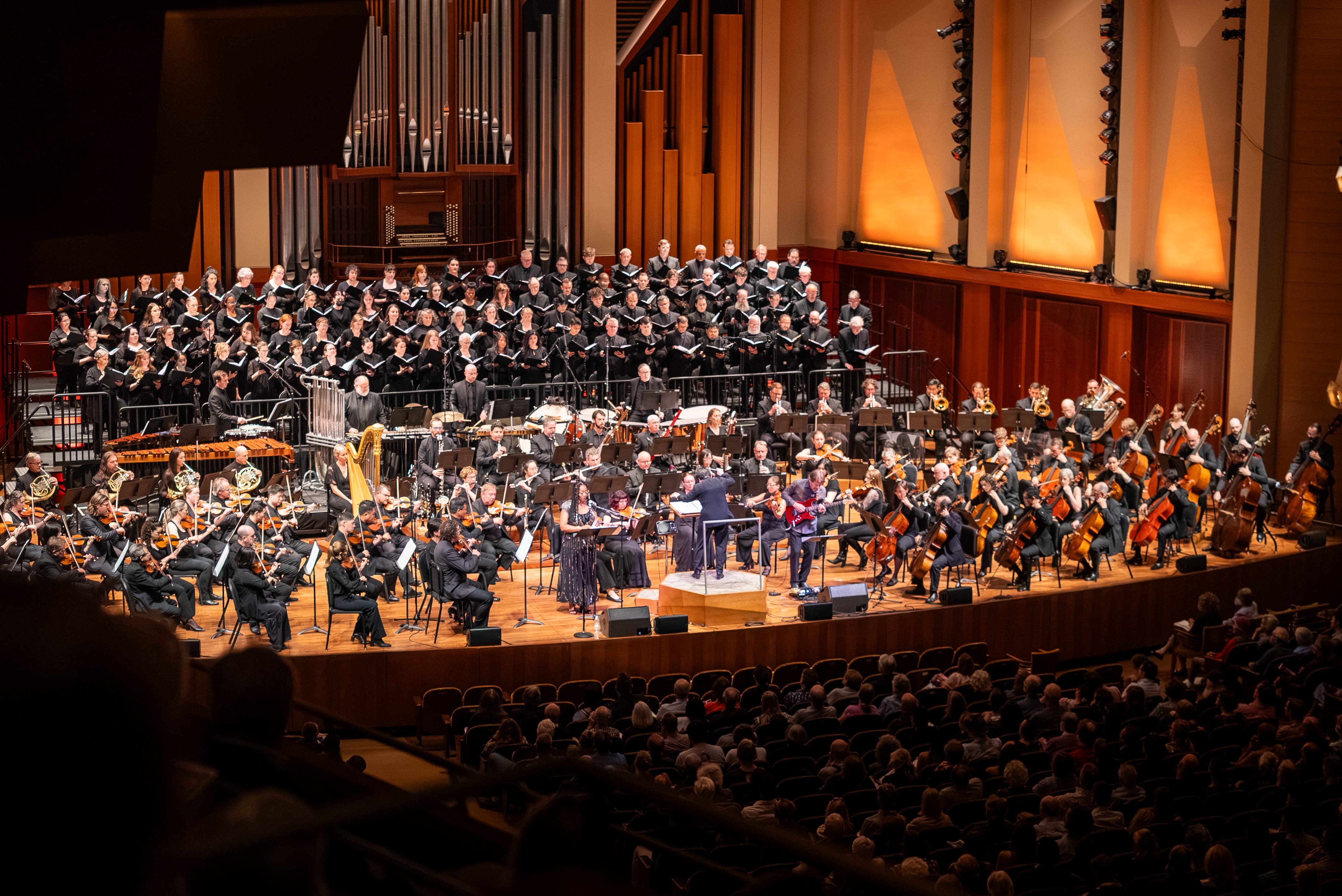
• I still think of Benaroya Hall, the Seattle Symphony’s home, as a new venue, but that’s only because I’m old enough to have reported on its grand opening during the previous millennium. My visits have been infrequent since then, and I’d mostly forgotten what a beautiful hall it is, with its big glass-fronted wraparound lobby space and its interior bedecked in various rich shades of wood.
I was glad, too, to see Zhang settling comfortably into her new post. The Chinese American conductor made a handful of exciting guest appearances in San Francisco, beginning during the tentative 2021 return from the Covid lockdown, and I was always impressed by the vigor and insight she brought to both standard and unfamiliar repertoire. Seattle’s decision to bring her on, after long periods of turbulence and unpredictability, seemed like a well-judged choice, and although one concert program is too slim a sample size to say it justified anything, my evening in Benaroya certainly seemed consistent with an optimistic reading.
• The opening moments of Beethoven’s Ninth are, or at least ought to be, an other-worldly affair. In an explicit rejection of previously standard practice, which calls for both the key and the thematic material to be firmly established at the outset of a piece, Beethoven begins with an eerie, insinuating haze, out of which thematic fragments emerge like cliffs along a fogbound shore. The gesture is startling, and it caught the imagination of later composers; it inspired the shimmery opening of Wagner’s Das Rheingold, and Mahler cribbed it unapologetically for the opening of his First Symphony.
That catch is that it’s incredibly hard to render successfully. The passage is scored for horns and strings, but if the audience hears either horns or strings that means you’re doing it wrong. What they need to sense is something else, something not even exactly audible: a chill, a presence, a sneaky tingle on the back of their neck. This week, alas, I heard strings in San Francisco and horns in Seattle; both orchestras and both conductors needed a few rehearsals, perhaps, to turn that musical content into something less literal.
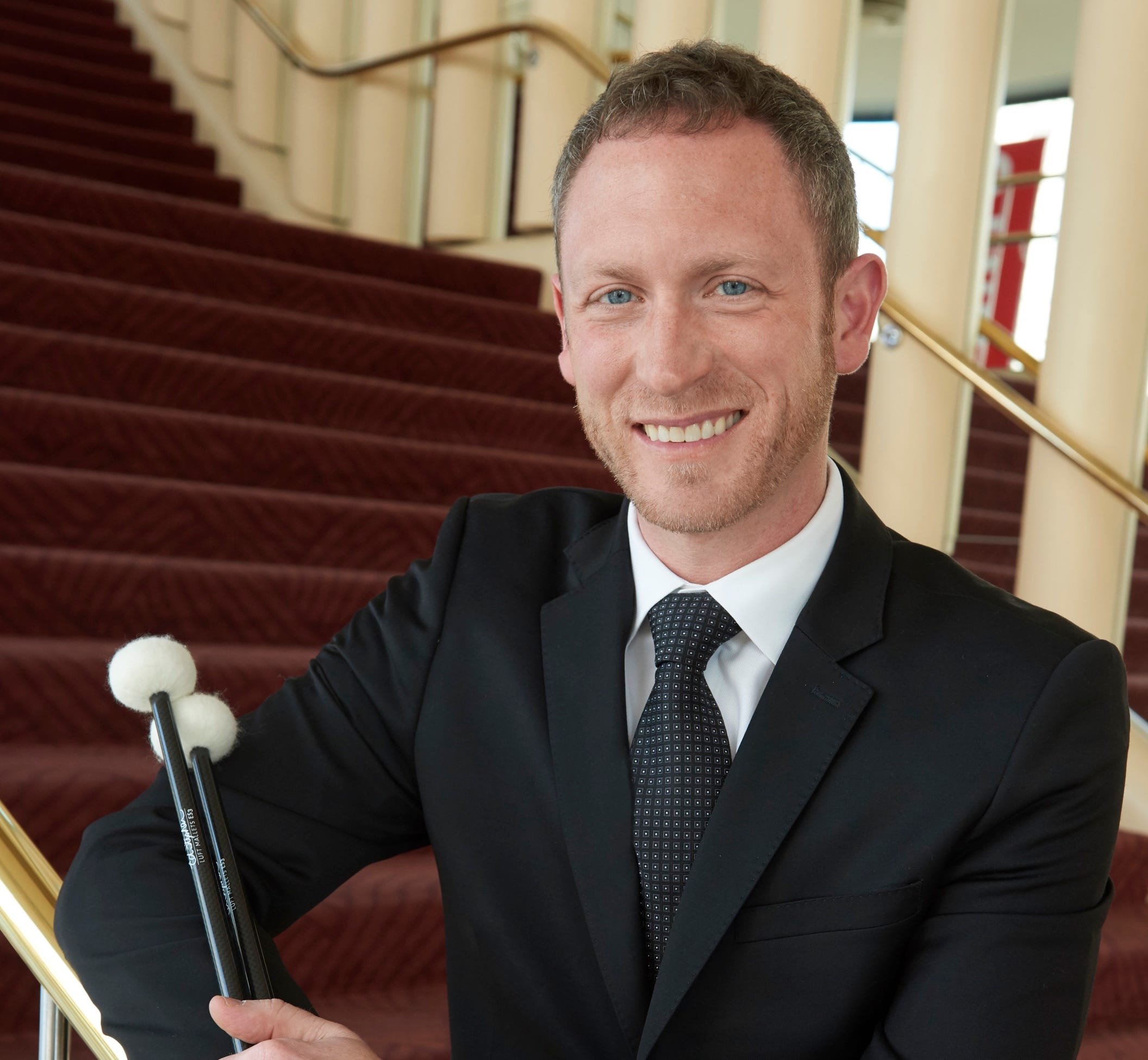
• Edward Stephan, the San Francisco Symphony’s principal timpanist, is one of the orchestra’s most reliably dynamic and musically eloquent members, but it’s rare that I appreciate his presence quite as acutely as I did during the second movement of the Ninth. It’s a fierce assignment, calling for the timpanist to volley back and forth as equals with the entire rest of the orchestra and to do it with perfect exactness at high speed.
When a timpanist doesn’t rise to the challenge, the entire main theme starts to feel a little soggy, and that in turn robs the entire movement of its force. Conversely, though, when you have Stephan on the scene, he raises everyone else’s game. In Davies, he set the bar so high in terms of explosive precision and piercing intensity that everyone else on stage had to match his energy or get left behind.
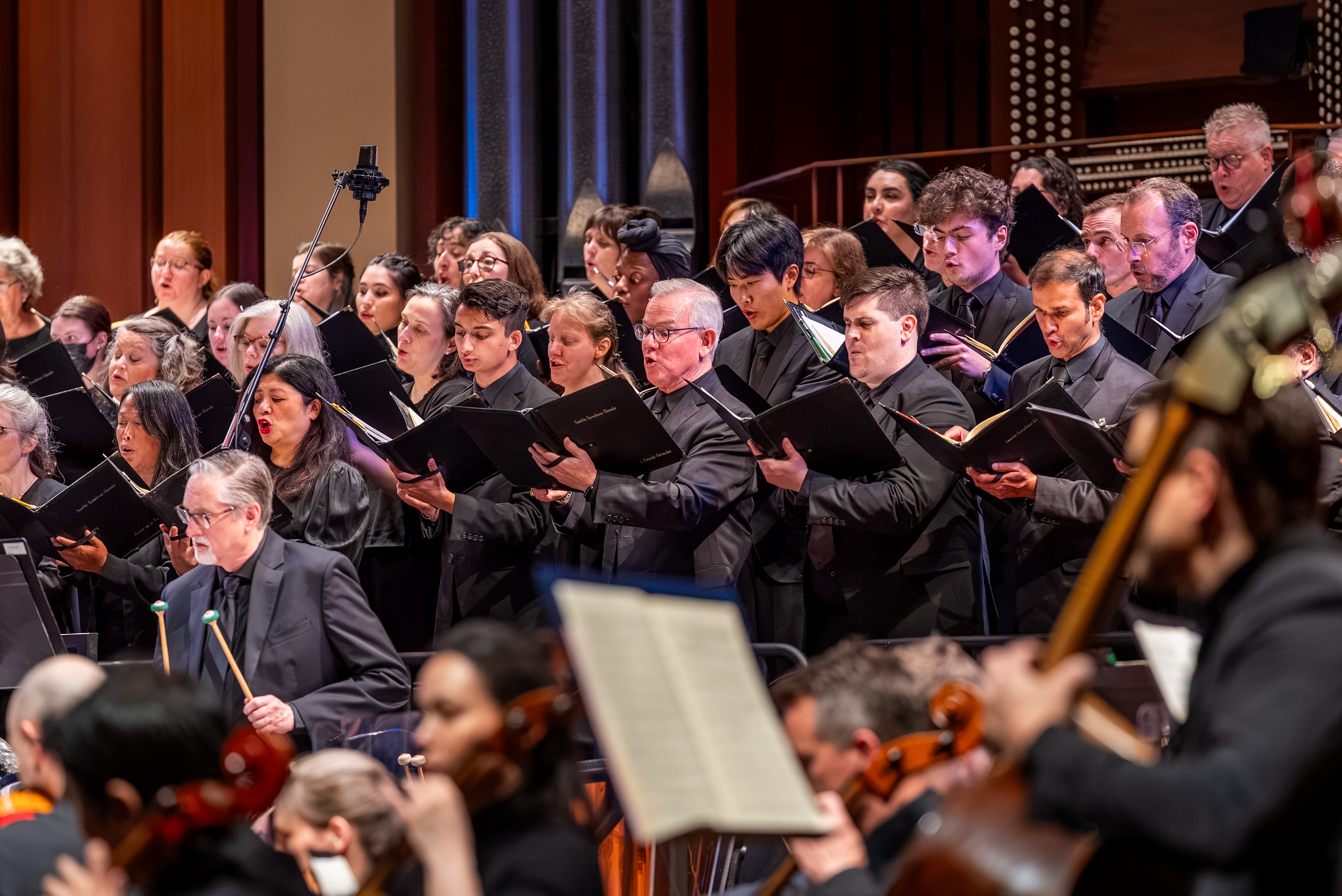
• It took me a long time to come around to the slow movement of the Ninth. If truth be told, I’m not necessarily all the way there even yet. Part of it is just the overall fact that slow movements tend to be a bit more boring than other music (hashtag NotAllSlowMovements, I’m generalizing here, but if you’re being honest you know I’m right). Mostly, though, I think it’s because the movement’s first measures are often done so badly.
A conductor whose goal is to be taken as some sort of voice of profundity treats the initial woodwind notes of the movement, and then the first four chords of the main theme, as discrete entities. Here’s a chord….here’s another one…don’t get impatient, something’s going to happen any minute now…By that time I’ve usually checked out, because I’ve heard those chords before. They’re not something you write home about.
Gaffigan, though, gave the thing a pulse, turning that potentially torpid opening into an actual melody, with rhythms you could feel and follow. It made all the difference. And Zhang went him one better, by adopting a surprisingly speedy tempo without giving up any of the music’s textural luxuriance. I loved both renditions so much that I’m trying out a new philosophy about this movement: it should be played fast. I’m sure that’s what Beethoven meant by “adagio molto,” or at least it’s what he should have meant.
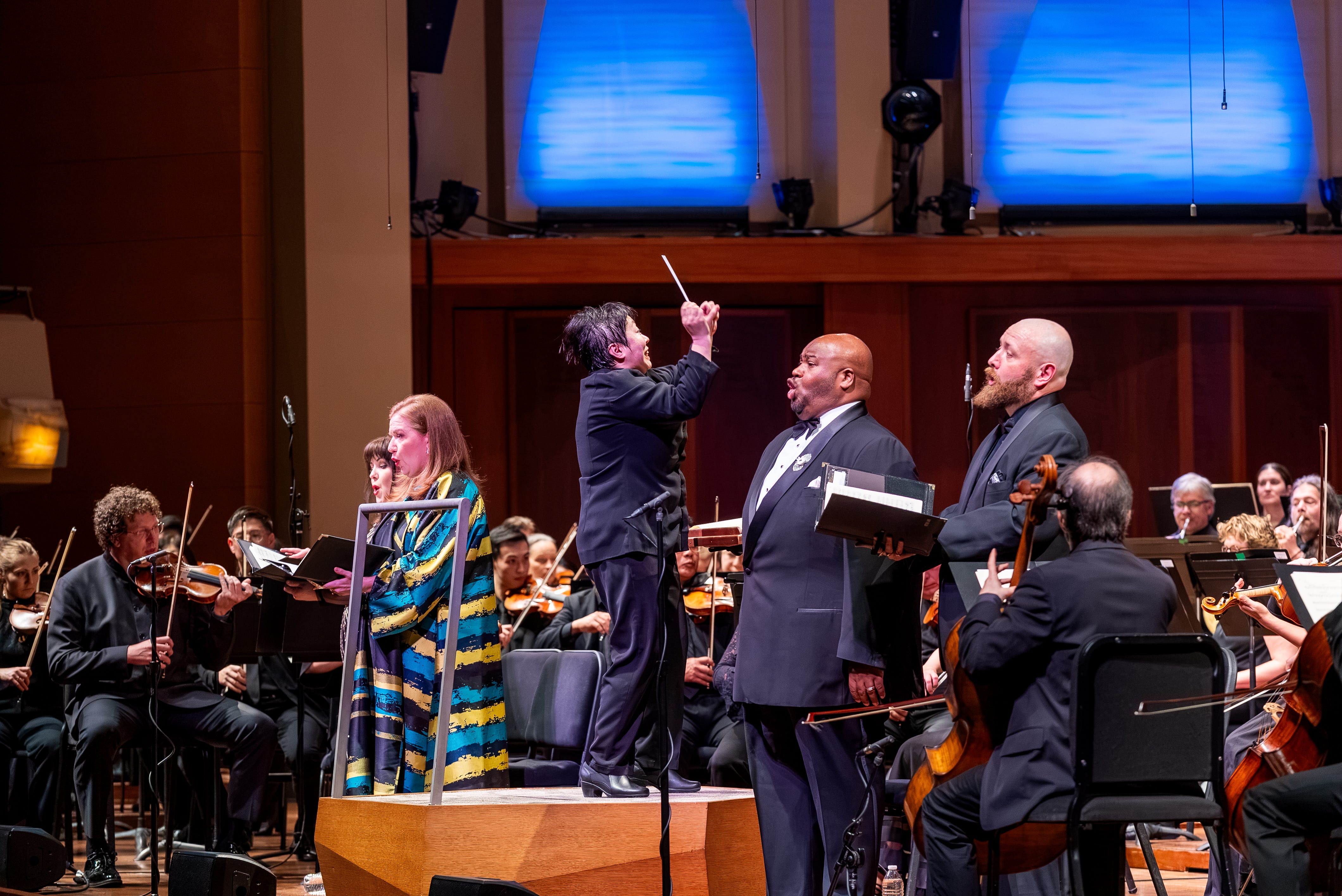
• Speaking of how things should be done: If you’ve ever seen the Ninth Symphony performed live, you will have noticed that the vocal soloists traditionally take the stage between the second and third movements, even though none of them needs to open their mouth until the middle of the final fourth movement. There’s a good reason for that. It’s because you don’t want to impede the symphony’s dramatic momentum, or delay the explosive opening chords of the finale, while we wait for singers to shuffle into their places.
When the third movement got underway in Seattle with no vocal soloists in sight, my heart sank a little. I knew there was a misstep on the way. Sure enough, the break between the two last movements, though admittedly executed efficiently enough, was still a major letdown.
The Ninth is one of the first symphonies with a dramatic plot. We hear three more or less traditional movements, and they’re great. But then, out of the blue, the orchestra throws a tantrum, and shoves all that music into a heap on the floor, like a frustrated toddler overturning a bowl of strained peas. This is not what we want! The cellos and basses struggle to make their objections understood, but they have no words to express themselves with. It’s only when the bass soloist comes in — rejecting the prior music and insisting on something more joyful — that the locus of the general dissatisfaction becomes clear. (And that, says Wagner years later, is why words and music are both necessary.)
All of this drama hinges on the impact of the finale’s first few measures. That cataclysmic dissonance makes no sense as a beginning, only as a sudden disruption. Taking a break right before it happens to let the singers file in is like pausing a scary movie at the climax to go cook up some popcorn and check your email. Sure, you can come back to it, but the thrill is gone. If it were up to me, conductors would just play the two movements without so much as a pause.
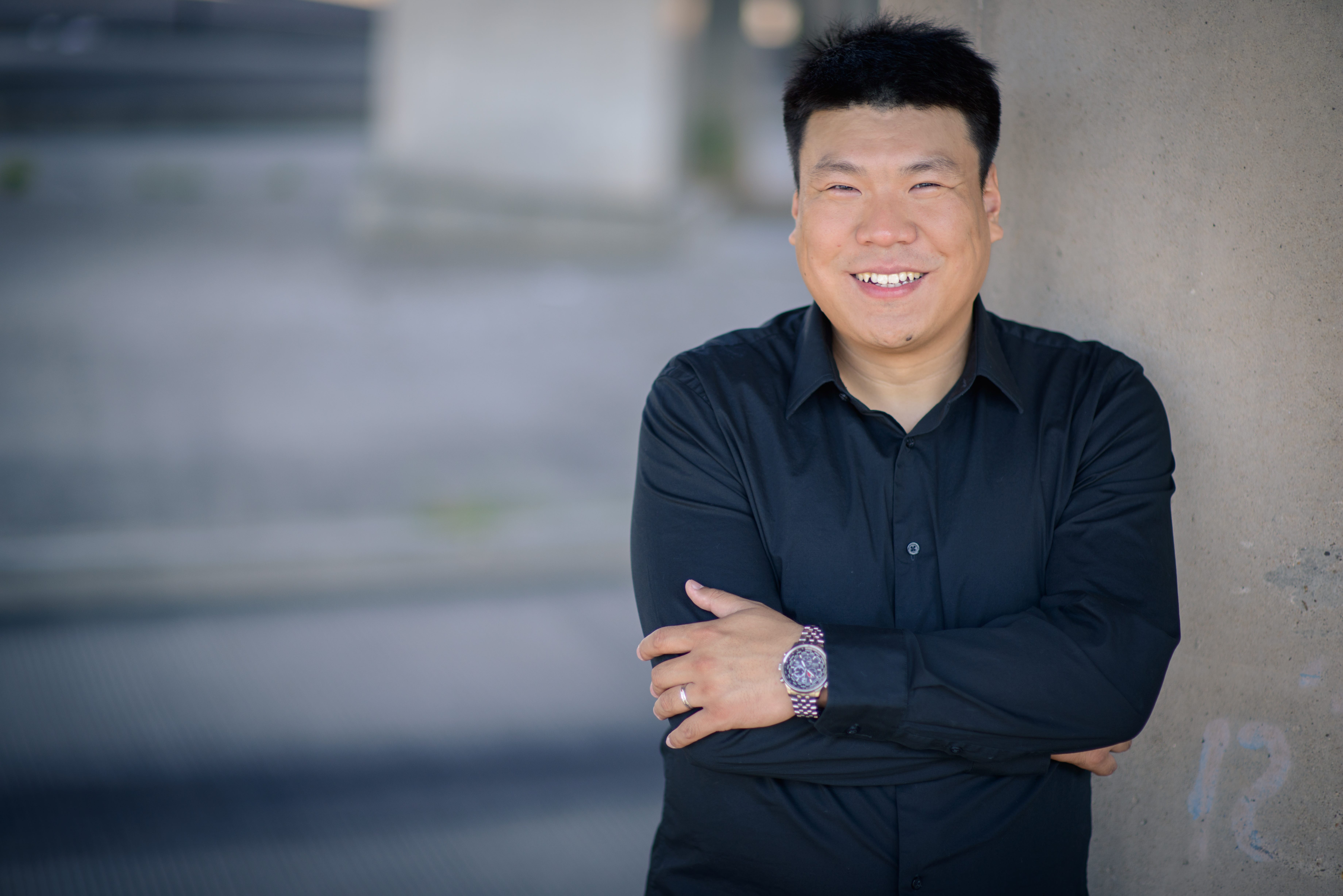
• In San Francisco, the bass soloist was Peixin Chen, whom many of us remember from his wondrous back-to-back San Francisco Opera appearances last fall in Rigoletto and The Monkey King. Yet neither of those successes quite prepared me for the glory of Chen’s performance on this occasion.
I think we can all agree that the bass solo in the Ninth nearly always sucks in performance. I don’t blame the singers so much as Beethoven, whose understanding of the human voice and how to write for it was, let us say, suboptimal. Some singers have the vocal power to put across this passage with the requisite presence; some can sing the passagework accurately and without smudging; some can make something compelling of the drama. But all three at once? Nope nope nope.
Chen is an exception. His call to attention (“O Freunde!”) was a weighty and stentorian thrill, as everything else about the performance seemed to recede into the background. He ran through the ensuing melody with astounding specificity, sounding each note clearly and helping them coalesce into meaningful phrases. And he gave the passage the theatrical charge it needed, establishing himself as the hero who would sweep away the effeteness of the first three movements and usher in a new age of joy. It was magnificent. The only downside is that I don’t ever want to hear the solo sung poorly ever again.
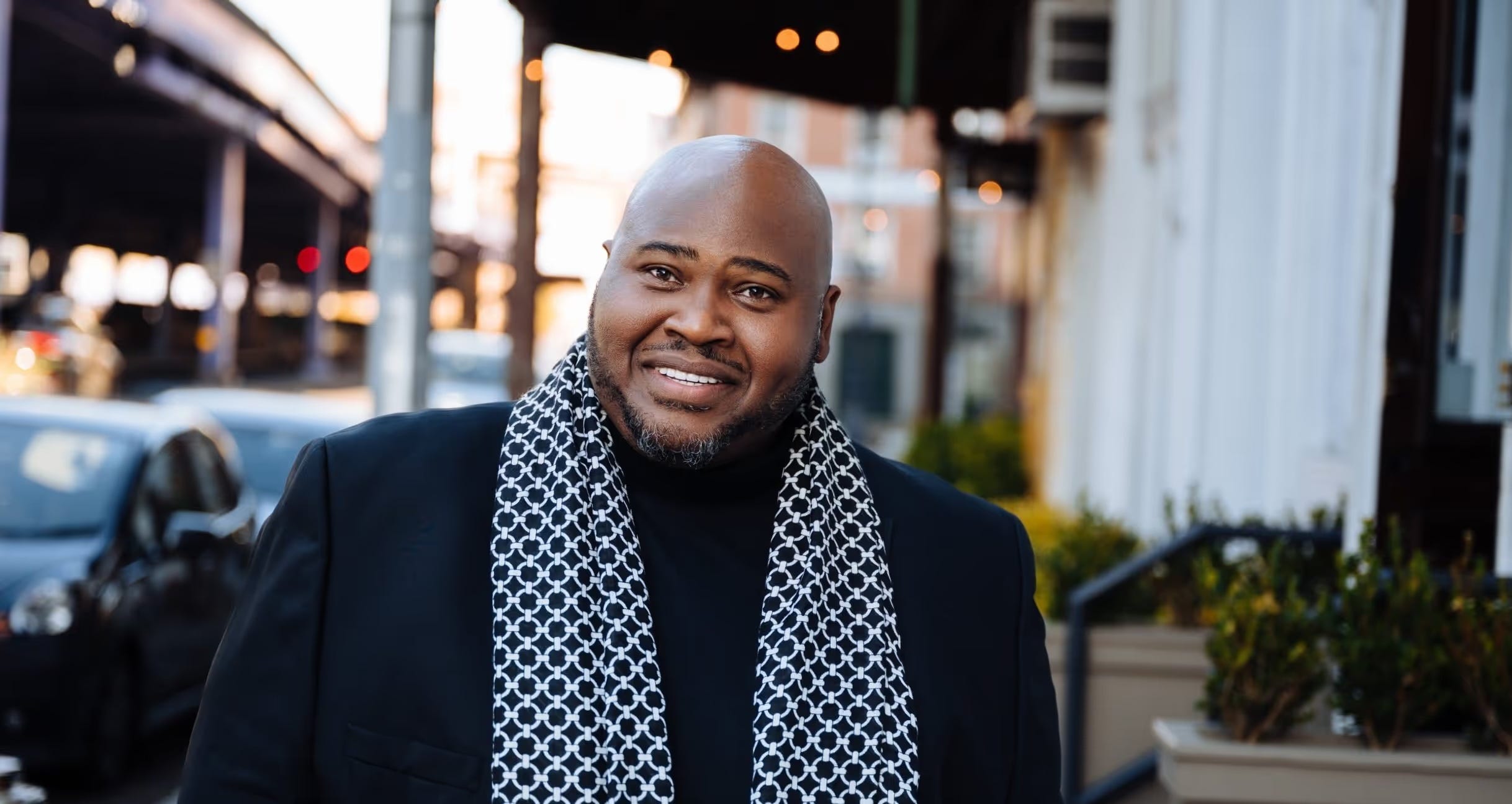
• In Seattle, meanwhile, the vocal standout was tenor Issachah Savage, who came in as a last-minute substitution and immediately put his stamp on the entire proceedings. Savage was in the Merola Opera Program in 2013, and although I don’t think I’ve heard him sing since then, his presence that summer was so electrifying that I snapped to attention on seeing his name in the program.

Savage did something incredibly simple and effective that turned out to be a game-changer: He memorized his music. That meant that during the weird military march preceding the big tenor solo, he was free to listen along with the audience, to emote, and to establish an expressive presence — making gestures of surprise, or raising a finger to the audience as if to say, “I have something important to tell you about all this when it’s my turn to sing.” That singing, when it arrived, was not only tonally resplendent but full of emotion in a way that felt almost unprecedented. Sure, vocal soloists talk about joy, but they’re generally just mouthing Schiller’s words. With his hands, eyes, and body freed from the score, Savage became an incarnation of joy. It spilled out through every note and every measure. It was like nothing I’d ever heard.
And I thought: Why doesn’t everyone do this? We’ve all become accustomed to the convention that the vocal soloists in a choral work are allowed to keep their little loose-leaf binders in hand throughout. But why should we settle for that, when the alternative can be so glorious? Any one of these solo assignments would be a cinch to memorize compared to the operatic roles these artists regularly take on. Yet there were soloists in these performances who kept their eyes glued to their music throughout, and as a result turned in performances that felt disconnected and irrelevant. If they had learned their music and tossed aside their scores, they might have been able to communicate as freely and vibrantly as Savage did. There’s a lesson here for everyone.
Elsewhere:
Collin Ziegler, San Francisco Chronicle/SFCV: “Gaffigan’s attention to rhythm and musical structures, for all the light it cast on the construction of the symphony, flattened what should be a sharp drama. The thunderous first movement lacked range; the scherzo, without shaping, got boring fast; and the ‘Ode to Joy’ itself even became plodding.”
Cryptic clue of the week
From Out of Left Field #325 by Henri Picciotto and me, sent to subscribers last Thursday:
Idea you once got: replace oxygen with hydrogen (7)
Last week’s clue:
River where you might refill your Cup o’ Noodles? (7)
Solution: POTOMAC
River: definition
where you might refill your Cup o’ Noodles?: POT O’ MAC
Coming up
• San Francisco Opera Pride Concert: For the second consecutive year, the company offers a musical celebration of queer composers and performing artists. Robert Mollicone, the newly named music director of the Bay Area Rainbow Symphony, conducts a program featuring Nikola Printz, Melody Moore, and Reginald Smith Jr., with Sapphira Cristál returning as host. June 26, War Memorial Opera House. www.sfopera.com.
• Other Minds: The indefatigable Bay Area contemporary music outfit offers a centenary tribute to the composer and thinker David Tudor — a fixture of the New York School, longtime collaborator with John Cage, and an early pioneer of live electronics. The weekend features two concerts devoted to Tudor’s music, as well as a workshop and discussion of his electronic innovations. June 26-27, Littlefield Concert Hall, Mills College, Oakland. www.otherminds.org.
Really nice writing. Thanks.
thou-gHt