
Let us spray
An exuberant and energetic production of "Hairspray" filled the San Francisco Playhouse with joy

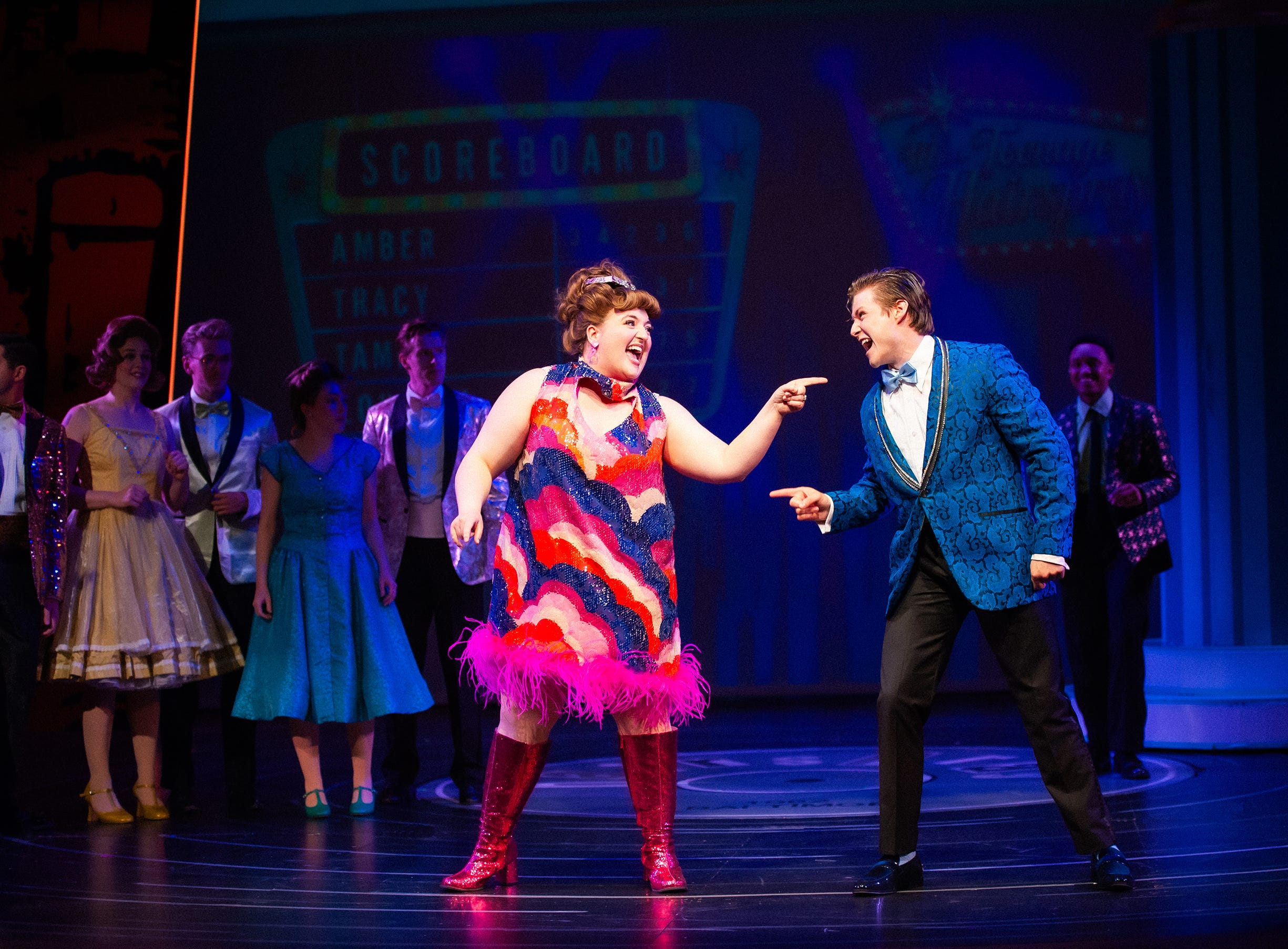
There was a prompt going around the social media site Bluesky the other day, asking people to propose examples of adaptations that are better than the works they’re based on. The timing was opportune. I had recently come from the opening night of San Francisco Playhouse’s thrillingly fine production of the musical Hairspray, and in addition to luxuriating in the good feelings engendered by this celebration of teenage hormones, body positivity, racial equality, and infectiously uptempo music — feelings that lingered for days after I left the theater — I thought a lot about the ways in which the musical had transformed and improved upon the campy 1988 John Waters movie of the same name.
Waters’ movie, which I had watched for the first time earlier in the week as preparation, turned out to be a buoyant package of joy. The avalanche of formulaic early ’60s pop hits — some of them well known, many seemingly pulled out of a virtual cutout bin — comes at you in a dizzying onslaught of delight. Ricki Lake’s irresistible turn as the pleasingly plump, pro-integrationist teen dance queen Tracy Turnblad certainly justifies the making of whatever career she subsequently landed in. Divine takes two roles — one female, one male — onto their capacious shoulders and turns them both into virtuoso displays of fabulous weirdness.
What the film lacks, though, is structure: a plot, characters who matter, some thematic consistency (the consideration of race relations in 1960s Baltimore drops by relatively late in the proceedings, in a way that feels tacked on.) It’s largely a jumbled display case for the uneasy products of Waters’ imagination.
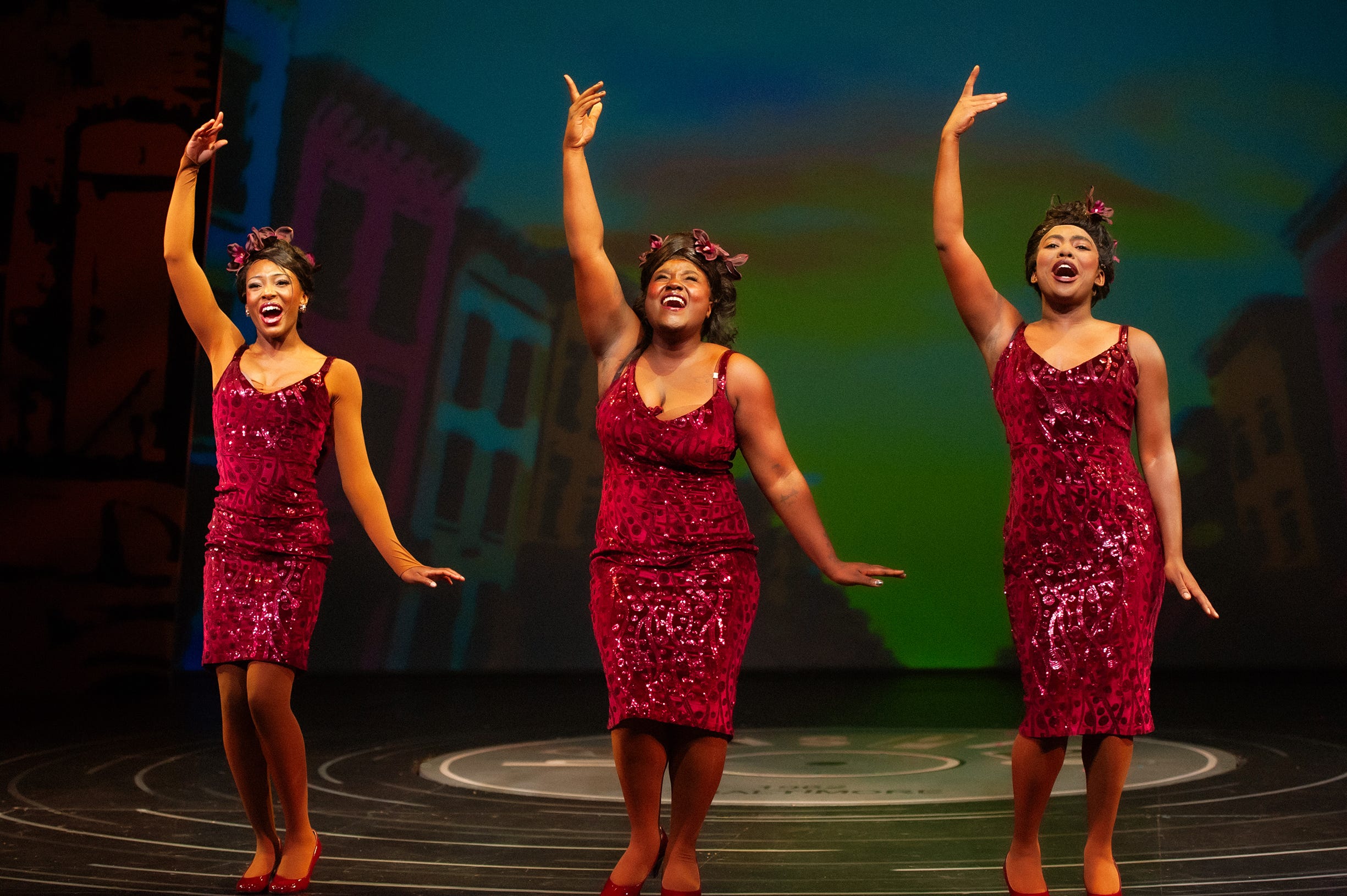
The musical, which features stylistically ingenious songs by Marc Shaiman and Scott Whittman, and an endlessly entertaining book by Mark O’Donnell and Thomas Meehan, sets out to polish those knickknacks and get them relating to one another in a meaningful way. Like Mary Poppins imposing order on a messy nursery, the creators go through Waters’ film rearranging the elements, jettisoning the ones that get in the way, and ensuring that a few key points — chiefly those pertaining to race — make their way consistently to the forefront.
This is in keeping with the organizational principles of Broadway musicals, which don’t allow for loose ends. If a theme or character or scene is important enough to include, it’s important enough to devote a song to it; and if there’s a song about it, it damn well better matter. Hairspray the music includes some wonderful throwaway material (I particularly liked the jokes about Debbie Reynolds, Nikita Khrushchev, and H&S Green Stamps, the ones that made me want to growl “go ask your grandpa” at the youngsters in the audience), but none of it impedes the pace of the show, which is sleek and feverish.

The Playhouse production, nimbly directed by Bill English with music direction by Dave Dobrusky and choreography by Phoenyx Rose, leans into the show’s breathless effervescence. Actors rush on and off the stage with clockwork precision, falling into intricate ensemble dances and then bowing out after a rotation or two. There are routines so energetic that Heather Kenyon’s spangly carnival-like sets seem in danger of collapse. And because the city’s racial turmoil is given its due, you can finally recognize that that’s where the frenetic pacing springs from.
Which is not to say that there aren’t oases of reflection as well, although even those can’t hold back the implacable current for long. “I Know Where I’ve Been” — an anthem of racial liberation modeled on Sam Cooke’s “A Change Is Gonna Come, which starts just on the edge of preachiness and quickly dives in with both feet because fuck it, how can you not — builds and the just keeps on building. In the role of Motormouth Maybelle, the record seller, DJ, and earth mother who serves as a spiritual guide for the Black kids of Baltimore, Jeannine Anderson delivers a powerhouse rendition, at once righteous and forgiving, that brought the entire house to their feet on opening night.
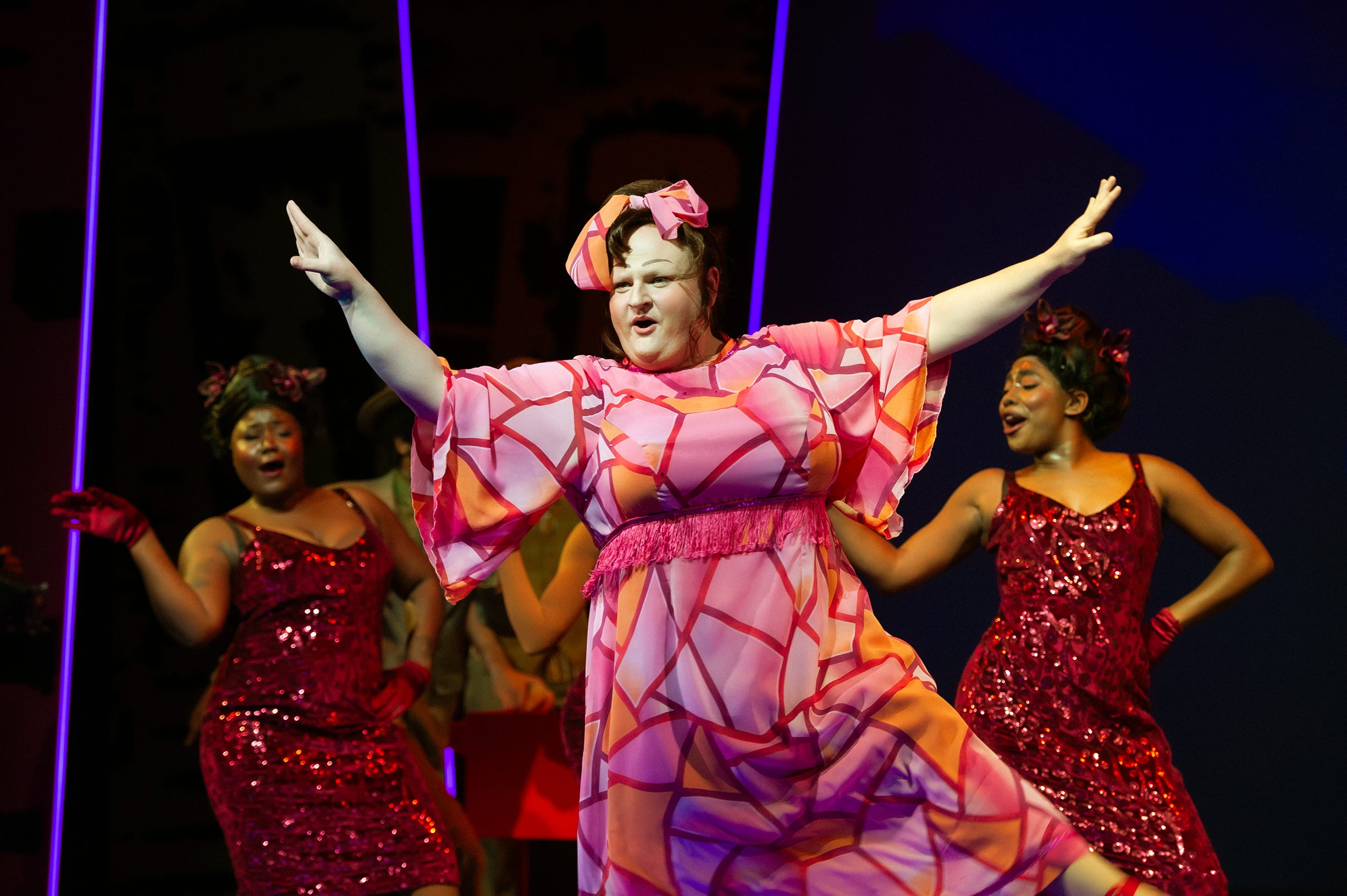
The cast is large and wondrous, and really too big to enumerate for individual praise. Ella Ruth Francis and Trevor March, as Tracy and her dashing beau Link Larkin, offer a winning combination of self-confidence and adolescent uncertainty that makes their romance feel utterly natural. As Seaweed, the preternaturally gifted lead dancer from Baltimore’s Black neighborhood, Jordan Covington moves around the stage like a ball of liquid charisma.
Most original, perhaps, is Jonathan Chisolm’s extraordinary turn as Edna Turnblad (Tracy’s mother, originally played by Divine). In Chisholm’s interpretation, Edna emerges as a poignant, eerie blank. Her facial expressions almost never change. Instead of responding to life’s indignities and disappointment with Divine’s raunchy, anarchic glee, Chisholm’s Edna keeps everything inside — and when the world finally comes to her doorstep, the sense of delivery is exhilarating.
Hairspray: San Francisco Playhouse, through Sept. 12. www.sfplayhouse.org.
Elsewhere:
Lily Janiak, San Francisco Chronicle: “Phoenyx Rose’s choreography is a joyous swirl of Elvis the Pelvis jerks and flapping, breaststroking, lassoing, dribbling and monkeying arms. In particular, when Covington seizes the stage, he makes his whole frame so responsive to the music and the energy around him it’s as if he’s dissolved the boundary between himself and the world.”
Steve Murray, Broadway World: “Central to the success of the show is the casting of Tracy, who must play the role with a sense of empowerment rather than victim. Ella Ruth Francis makes her San Francisco Playhouse debut with all the joy, enthusiasm, and confidence required. She’s a triple threat who elevates the cast to the heights.”
Critique of Judgment
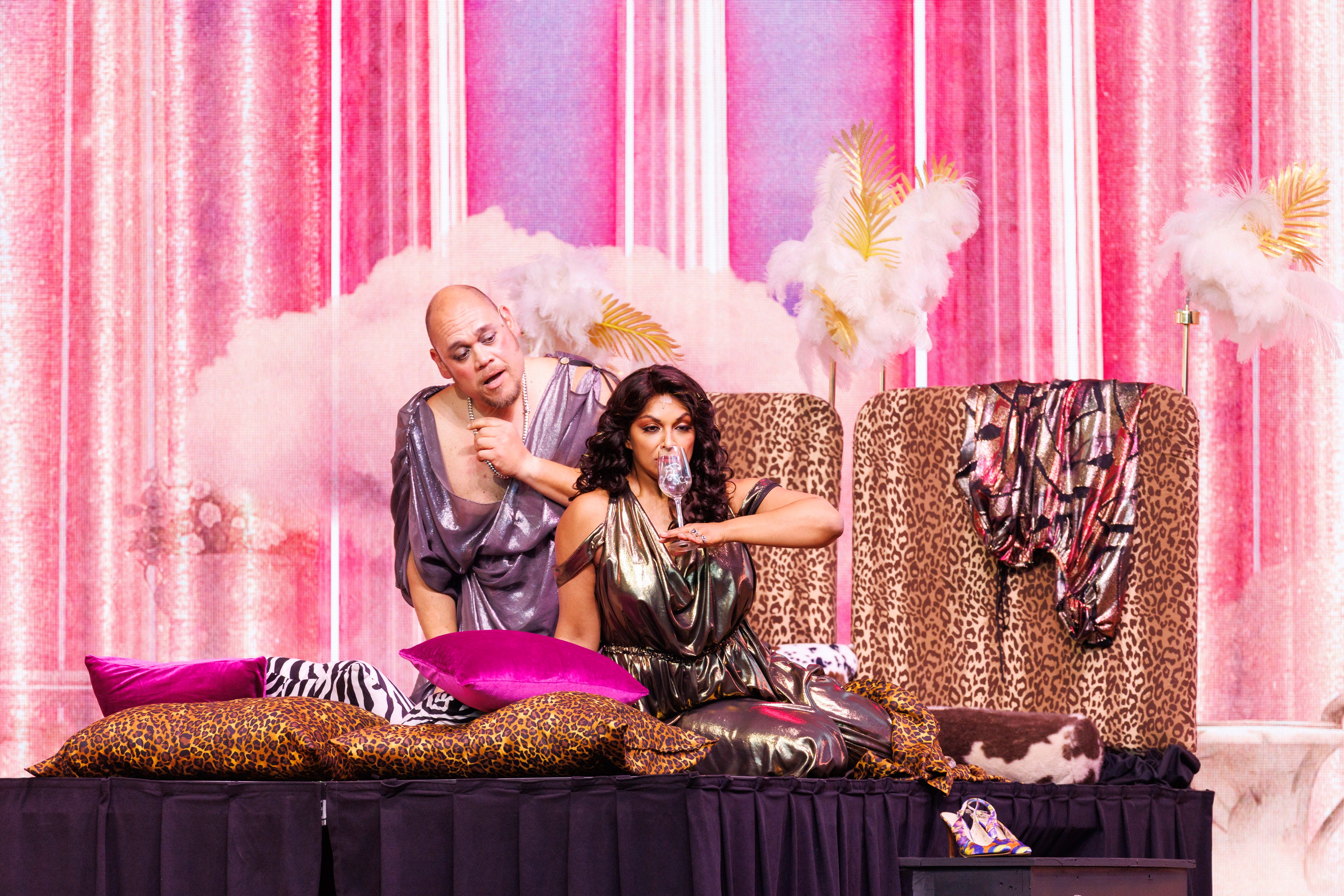
Saturday night brought the world premiere of The Judgment of Paris, a bubbly one-act comic opera by composer Jake Heggie and librettist Gene Scheer. I reviewed it for the San Francisco Chronicle here, and I don’t have much to add except to reiterate my hope that this isn’t the last time the piece gets staged.
But during the interminable drive home from Napa, I got to thinking about the underlying event the opera is based on, and what it might tell us about judgment in general. (This is probably the moment to apologize to the ghost of Immanuel Kant and to his living acolytes for filching the title of a book I’ve never read, will certainly never read, and know nothing about except that its title is what I need right here and now.)
The story, in brief, is that in 1976 a pair of wine experts, an American and a Briton, began to believe that California wines, long held in low regard, had developed in quality to the point where they might actually challenge the international supremacy of French wines. So the two arranged a blind taste test in Paris, in which a panel of French experts would sample an array of reds and whites from France and the U.S., and record their judgments without the benefit of any information except what they could garner from their mouths, eyes, and noses. And what do you know — the experts, including the leading critic Odette Kahn, sneered at the French wines, which they assumed were shoddy American products, and pronounced the Napa wines the prizewinners in both categories.
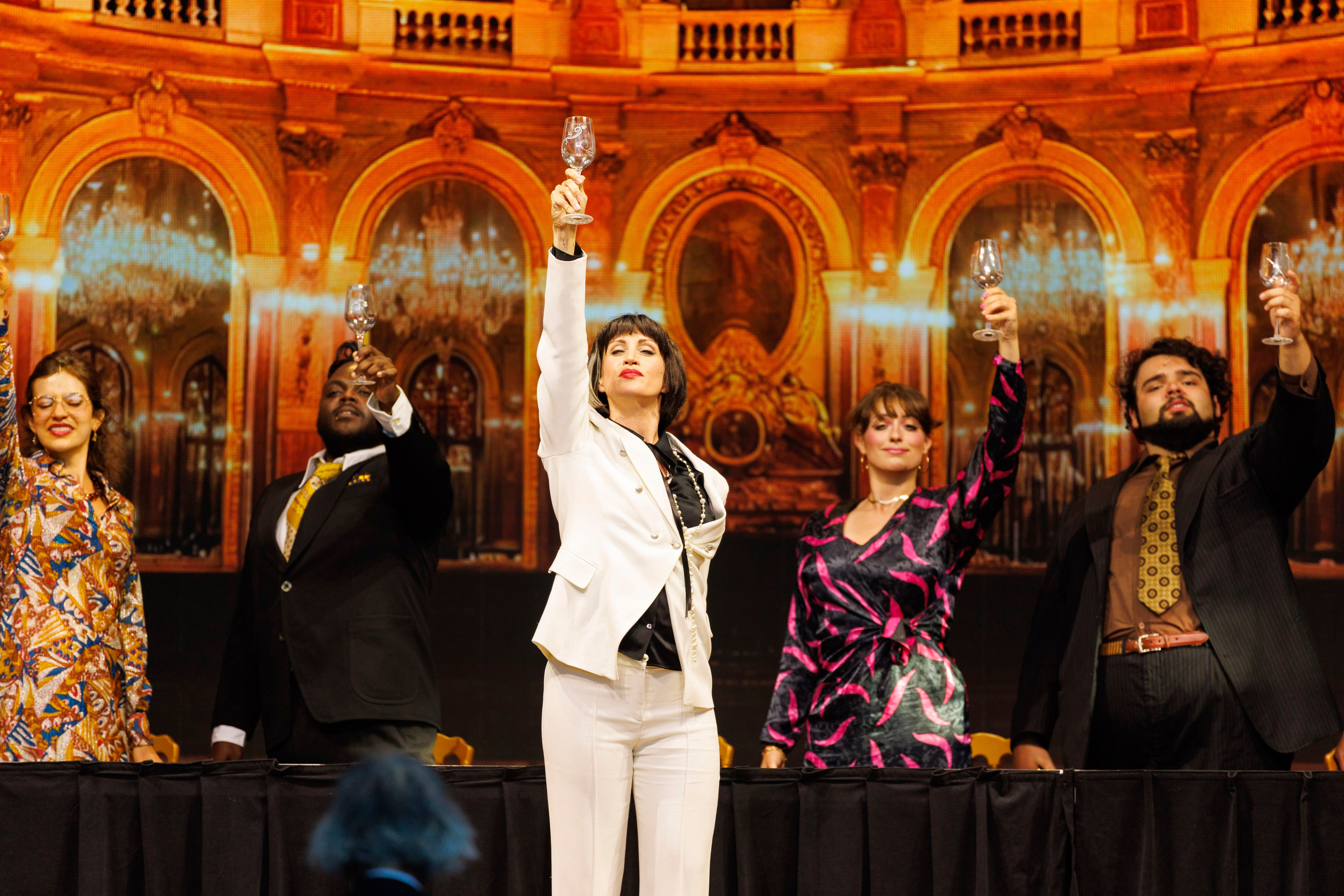
Like any right-thinking person, I’m always up for a little dramatic irony. Snooty French oenophiles getting their comeuppance? Shoot it into my veins. But what’s always fascinated me about this story is the conclusion people draw from it. The American wine industry and its hangers-on tend to infer that in 1976, the products of Napa Valley vintners were finally proven to be just as good as their French counterparts. Which, OK, maybe.
As an observer with zero knowledge of wine but a lifetime’s experience making fallible critical judgments, however, I’d like to propose an alternative takeaway. What if the judges have been talking through their respective hats all along? What if connoisseurship is merely an excuse to lord your opinion over those less confident than yourself?
I wouldn’t for a moment suggest that there’s no such thing as expertise in wine-tasting. Clearly, people who have devoted their lives to the subject know a lot more about it than you or I. Nor would I deny the possibility that Napa Valley’s wines by 1976 had developed to the point where they could stand shoulder to shoulder with French vintages.
But I do believe that the Paris event has as much to tell us about judgment as about wine. Judgments are made by judges, who are human and therefore fallible.
That’s why we drink.
Elsewhere:
Michael Zwiebach, SFCV: “Heggie and Scheer treat the event with lightness and broad humor. Venus and Bacchus have a spat on Mount Olympus and involve themselves in the humans’ contest. Every time the leading French wine critic, Odette Kahn, is mentioned, a chorus bellows her name from backstage, bringing to mind “Frau Blucher” from Mel Brooks’s Young Frankenstein.”
Cryptic clue of the week
First of all, a warm welcome to the dozens of new subscribers who suddenly showed up this week thanks to a recommendation from the substack The Art of Listening, and thanks to the good folks at the Chamber Music Society for sending you my way. Just by chance, there’s less classical music content this week than usual (August is always slow on the classical beat), but please do stick around. We have a good time here, and there’s more yet to come.
The other thing I include in every column is a sample clue from Out of Left Field, the weekly cryptic crossword I create with my longtime friend and collaborator Henri Picciotto. If puzzles don’t interest you, there’s no harm in just ignoring it. But some readers have reported having fun with them.
From Out of Left Field #329, sent to subscribers last Thursday:
Protagonist of The Handmaid’s Tale conceals conclusion of rescue bid (7)
Last week’s month’s clue:
Little piece from debut for solo organ (6)
Solution: SLIVER
Little piece: definition
debut for solo: S (first letter)
organ: LIVER
Coming up
• Tolomeo: Before their regular subscription season begins in November, the Philharmonia Baroque Orchestra & Chorale and music director Peter Whelan offer a sumptuous appetizer in the form of Handel’s opera. The semistaged production, directed by James Darrah Black, features a starry cast of countertenors Aryeh Nussbaum Cohen and Kangmin Justin Kim, sopranos Lauren Snouffer and Nicole Heaston, and bass-baritone Dashon Burton. July 23, Herbst Theatre. July 24, First Congregational Church, Berkeley. www.philharmonia.org.
• Music@Menlo: Music by living composers is almost never heard at this venerable Peninsula chamber festival, but an exception can be made for a composer who’s also a top-tier instrumentalist. Pianist Stephen Hough takes part in the West Coast premiere of his 2024 Piano Quintet Les Noces Rouges, the headline element of a program that also includes music by Telemann, Beethoven, Schumann, and Bartók. July 26 & 28, Spieker Center for the Arts, Menlo School, Atherton. www.musicatmenlo.org.
There's a 2008 film, "Bottle Shock," featuring Alan Rickman, that tells a fictionalized, based-on-a-true-story version of the Judgment of Paris wine tasting, and it's pretty darn good.
My recollection is that they wound up tasting good vintages of American wines against lesser vintages of French wines, back before global warming when French wines had way more vintage variation. But yeah, I'll never forget a blind sparkling wine tasting where one guy repeatedly opined that an awful wine was Dom Pérignon and we were all too unsophisticated to appreciate it. It turned out to be Bully Hill. Hope to get the chance to hear this opera sometime!