
Marathon man
One unsteady performance can't dim the glory of Herbert Blomstedt's extraordinary multi-decade run

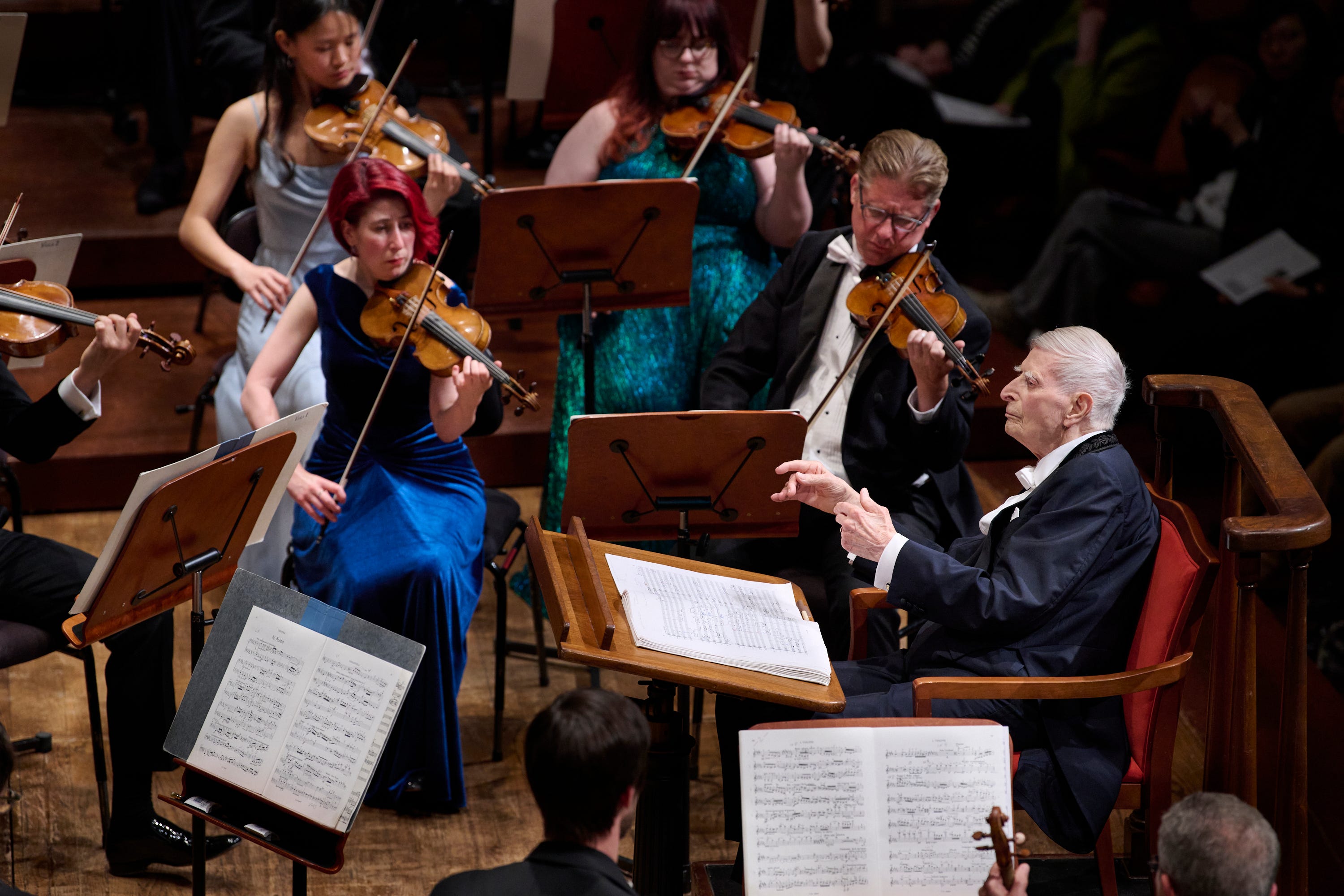
The thing about Herbert Blomstedt’s late-in-life ironman streak, which has seen him touring the world’s orchestral podiums throughout his 80s and 90s, is that he’s made it seem so easy. Year after year, even in the face of what must presumably have been weakening health, Blomstedt has been racing hither and yon, conducting Beethoven on this continent and Bruckner on another, and every report has been along the lines of he’s as strong as ever! There was a part of me — an irrational, lovestruck part — that believed it would somehow go on forever.
Well, no. Blomstedt returned to Davies Symphony Hall on Friday night to lead the San Francisco Symphony in Mahler’s Ninth, and it did not go well. He was physically enfeebled to a degree we’ve never seen before, and in ways that interfered with the music-making itself. There’s a lot a conductor can do to shape a performance without much physical exertion — through verbal communication in rehearsal, followed onstage by a combination of glances, finger wags, subtle glances, and eyebrow ballet. But the list isn’t infinite. At some point, the conductor’s body does have to get in on the action.
That wasn’t possible on Friday. In his previous appearance in Davies, Blomstedt took a slow, shambling walk to the podium, leaning on the arm of concertmaster Alexander Barantschik. This time he was brought to the podium in a wheelchair by three burly attendants, who were then tasked with the not insignificant assignment of deadlifting him onto the piano bench he has long favored as a conducting perch. The piano bench, however, was not his friend. Over the course of the 90-minute performance, Blomstedt listed increasingly to his right, seemingly unable to return to an upright position. Midway through the third movement, when he was nearly horizontal, the attendants returned to wrangle him off the bench — seemingly against his wishes — and into an armchair that at least helped keep him vertical through the remainder of the interrupted performance.
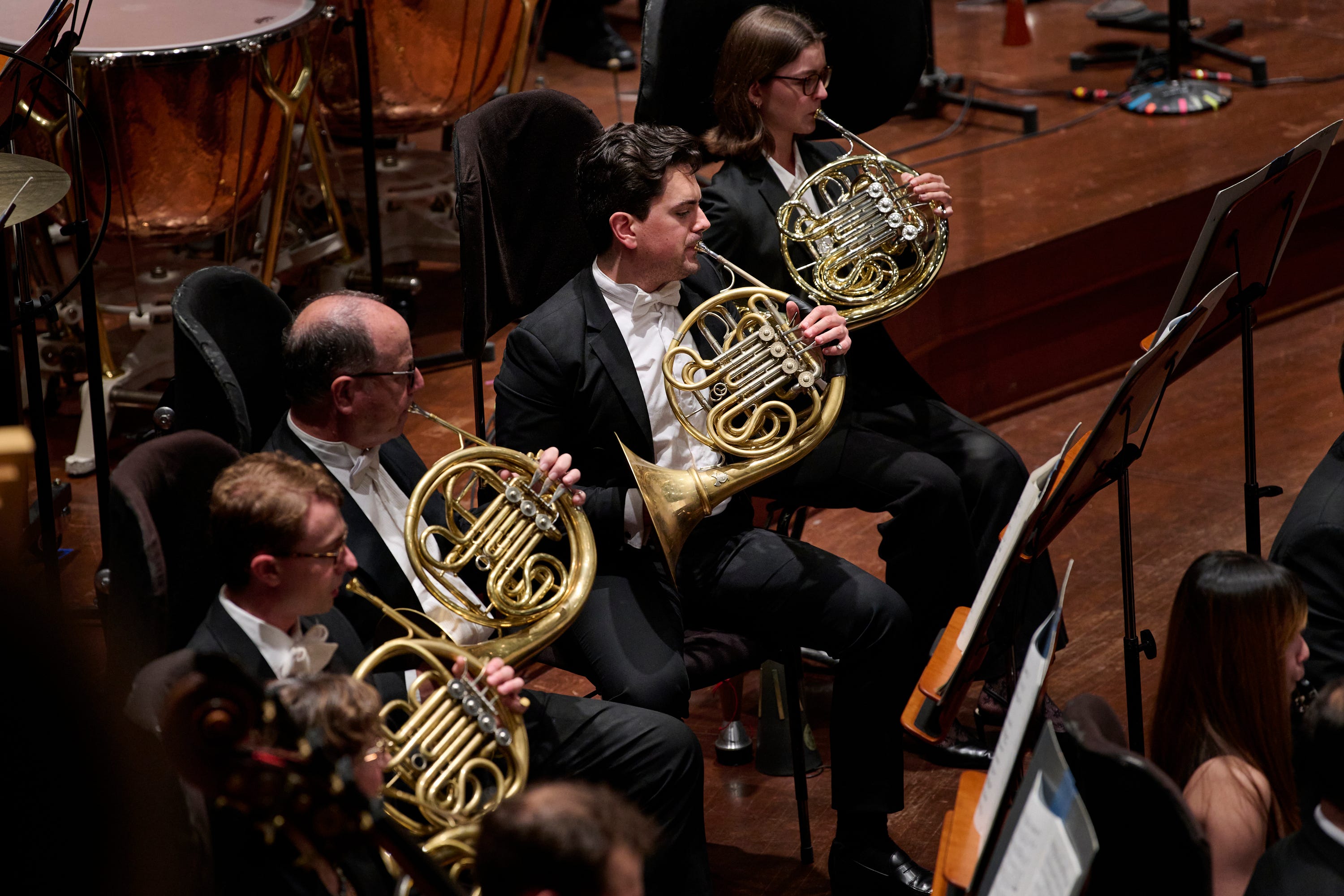
It was a white-knuckled, heart-wrenching affair, and over the course of the evening, the music itself sort of fell by the wayside. It’s hard to get much of a musical sense of a performance when your first thought is Is he going to make it through to the end?, and even more so when that thought never fully leaves you. The first movement, after an unsteady opening, grew into its trademark sense of expansive grace, with the main theme building and cresting in urgent waves, and the second movement caught some of the relevant rhythmic impetus. But even there, it wasn’t clear that the musicians were always on the same page at the same moment, and by the midpoint, coordination had become increasingly threadbare, both rhythmically and interpretively.
What we still don’t know is whether this was Blomstedt’s final hurrah, or whether San Francisco just caught him at a moment of weakness. A week earlier he had conducted the Mahler Ninth with the Detroit Symphony, and there were no reports of unsteadiness or debilitation. But he was ailing when he reached the Bay Area; according to a report posted on Facebook by an orchestra member and subsequently confirmed by the Symphony’s press department, Blomstedt was hospitalized until the day of the performance, as David Robertson took over all but the last of the rehearsals.
I’d like to believe, in other words, that Blomstedt was ailing and will now recover to conduct again, as he did in 2023. He’s scheduled to return in January to conduct the orchestra in symphonies by Schubert and Bruckner, and I want to be there to hear it. It’s also possible, though, that Friday’s concert will turn out to have been the finale of his extraordinary career. Either way, conducting Mahler at 98 is a feat that no one else will ever match, the 56-game hitting streak of conductorial longevity.
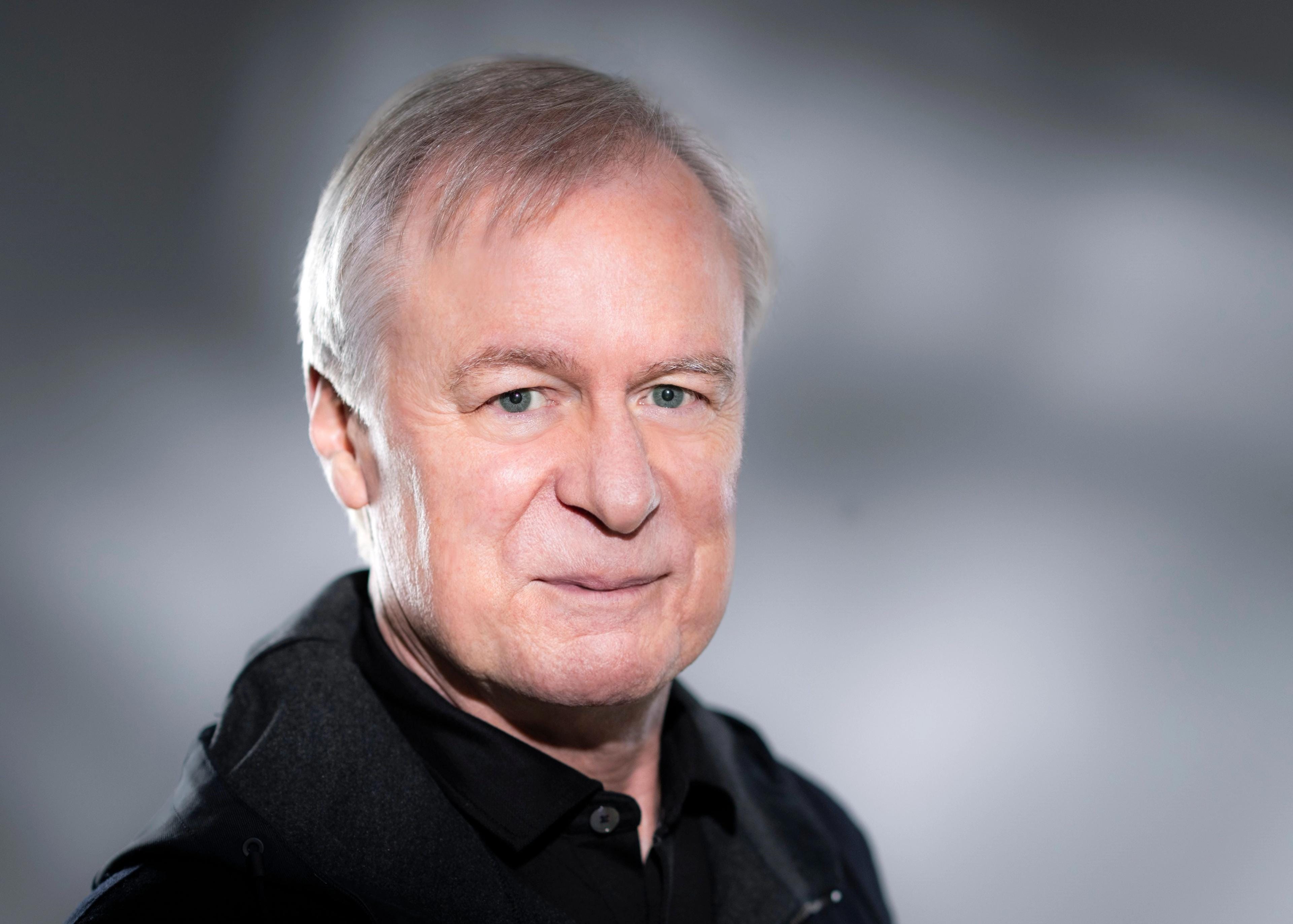
Robertson, meanwhile, was happily on hand to conduct the two remaining performances, and he did it with his characteristic blend of athleticism and clarity. After Friday night, I wanted to hear the piece played with an abundance of energy and precision, and as luck would have it, those qualities are Robertson’s stock-in-trade. On Sunday afternoon, the opening measures were delivered with all the firmness appropriate for a trio of scant thematic gestures that are about to form the scaffolding for an enormous movement. The third movement delivered one haymaker after another, each one landing with perfectly judged weight, and the gorgeous, elegiac finale seemed to shimmer with a sorrowful inner glow. It was enough to give you faith all over again.
Elsewhere:
Lisa Hirsch, San Francisco Chronicle/SFCV: “Even in less-than-ideal conditions, Blomstedt brought some magic to the score. The closing measures, with just the strings playing, raised goosebumps.”
One of the gang
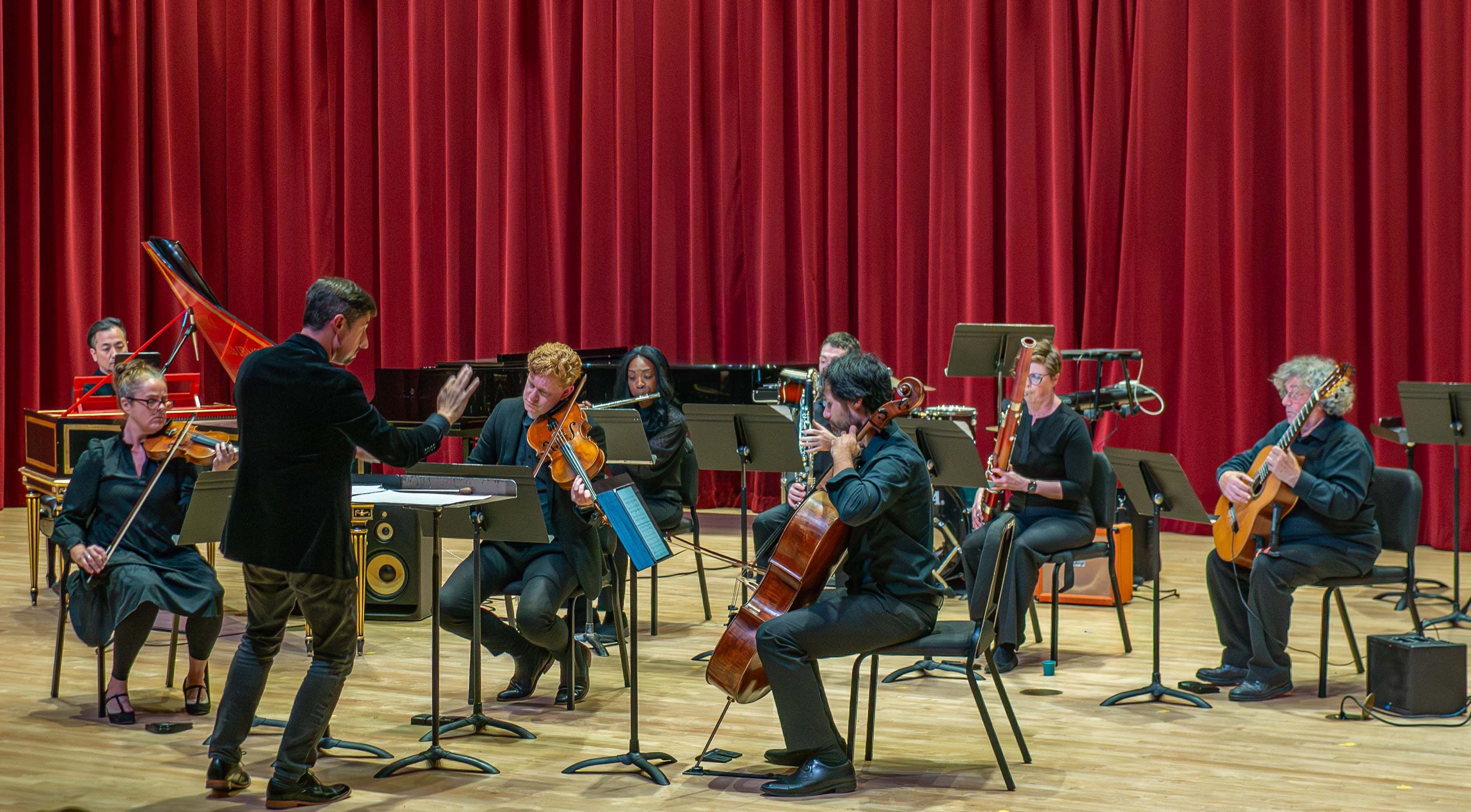
For the most part, composers and performers stick to their separate lanes, with the implicit understanding that one person writes the music and the others play it. This has become a less predominant paradigm in the past decade or two (and there have always been composers who wrote virtuoso solo showcases for themselves), but I still find myself moved when one member of a chamber ensemble emerges from the group to say, “Yeah, I wrote that. Nice, huh?”
It happened during Saturday’s concert by the San Francisco Contemporary Music Players under artistic director Eric Dudley, when the group performed percussionist Haruka Fujii’s quintet Divisions I. Fujii had already played a key role in Nico Muhly’s puckish quartet Flexible Music, which opened the program for this final concert of the season. But her 2023 composition was something else again — vivid, inventive, and by my reckoning the most engaging work of the evening.
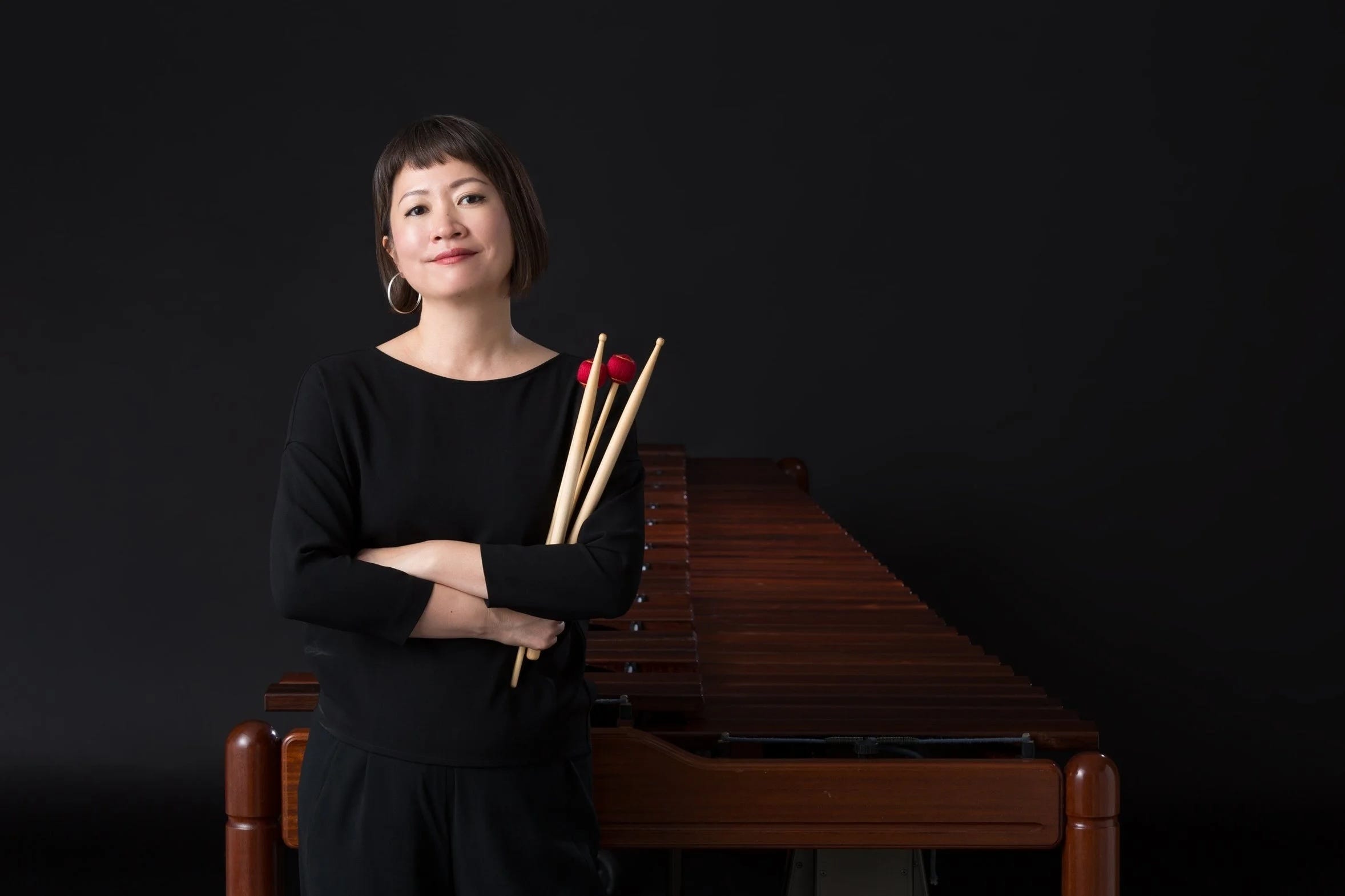
What’s particularly interesting is the way this short three-movement piece seems to map onto the divisions within the ensemble itself. On one side is the marimba, which in Fujii’s hands emerges as a combination ringleader and antagonist; on the other are the rest of the players, three string players and a clarinet. (Functionally, this serves as a string quartet with a bit more resonance and range of timbre.) In the first movement, a brusque five-note theme from the marimba serves to punctuate a series of elegant episodes, as well as opening and closing the proceedings; in the second, it maintains a gentle, thrumming drone as each of the other instruments in turn plays a luminous solo. This would be a compelling creation under any circumstances, but to have Fujii take part in the performance gave it an extra spark.
Cryptic clue of the week
From Out of Left Field #320 by Henri Picciotto and me, sent to subscribers last Thursday:
Relief pitcher is warmer? (6)
Last week’s clue:
Sunni tribe discombobulated pianist (10)
Solution: RUBINSTEIN
Sunni tribe: anagram fodder
discombobulated: anagram indicator
pianist: definition
Coming up
• Tosca: Admittedly, Puccini’s classic opera is a perennial standby for companies both large and small. But West Bay Opera, under the leadership of general director José Luis Moscovich, has a knack for breathing new life into even overexposed repertoire. This production, conducted by Moscovich and directed by José María Condemi, features soprano Julia Behbudov in the title role, alongside tenor Xavier Prado and baritone Robert Balonek. May 22-31, Lucie Stern Theatre, Palo Alto. www.wbopera.org.
• Earplay: The venerable contemporary music ensemble concludes its season with the world premiere of Time Pieces, a commissioned quintet from composer Trevor Weston. The program, titled “Is That Your Final Answer?” also features Charles Ives’ timeless The Unanswered Question in a new chamber arrangement, along with music by Aida Shirazi, Edmund Song, Elliott Carter, and Peter Josheff. May 25, Noe Valley Ministry. www.earplay.org.
Thanks for this moving tribute. Anyone know who other conductors are who were even close to Blomstedt's age who were regulars on the podium?