
Morton's moment
Centenary observances for Morton Feldman began with a transfixing performance of one of his great piano works

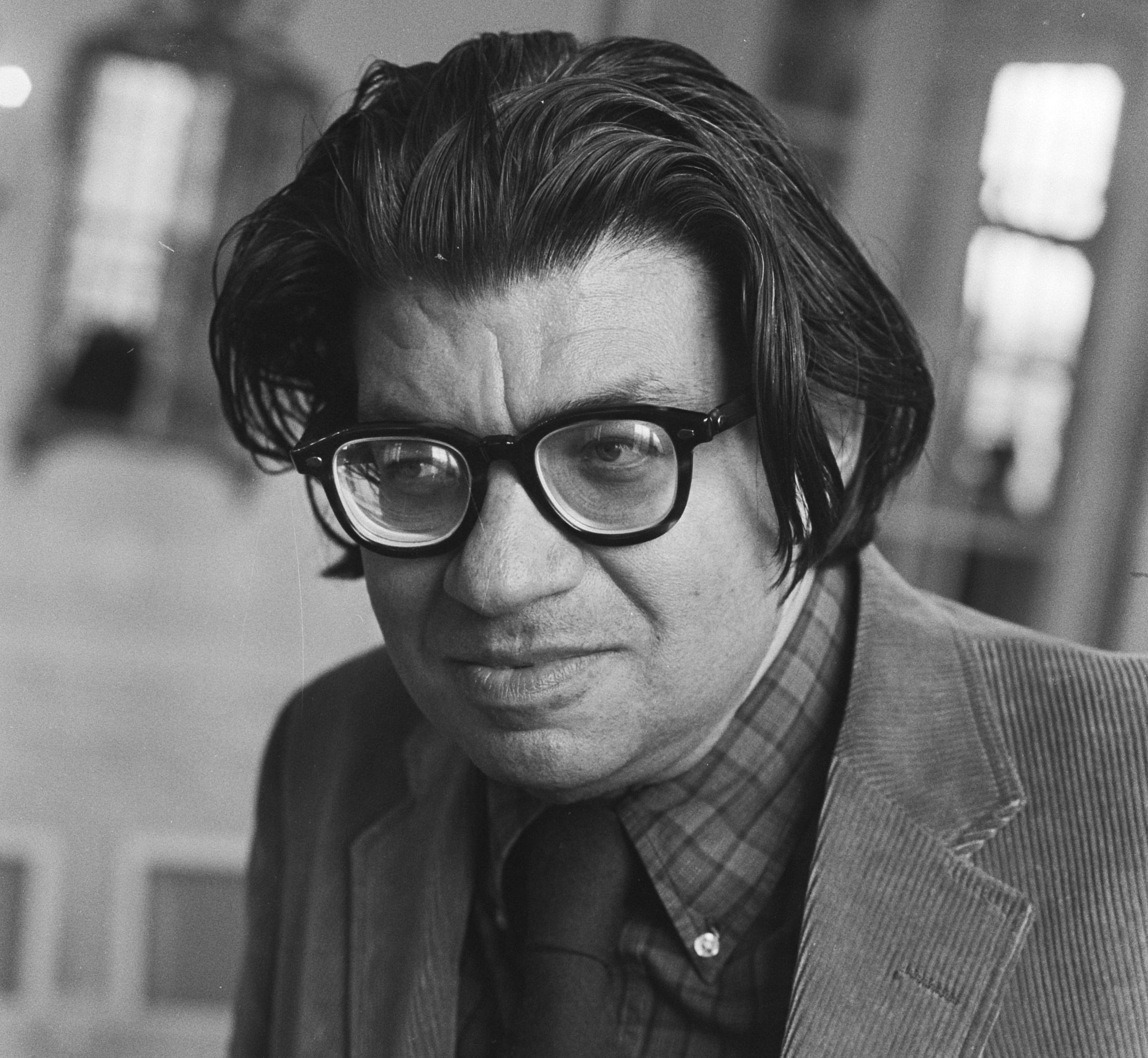
The composer Morton Feldman, born 100 years ago this past Monday, is often hailed as an innovator, an inventor, even a revolutionary. These things are all true. His music is full of harmonies, textures, and structural concepts that no one had thought to put together in just that way before. But assessing Feldman’s place in music history, as important as that can be, tends to sideline the unsettling beauty of actually hearing one of his magical creations in all its slow, soft-spoken, expansiveness. To get a sense of what he was up to, you have to be in the concert hall in person.
Last Thursday, in what I trust will be only the beginning of a yearlong centenary celebration in the Bay Area and worldwide, Other Minds played host to pianist Amy Williams, whose recital at Mills College was devoted to Feldman’s 1981 work Triadic Memories. Like most of Feldman’s best-known music, this is a piece that unfolds over a broad expanse of time, often at glacial tempos and without ever raising its voice. If you allow it, the music curls itself around you like a housecat, at once inviting and aloof.
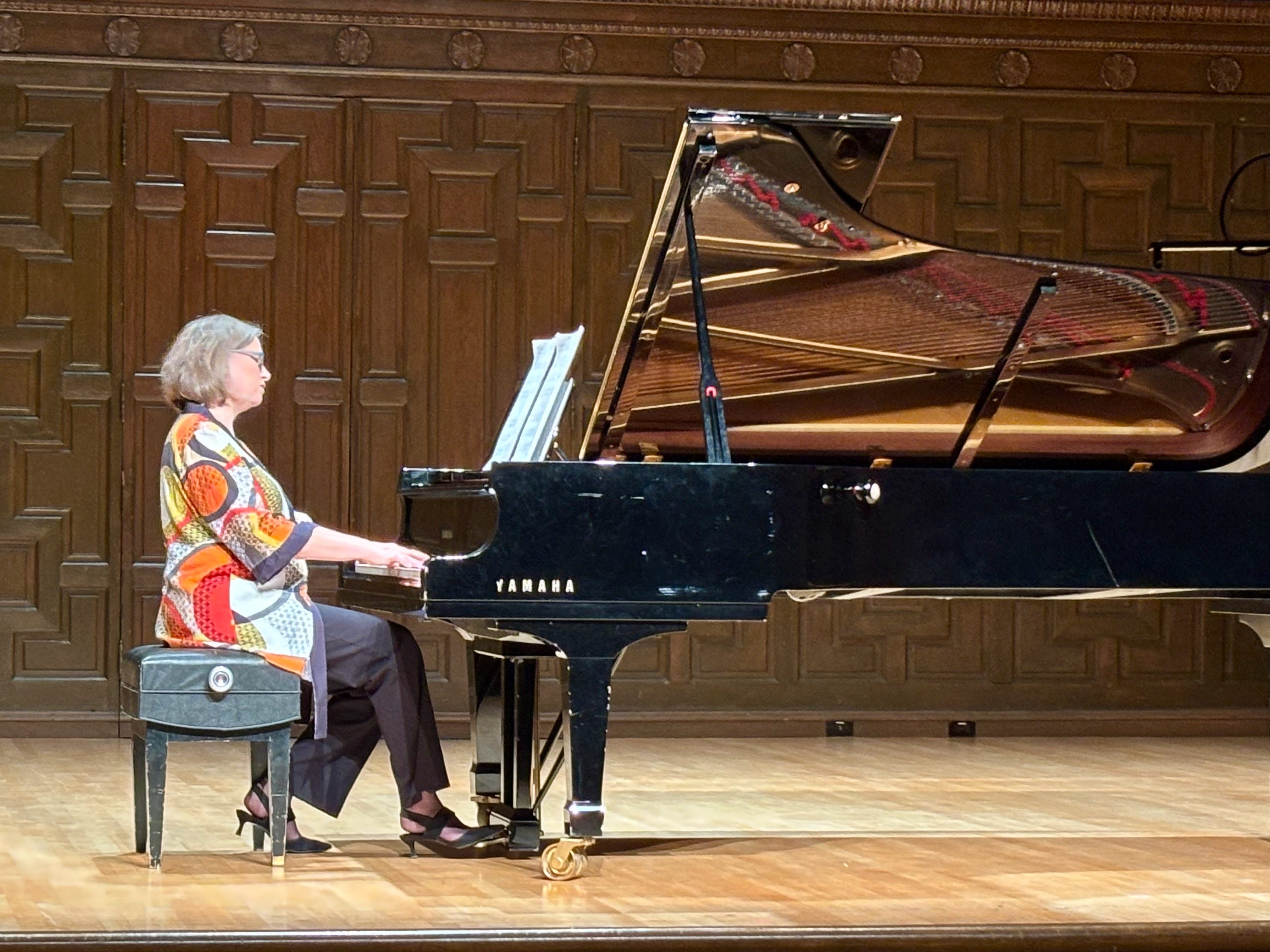
What struck me most about Williams’ gorgeous and reserved performance was how deftly it caught that duality. A lot of Feldman’s music boasts a vein of restrained sensuality, but Triadic Memories is considerably more cerebral in its focus. The material is a string of gemlike musical cells — a pair of two- or three-note chords in alternation, a subtly varied five-finger exercise, a snippet of melody — that repeat in unpredictable iterations. (Depending on the performer’s choices, a performance can range in duration between Williams’ concise 70 minutes and a more capacious 90 minutes or more.) In Williams’ hands, there was something appropriately sphinx-like about the journey, which drew the listener in while refusing to explain too much.
I find I frequently have similar experiences with Feldman. He’s like a painter of surrealist landscapes that you explore without ever quite getting your bearings. An alternative metaphor might be diving into an elaborate fantasy novel, the kind that (ideally) comes with a large, detailed map at the front. The difference here is that there’s no map. You roam wonderstruck through the terrain, which for all its splendor doesn’t really make any musical or geographical sense in the way you’ve come to understand those terms. Trying to explain how any of it works would be a chump’s game.
This is why I tend to resist the common assertion that Feldman’s music jettisons common musical elements like melody, harmony, and rhythm. There is harmony, it just doesn’t function like the harmonies we know; similarly with other fundamental building blocks. Again, it’s as though the path through that fantasy landscape were populated by flora and fauna of no known variety. When a mysterious quadruped bounds across the path in front of you, “That’s not an animal” and “Wait, is that some kind of dog?” are both ill-judged responses. Much better, at least to a first approximation, is “whoooooa.”
Elsewhere:
George Grella, Kill Yr Idols: “The music is remarkable, and it’s a remarkable case of an avant-gardist finding a way to use mainstream language to express their out-of-the-mainstream ideas.”
Tim Rutherford-Johnson, Van Magazine: “The sonic constant in this music was the decaying tone of a piano…That strain towards nothingness draws the ear to locate and consider the brink of perception; the elegant curve on which music shades into environment, where art and reality dissolve into one another.”
Agenda addenda
In last week’s column I took a look at the musical schedule for the coming months and found a handful of events I was looking forward to with particular eagerness. Not enough, though. This is the time of year when the calendar is usually overstuffed with can’t-miss items, and instead I was struggling just to fill out the traditional allotment of 10.
I stand by that overall assessment — things really are uncharacteristically dry this spring — but I have to concede that the spotty results of my search made me a bit cranky, and that in turn led me to overlook some perfectly cromulent candidates for inclusion. With apologies to all and gratitude to those who helped steer me straight (in particular Lisa Hirsch), here are some late additions that should have been included the first time around:
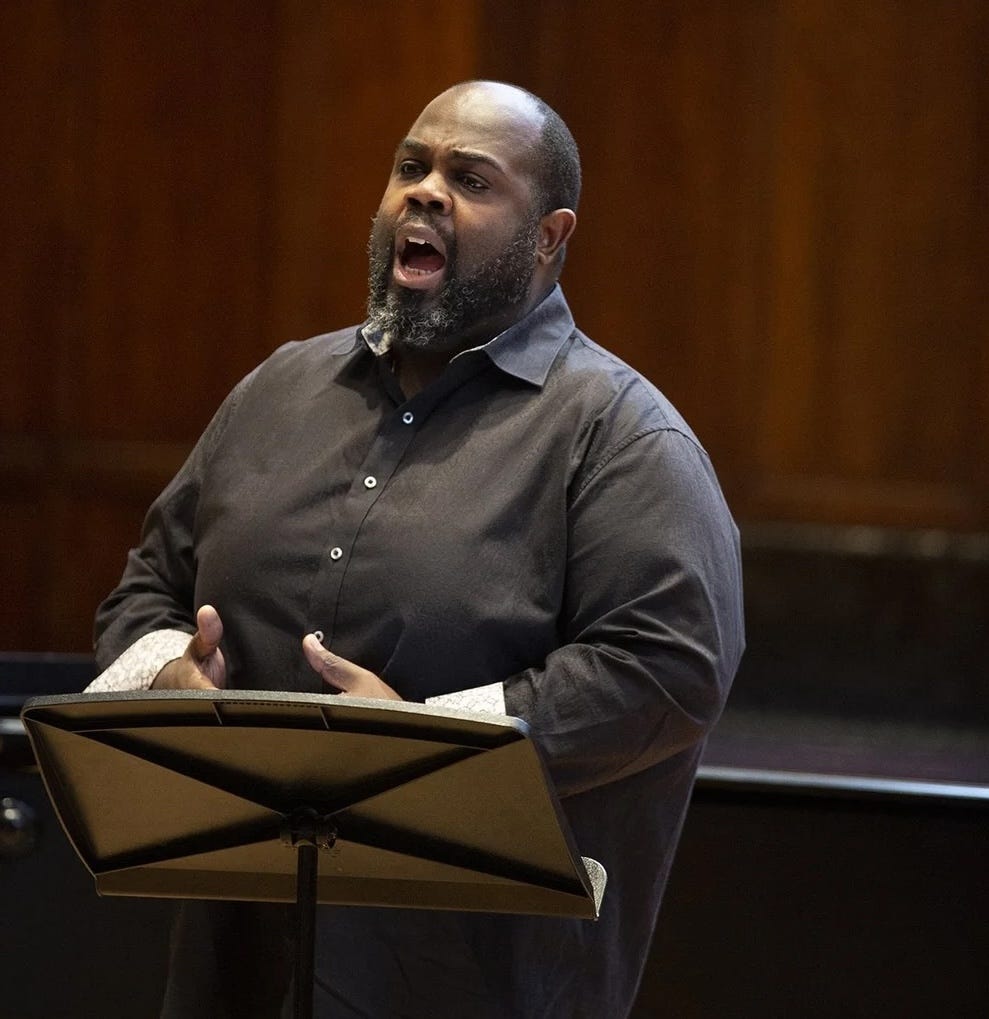
• Philharmonia Baroque Orchestra & Chorale: Countertenor Reginald Mobley joins the orchestra for an evening that combines African American spirituals with music of tribulation and sorrow from the European Baroque. Guest conductor Christine Brandes leads a program featuring music of Schütz, Bach, and others, together with such classics as “Were You There?” and “There is a Balm in Gilead.” March 13-14, First Congregational Church, Berkeley. March 15, Bing Concert Hall, Stanford. www.philharmonia.org.
• A Midsummer Night’s Dream: In a thrilling display of artistic ambition, Pocket Opera presents Britten’s phantasmagorical Shakespearean masterpiece with a newly commissioned orchestral reduction. David Drummond conducts a cast headed by countertenor Kyle Tingzon and soprano Chelsea Hollow. April 17, Mountain View Center for the Performing Arts. April 19, Hillside Club, Berkeley. April 26, Gunn Theater, Legion of Honor. www.pocketopera.org.
• Redwood Symphony: Music director and founder Eric Kujawsky leads the community orchestra in a characteristically challenging program headlined by the gripping Third Symphony of Witold Lutosławski. Mezzo-soprano Kindra Scharich joins the orchestra as soloist in Mahler’s Kindertotenlieder. April 18, Cañada College Main Theater, Redwood City. www.redwoodsymphony.org.
Cryptic clue of the week
From Out of Left Field #302 by Henri Picciotto and me, sent to subscribers last Thursday:
Audited purchase: simple aircraft (7)
Last week’s clue:
Headless trunk, roughly speaking (2,2)
Solution: OR SO
Headless: delete the first letter of…
trunk: TORSO
roughly speaking: definition
Coming up
• Chicago Symphony Orchestra: One of America’s great orchestras breezes through the Bay Area for two stops as part of a California tour under its longtime former music director Riccardo Muti. The program includes orchestral masterpieces by Brahms, Stravinsky, and Ravel. Jan. 17, Zellerbach Hall, UC Berkeley. www.calperformances.org. Jan. 18, Mondavi Center for the Performing Arts, UC Davis. www.mondaviarts.org.
• Earplay: The season-opening program by this venerable local chamber ensemble features the world premiere of What Lies at Dream’s End, a trio commissioned from San Francisco composer Emma Logan. Also on the program are a chamber arrangement of Charles Ives’ classic The Unanswered Question and music by John Harbison and Roger Reynolds. Jan. 19, Noe Valley Ministry. www.earplay.org.
Love your description of the experience of hearing Feldman’s piece! But the title (which you do have right in the photo caption) is actually ‘Triadic Memories.’
You're very welcome! And also I apologize for an omission: the Redwood Symphony program you cite is opposite the great flutist Claire Chase at SFO, with a new tranche of commissions from Density 2036. A terrible choice.