

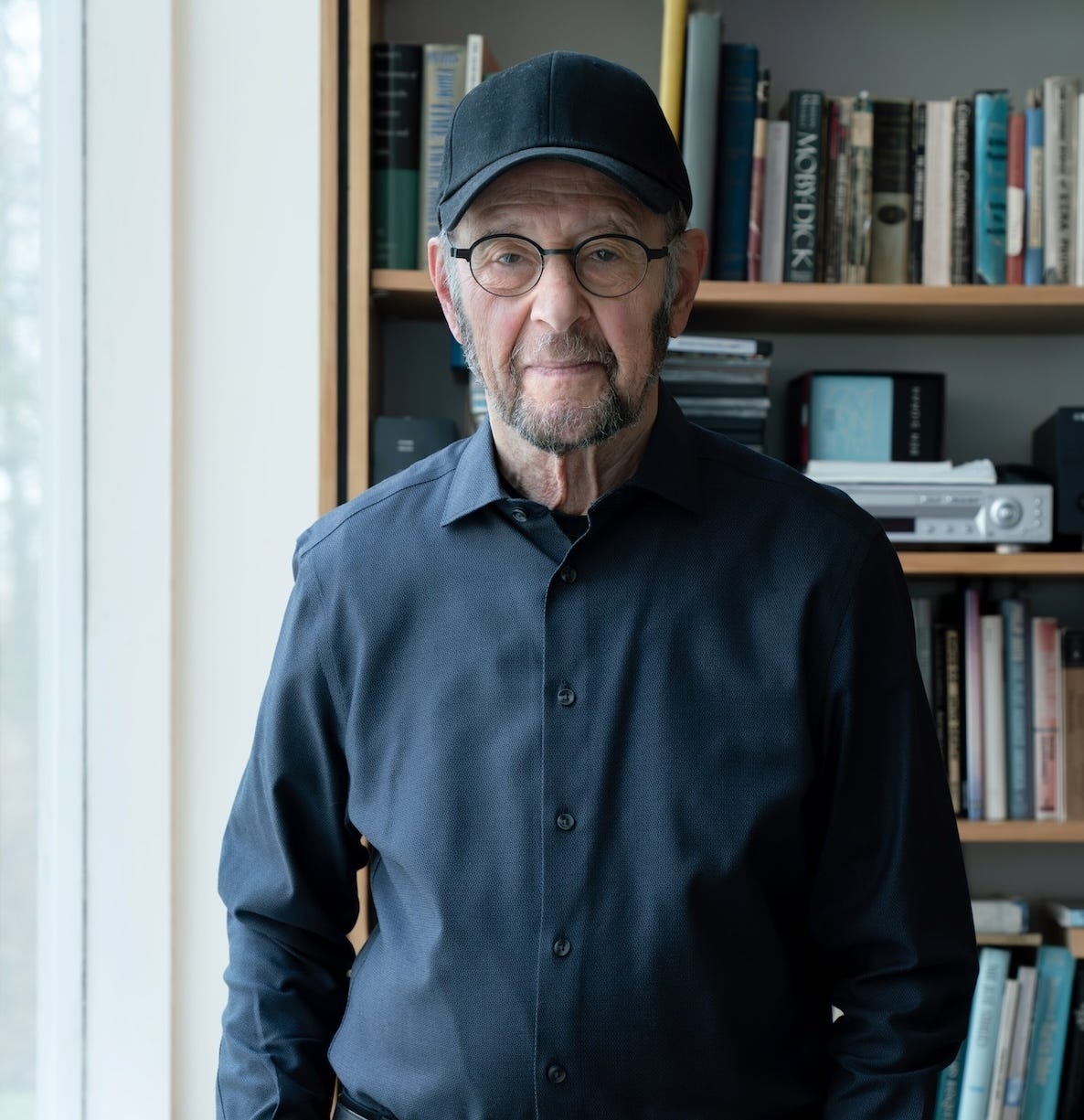
If only we had a large enough sample size, we might be able to sketch out an esthetic theory of Really Old Composer music. I don’t mean the so-called “late style” of, say, Beethoven’s last string quartets or Stravinsky’s serial compositions. No, I’m thinking of people like Elliott Carter, who kept composing music right up until his death at 103, or Giuseppe Verdi, who was 80 when he wrote his final masterpiece, Falstaff. These are pieces that go beyond distillations or summations to a place where few can follow.
Last Saturday’s fascinating concert by Ensemble Signal and the Bang on a Can All-Stars, presented by Cal Performances, added a new one to this slender catalog. The program was dedicated to the music of Steve Reich, who turned 90 earlier this month, and it was crowned by the U.S. premiere of In All Your Ways, a riveting and beautiful new piece that seems to sum up much of what Reich has done before while adding ideas that are entirely new.
This has been Reich’s modus operandi through his entire career, going back to the mid-’60s: Assemble some basic ideas, gun the engine a few times to make sure the mechanism is running smoothly, then use that as the basis for the next iteration. That means there’s a lot of similarity between one piece and the next, but also that each one builds on the premises of its predecessors in new and different ways.
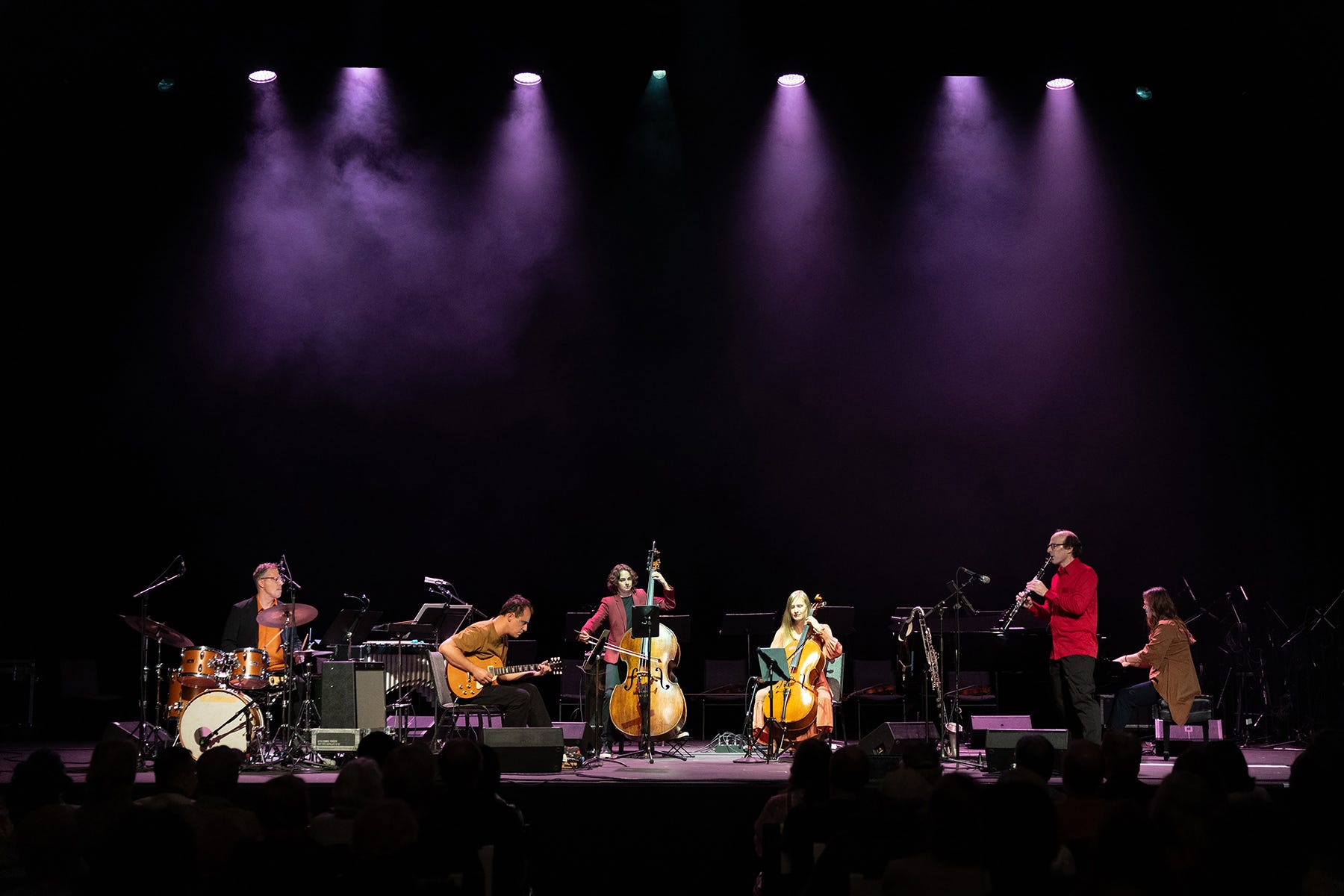
In All Your Ways, which is a wordless setting of a verse from the Book of Proverbs, is in four unbroken sections running about 20 minutes altogether, and it exhibits that well-established deep-rootedness — up to a point. The instrumentation of woodwinds, mallet instruments, and strings yields a familiar mesh of sonorities, and Reich’s interest in metrical subdivisions is as keen as ever. But on top of that comes a slew of new interests and techniques the show the composer continuing to operate at the top of his game.
In particular, there’s less large-scale repetition than I can recall hearing in his work until now. At the lowest level of detail, not much has changed — the chugging, contrapuntal textures that are among Reich’s musical fingerprints continue to rely on little rhythmic and melodic cells that repeat. But the larger musical structures that emerge from them are full of variety. There are extended, snaky melodies and great blocky paragraphs that go off at length in unpredictable directions, all adding up to an experience that feels ravishingly new. Brad Lubman conducted the music with the sharp-edged precision it needed, while still allowing plenty of scope for Reich’s newfound freedom.
As if to set the new piece in context, the evening began with two of Reich’s earlier works: Electric Counterpoint, featuring guitarist Taylor Levine operating in counterpoint with 12 pre-recorded tracks featuring himself, and Double Sextet, the 2007 chamber work that won the Pulitzer Prize for Music. I remember well how surprising Double Sextet sounded when it was new — how it seemed to subsume everything that had come before it in Reich’s oeuvre and then extend it, without devaluing the tactile riches of any of its predecessors. And now the process continues.
Elsewhere:
Andrew Gilbert, SFCV: “Delivered at any point in a composer’s career, [In All Your Ways] would be an impressive statement. But given the work’s subject matter it’s tempting to describe the fact that Reich is writing enthralling music as he approaches his 10th decade as miraculous.”
(Non)-animated
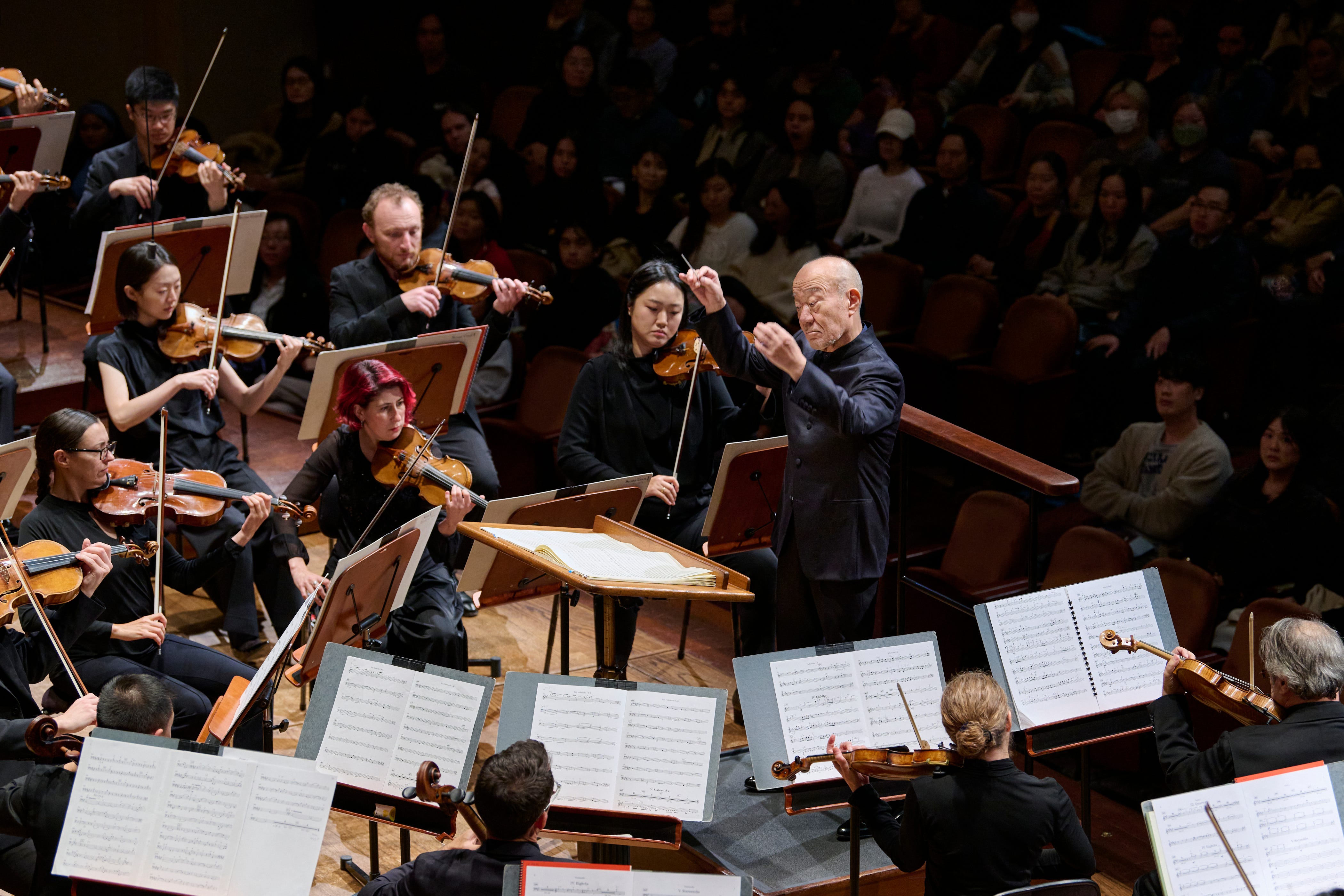
If the Berkeley concert was the most notable local celebration of Reich’s 90th, it wasn’t the only one. At last week’s San Francisco Symphony concert, conductor and composer Joe Hisaishi paid tribute to one of his important creative influences by leading the orchestra in a beautiful performance of Reich’s Music for Ensemble and Orchestra as a testament, he said, to his “longstanding passion for minimalism.” This 2018 masterpiece was commissioned by the Symphony (along with five other orchestras), and it landed with an exhilarating bang when the orchestra first performed it just a year after the premiere. It sounded just as exciting this time around, with the composer’s belated interest in the traditional symphony orchestra paying off in new instrumental sonorities, and with assistant concertmaster Jeremy Constant spinning out beautifully turned violin solos.
But Reich’s piece wasn’t the point of the concert, nor was David Lang’s wonderfully crunchy and boisterous tone poem mountain, which followed it during the first half of the program. No, the draw here was the chance to hear Hisaishi — still most widely known as the musical savant behind the animated feature films of director Hayao Miyazaki and Studio Ghibli (Princess Mononoke, Howl’s Moving Castle, et al.) — as the creator of a non-cinematic score. The West Coast premiere of his Concerto for Orchestra, for which the Symphony was again one of a group of co-commissioners, turned out to be unalloyed delight — a busy, action-filled 45-minute entertainment that called for all the virtuosity the orchestra could muster.
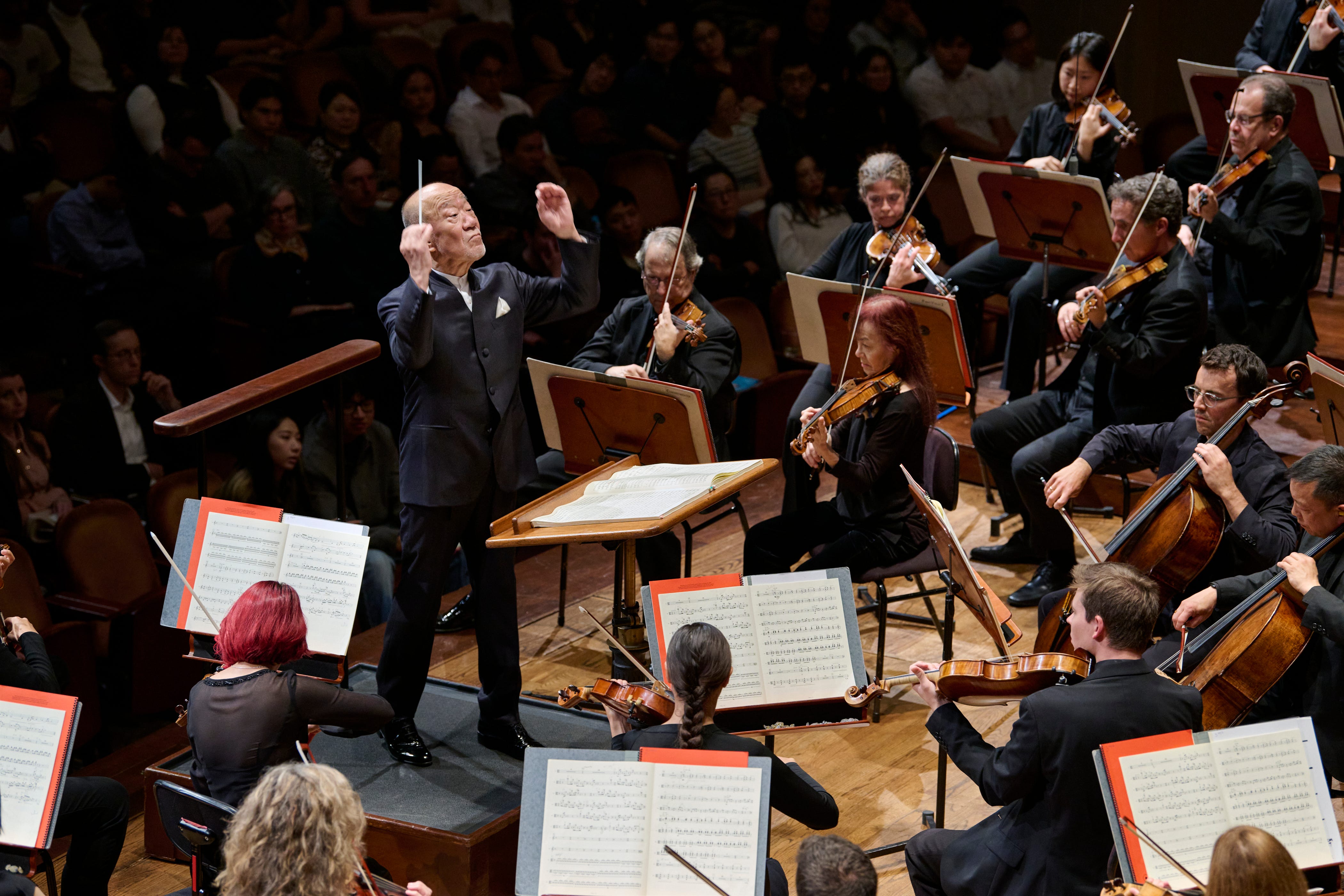
If I were as familiar as I ought to be with Hisaishi’s cinematic scores, I imagine I might be able to provide some observations on the ways in which the new piece departs from that musical world. Instead, I can only say that the concerto is sleek, inventive and seductively full of incident. It’s cartoon music in the best possible sense of the word. Hisaishi’s style is accessible in every way, cast in tonal harmonies and regular, chuggy rhythmic textures that owe an overt debt to Reich. But it never panders or sets the bar too low. Wherever you turn, Hisaishi has something enjoyable or clever or tender to offer you — a series of rapid, hell-for-leather melodies chasing one another around the stage in the first movement (out of five), or a spare, gorgeous duet for flute and harp in the fourth. No one keeps the needs and interests of the audience in mind like a film composer, and you can feel that generosity throughout Hisaishi’s piece.
Elsewhere:
Jens Ibsen, SFCV: “You may know him from Studio Ghibli, but Joe Hisaishi is bigger than just anime. He is the rare sort of composer with one foot planted in the film universe, and another in concert music.”
Also elsewhere
The San Francisco Symphony’s future music director, Elim Chan, showed up this week to conduct a splendid orchestral program highlighted by the local performance of John Adams’ towering Doctor Atomic Symphony. There were also welcome appearances by violinist Renaud Capuçon and the Symphony Chorus led by Jenny Wong. I reviewed the program for The Chronicle.
Cryptic clue of the week
From Out of Left Field #343 by Henri Picciotto and me, sent to subscribers last Thursday:
Reordering open lists is futile (9)
Last week’s clue:
Wickedness of expansive residence in Yemen’s capital (8)
Solution: VILLAINY
Wickedness: definition
expansive residence: VILLA
in: IN
Yemen’s capital: Y
Coming up
• Ema Nikolovska: The inventive Macedonian-Canadian mezzo-soprano returns to Cal Performances with guitarist Sean Shibe for a fascinating recital titled Orlando Variations. An exploration of themes from Virginia Woolf’s novel, the afternoon includes music by Schubert, Bob Dylan, and Laurie Anderson, as well as commissioned works by composers Sasha Scott, Nahre Sol, and more. Nov. 1, Hertz Hall, UC Berkeley. www.calperformances.org.
Not a fan
Although I can't attend these events, I do so enjoy your columns. Very exciting times in the SF music sphere!