
On the brighter side
Shostakovich's First Piano Concerto enlivened a formidable conducting debut

One of the essential qualities that run through nearly all of Shostakovich’s music is its unrelenting grimness. One can understand why this might be so — the essential quality of life under the Stalinist regime was unrelenting grimness — without always wishing to experience the results in large doses. My favorite encounters with Shostakovich come when he decides to throw off the burden of history and simply have fun with the music. Those occasions are rare enough — the Ninth Symphony, parts of the Fifteenth, and some of the tangier chamber music are a few of the leading examples — but when they happen, they lighten up the concert hall like nothing else.
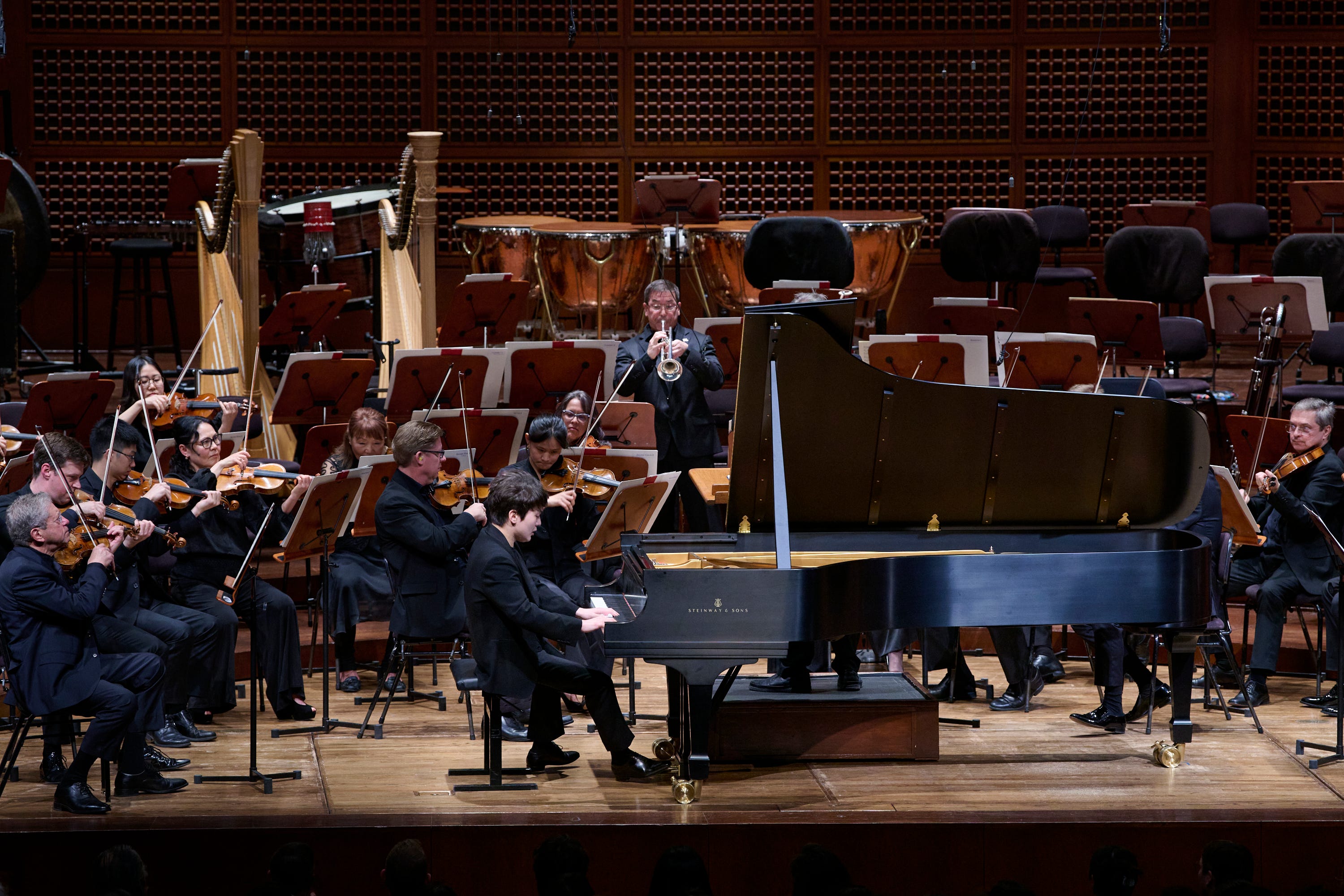
The First Piano Concerto, which was the splendid centerpiece of last week’s San Francisco Symphony program, is among Shostakovich’s most open-hearted, winning creations. It’s buoyant and whimsical, full of jaunty tunes and lyricism. Is it sardonic? Of course it is, just a little bit, because that’s who Shostakovich is. But the humor is easeful, with none of the tight-lipped ferocity that infuses his dark, scarifying scherzos. And the jokes can take a meta twist; the first movement in particular, with its extroverted display, is like a straight-faced parody of a more outlandish parody.
The Symphony’s performance, led by debuting conductor John Storgårds, featured the young South Korean phenom Seong-Jin Cho as the soloist, with principal trumpeter Mark Inouye bringing his characteristic steely flair to the equally important solo trumpet part. The two of them made a terrific pair, swapping phrases and complementing one another where the two roles were noticeably bound together. I particularly appreciated the delicacy of Cho’s approach, which seemed flavored by his immersion in Chopin.
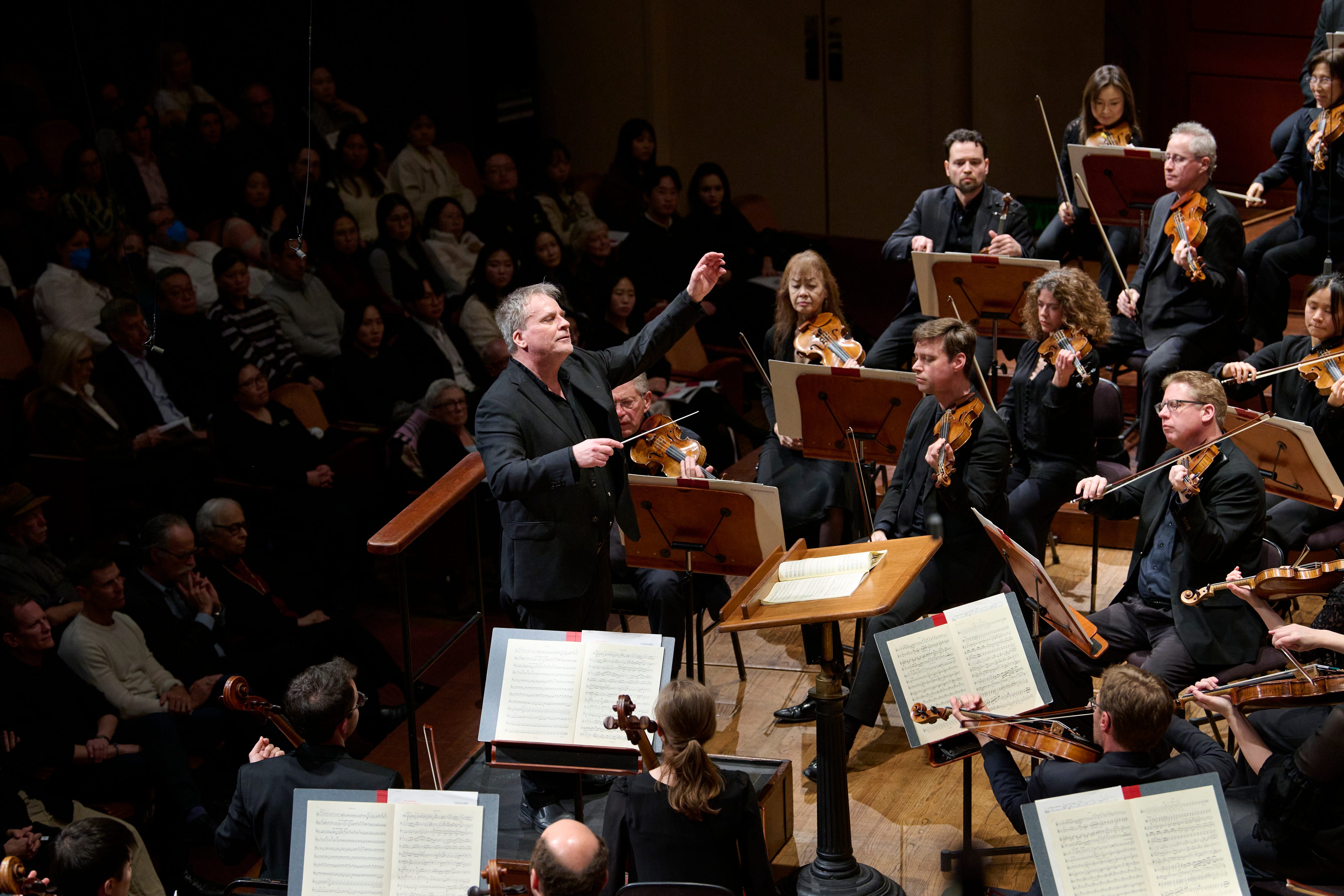
Overall, though, the hero of the evening was Storgårds, the Finnish conductor whose resume includes posts with the BBC Philharmonic and the Turku Philharmonic (Finland’s oldest orchestra!). This was a formidable debut, full of insight and strength. Storgårds podium manner is shambling and seemingly absent-minded, as if he were leaving most of the decisions to the orchestra members and simply tapping the brake or nudging the steering wheel now and again. But that’s an illusion, as most of the performance made clear. In a new piece by his compatriot Outi Tarkiainen and especially in a potent account of Beethoven’s Fifth Symphony, Storgårds crafted the entire performance with deliberate skill.
The U.S. premiere of Tarkiainen’s The Rapids of Life, a tenderly dramatic evocation of childbirth served as a forceful opener. The composer’s English horn concerto Milky Ways had its memorable premiere here three years ago, and here again she showed a gift for orchestral atmospherics — if you’ve ever wondered what life in the womb was like, the first few minutes of this piece, featuring a winding, exploratory solo for cellist Rainer Eudeikis, feels like a plausible approximation.
The piece was also a perfectly apt companion to Beethoven’s Fifth Symphony, which occupied the second half in a splendidly propulsive rendition. Tarkiainen’s piece depicts the Ferguson reflex, in which the fetus is swiftly expelled from the womb in a sudden rush. The analog to Beethoven’s final triumphal breakthrough was hard to miss.
Elsewhere:
Lisa Hirsch, San Francisco Chronicle/SFCV: “Conductors can easily be lured into searching for novel ways to perform [Beethoven’s] Fifth, with eccentric tempos or phrasing. But John Storgårds, the Finnish conductor who’s making his debut this week with the San Francisco Symphony, let the music speak for itself.”
Orchestra roundup
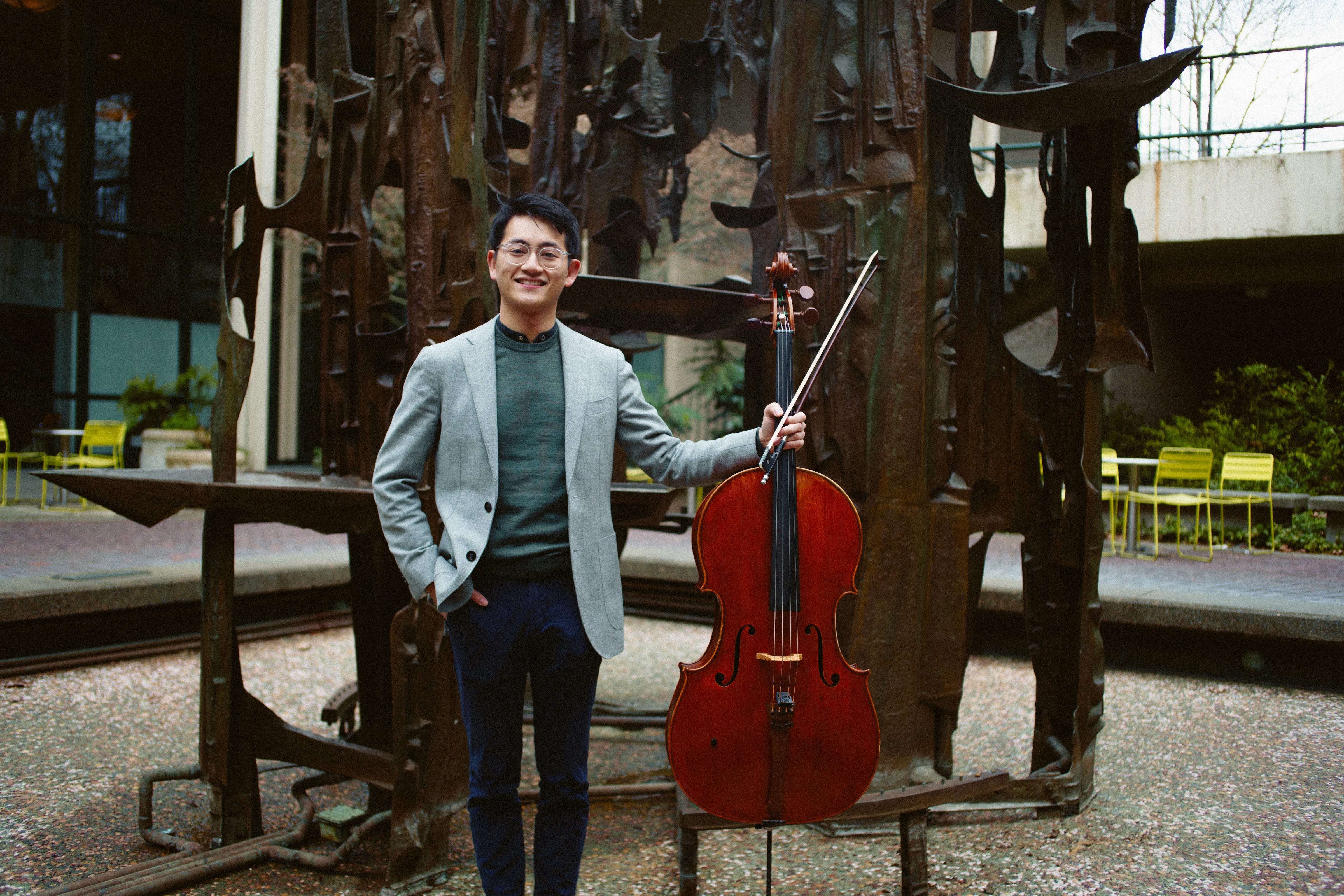
• The Austrian pianist Friedrich Gulda is probably best known to classical aficionados for his recordings of the standard repertoire, including keyboard works of Beethoven and Bach. But he was also a committed jazz player, and his 1980 Concerto for Cello and Wind Orchestra, which constituted the spangly highlight of Saturday’s concert by Donato Cabrera and the California Symphony, finds the composer at his most stylistically multifaceted.
This is a weird concoction, to be sure, with five movements that bounce between the sounds of the Baroque concert hall, the jazz club, and the circus. Cellist Nathan Chan was a delightful soloist, his playing by turns brusque and sinuous; the central cadenza, full of feints and twists, could not have asked for a more persuasive champion. The orchestra’s winds, abetted by an uncredited rhythm section, negotiated their way nimbly throughout. They also stepped into the spotlight after intermission during Schubert’s “Great” C-Major Symphony, when Cabrera seated the winds at the front of the orchestra where the strings usually are — a decision that brought out new shades and balances in this familiar score.
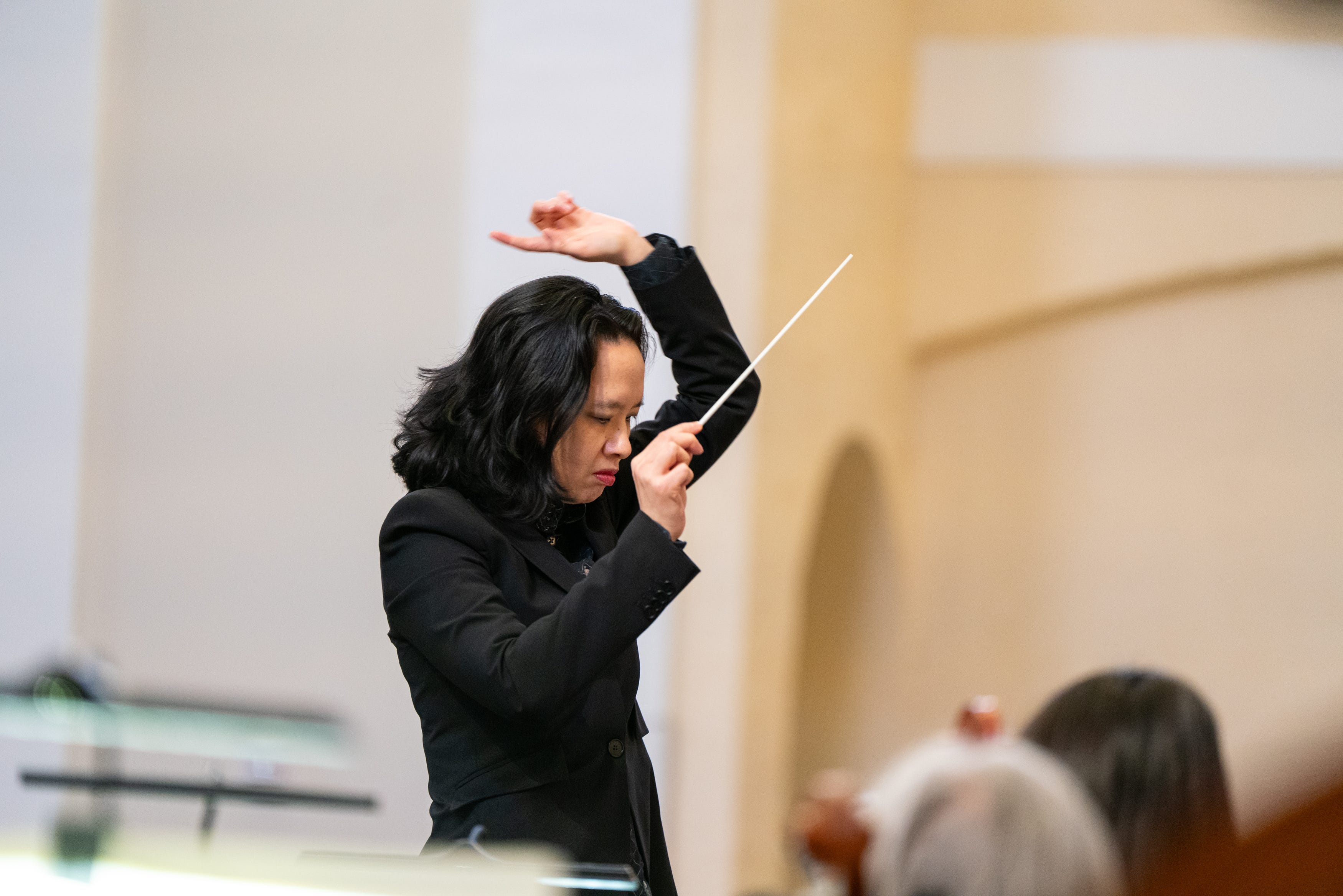
• Sunday afternoon’s final orchestral concert of the season for the Berkeley Symphony was like a quick reprise of last fall’s operatic triumph, The Monkey King. Guest conductor Carolyn Kuan was on the podium again leading the music of composer Huang Ruo — a choice matchup for fervor and finesse. In Huang Ruo’s Folk Songs for Orchestra, you could hear some of the same instrumental resourcefulness and sonorous depth that had run through the more ambitious stretches of the opera. There were clangorous percussion explosions, a brisk march-like episode, a sweet-toned violin solo, and more.
Kuan, who conducts the Hartford Symphony in Connecticut, had assembled a thoughtful program mixing accessible recent work with more traditional fare. O Saci-Pererê, an ingratiating and often lovely guitar concerto by Clarice Assad, spotlighted the eloquence of soloist Marc Teicholz, and Dvorák’s Eighth Symphony prompted some of the orchestra’s most fluid and shapely playing.
Cryptic clue of the week
From Out of Left Field #304 by Henri Picciotto and me, sent to subscribers last Thursday:
Quiet afterthought involving border crustaceans (7)
Last week’s clue:
Menacing and covered with cotton? (7)
Solution: BALEFUL
Menacing: definition
covered with cotton?: second, punny definition
Coming up
• Steven Banks: Plenty of composers write music for low-lying instruments, but there’s not much solo work in the standard repertoire for the baritone saxophone. So this American virtuoso has adapted music for bassoon (by Saint-Saëns) and cello (Beethoven and Barber); his recital with pianist Xak Bjerken also includes recent music by Carlos Simon and John Musto. Feb. 1, Hertz Hall, UC Berkeley. www.calperformances.org.
• Vallejo Symphony: Music director Marc Taddei and the orchestra’s tour through the “London” Symphonies of Haydn have brought them to No. 101, the “Clock” Symphony, with the tick-tock slow movement that provides its nickname. Also on the program is mezzo-soprano Nikola Printz singing Berlioz’ Les nuits d’été, along with Ravel’s Le tombeau de Couperin. Feb. 1, Empress Theatre, Vallejo. www.vallejosymphony.org.
As always, deepest admiration for your writing. Very glad you liked Storgårds as much as I did.
Fantastic review. The observation that Storgårds' conducting style looks shambling but is actually tightly controlled reflects something I've seen in othr conductors too. When Shostakovich lets his hair down, those moments become even more poignant becuase of the contrast with the heavier stuff. The interplay between Cho and Inouye in the trumpet-piano exchange must have been electric.