
Thrice over lightly
A swift overview of three musical and theatrical events from a slowish week

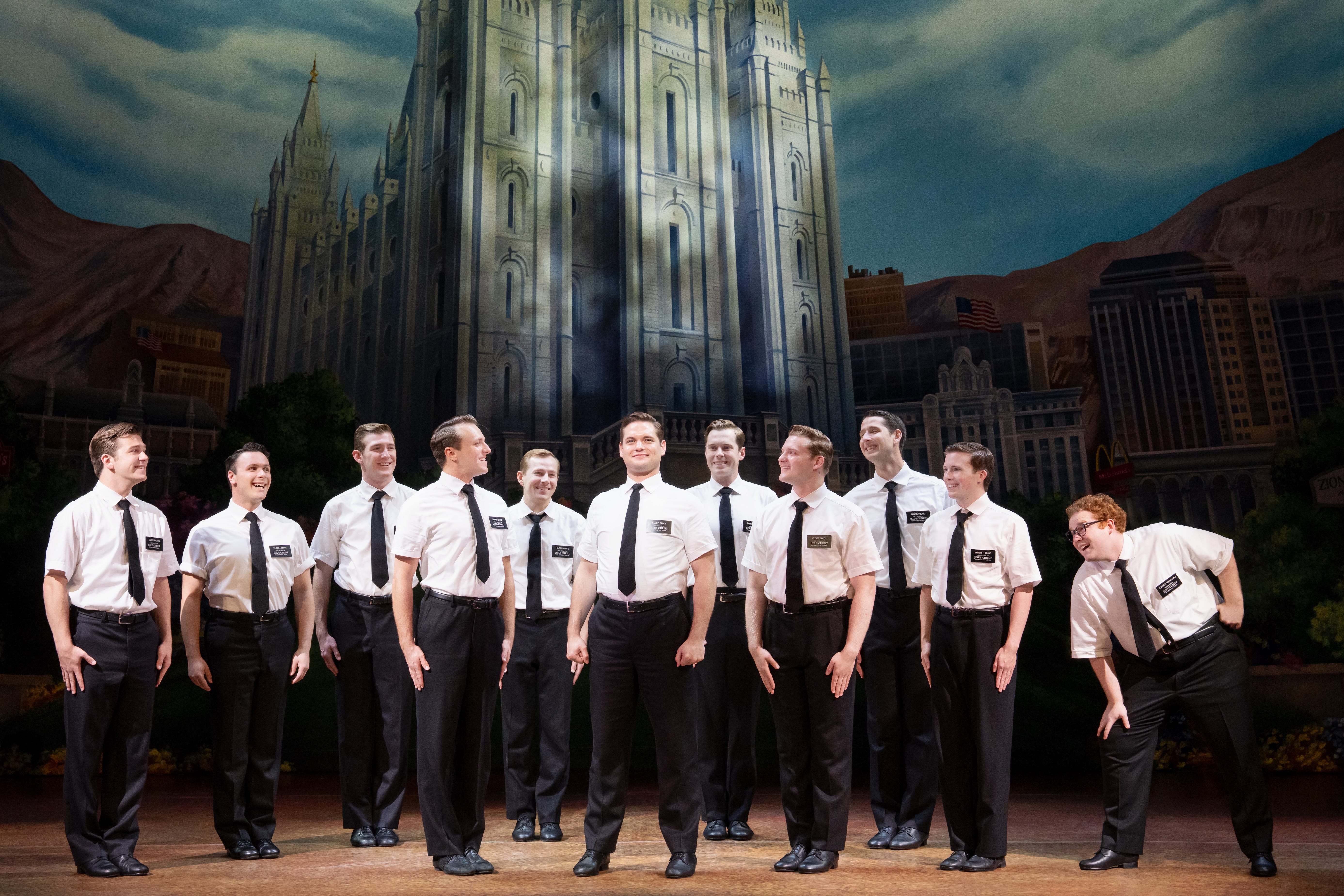
It’s been a quiet week around the old town, as the fellow on the radio used to say. I heard some music and saw some theater, sometimes with pleasure. But none of it felt particularly urgent or inspired much in the way of a critical response. So let’s do a quick tour through the week’s events and go on about our day.
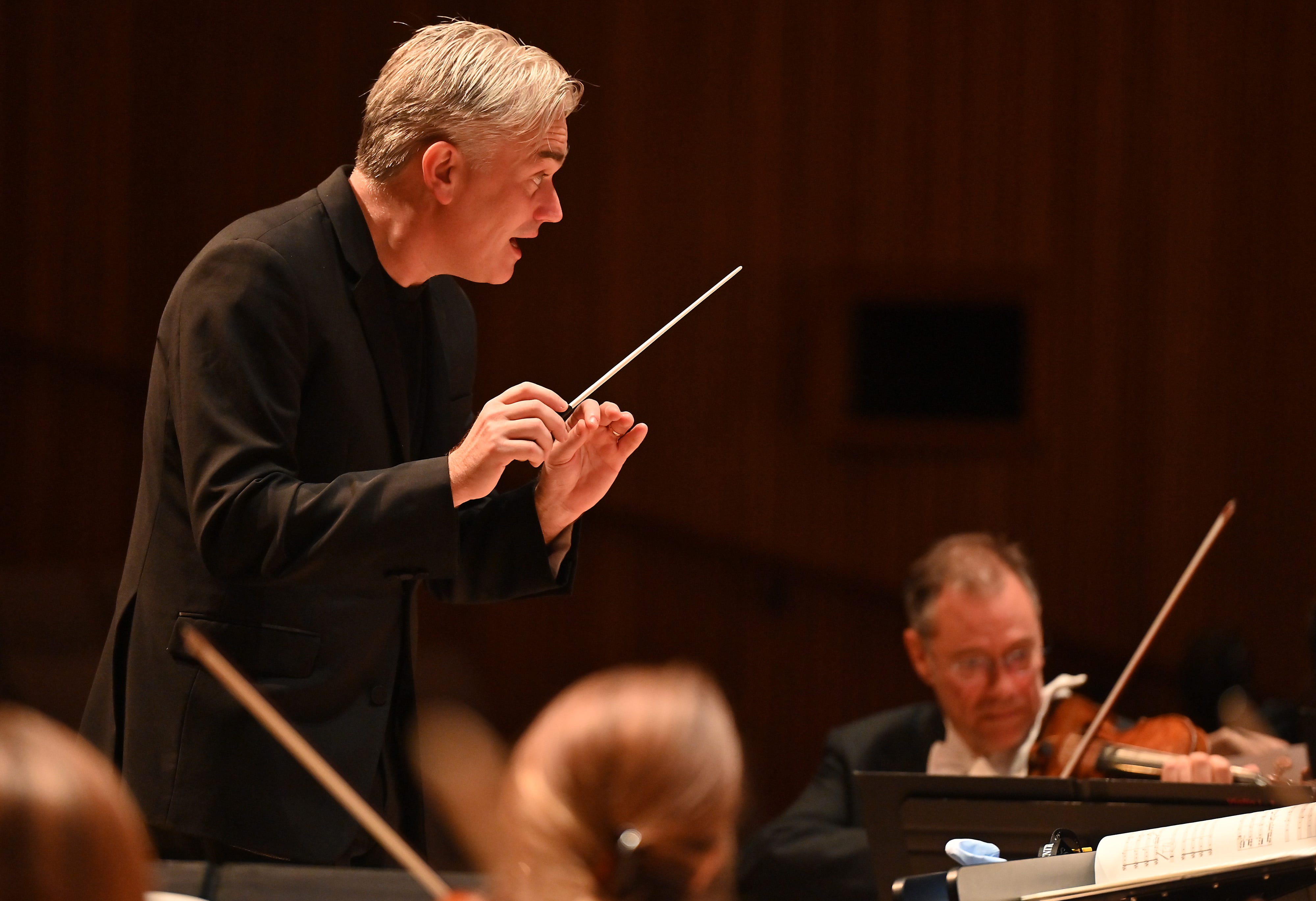
• In Davies Symphony Hall, the San Francisco Symphony welcomed back the English conductor Edward Gardner for his first guest appearance since his 2018 debut. As in his previous visit, Gardner turned out to be a canny and skillful interpreter of music that wasn’t entirely worth the effort. Or to put it another way, both Bruch’s G-Minor Violin Concerto and Holst’s The Planets deserve their place in the repertoire; I just don’t care very much. The marginal artistic return of a top-notch performance compared to one that’s solid and unobjectionable isn’t especially big.
More interesting than either of those was the first Symphony performance of Vaughan Williams’ 1909 Overture for a stage production of The Wasps, Aristophanes’ acute satire of the Athenian legal system. I had never heard the piece in concert before, and on record only decades ago, and it proved an utter delight. There are onomatopoeic passages of buzzing and fluttering trills to conjure up the titular figures (take that, Rimsky-Korsakov!) and the jaunty, square-toed melodies that come out of the composer’s immersion in old English folk music. The whole thing is perfectly shaped as a fluid succession of thematically distinct chapters, and Gardner caught the flavor of the piece perfectly.
He also did well with the larger and more familiar offerings. “Mars, the Bringer of War” opened the Holst with the requisite panoramic bravado, and it was well matched by the spectral decrescendo of the concluding “Neptune, the Mystic,” with Jenny Wong’s Symphony Chorus vocalizing almost inaudibly in the rear of the hall. The horn solo at the beginning of “Venus, the Bringer of Peace” was delivered with tenderness and suavity by Diego Incertis Sánchez, the orchestra’s brand-new principal.
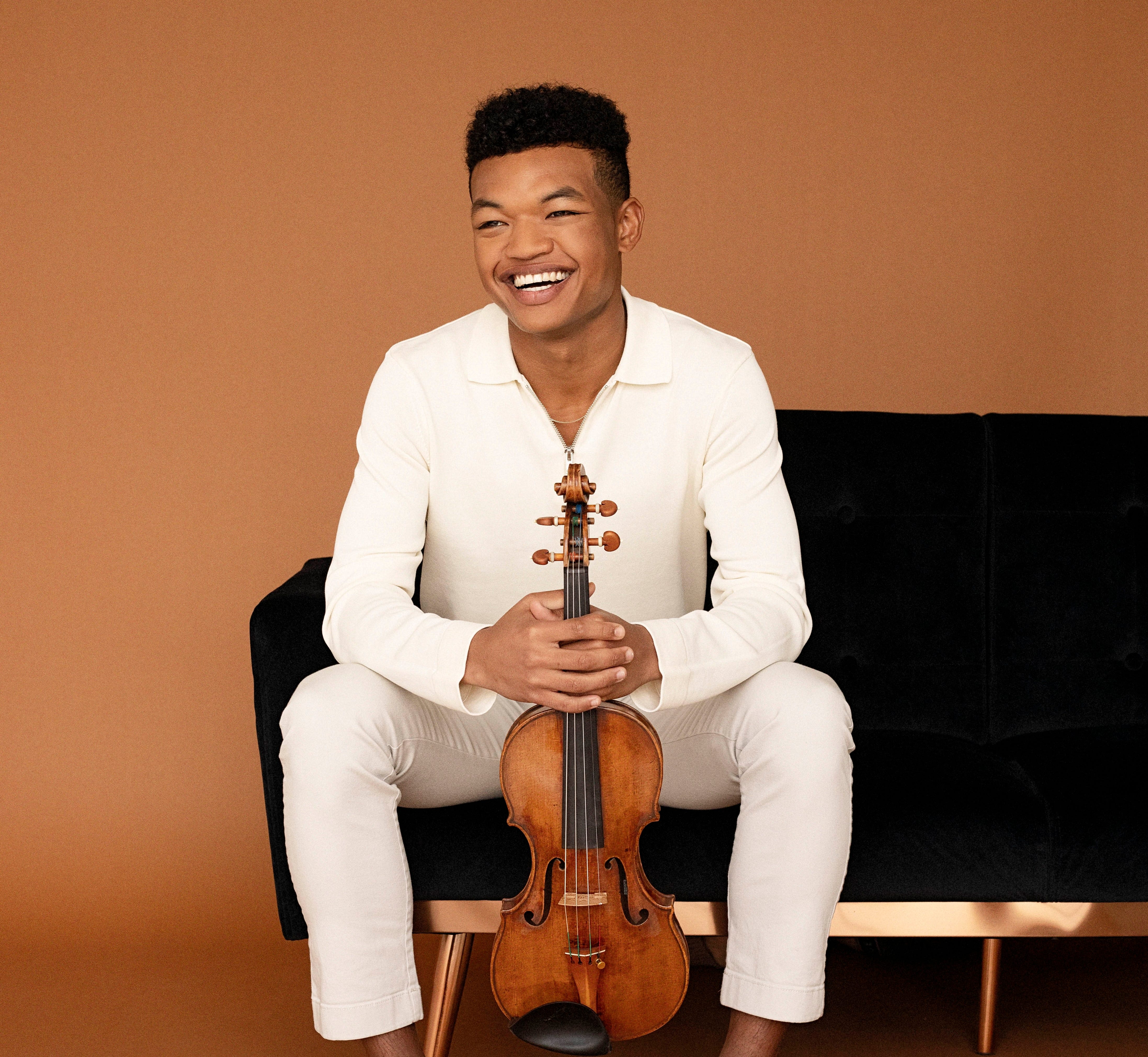
The soloist for the Bruch was the acclaimed young violinist Randall Goosby, whom I was finally encountering for the first time. He seems like an artist of technical panache and expressive depth, but I’d have to hear him in something more telling than the piece I still think of as the not-Brahms Concerto.
Steven Winn, San Francisco Chronicle/SFCV: “Hitting decibel levels rarely heard at Davies, the opening of ‘Mars, the Bringer of War,’ was like an aerial attack. Over ominously pulsing strings, a large brass ensemble all but exploded with exultant alarm. ‘Venus, the Bringer of Peace’ seemed to hover in space with a beguiling interplay of horns and harps.”
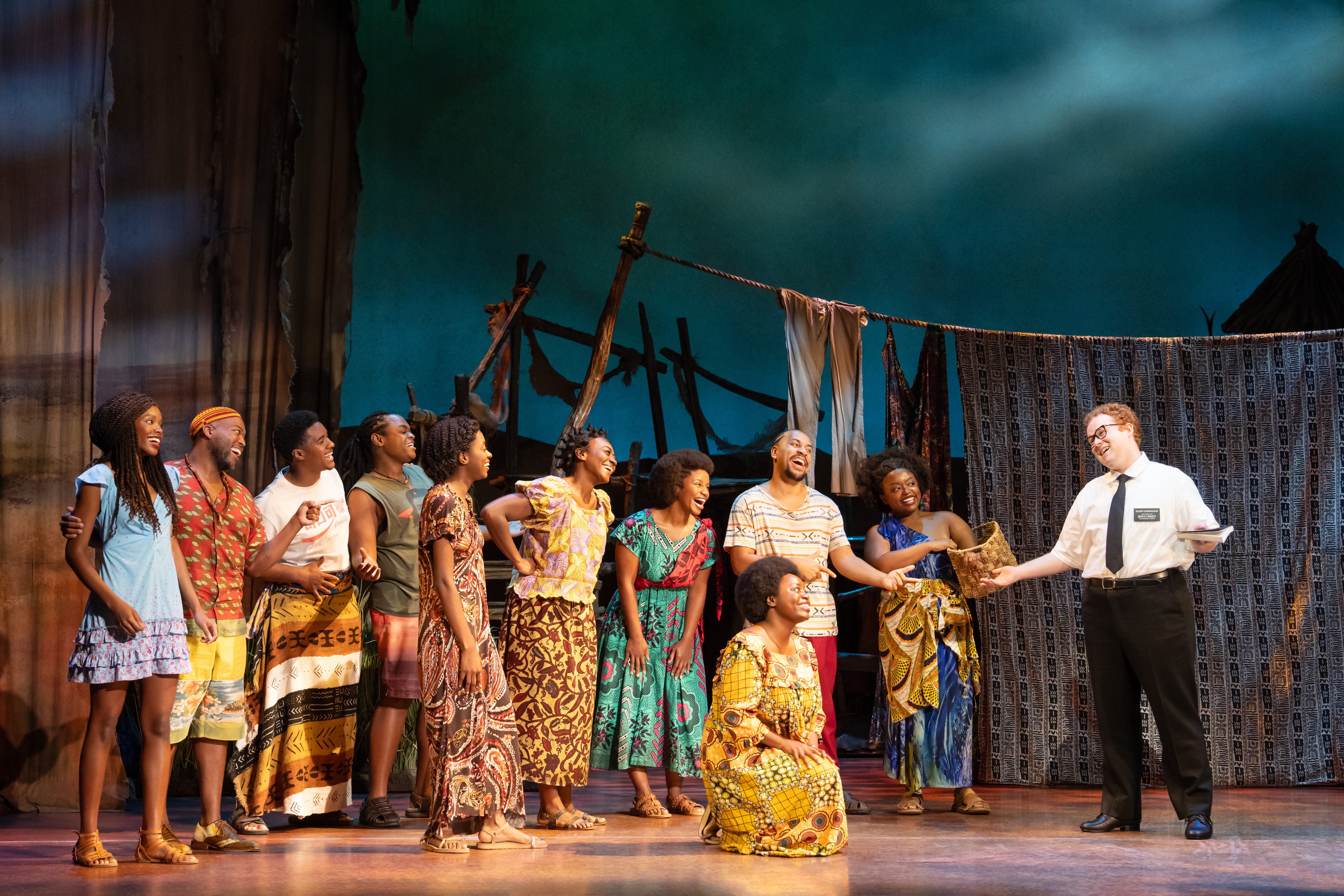
• The big reveal in the hit Broadway musical The Book of Mormon comes late in the second act. One of the young missionaries sent to Uganda to spread the Word to the local villagers (the needy, manic Elder Cunningham) has been preaching a nonsense variant of Mormon doctrine, improvised amid a spiraling flurry of flop-sweat. Whatever he thinks the villagers need to hear, either for his protection or theirs — stories about frogs, advice on how to not get AIDS, wisdom for dealing with murderous warlords — suddenly pops up in his holy book, which is also now populated by characters from Star Trek, Star Wars, and Lord of the Rings.
And it works, until it doesn’t. The villagers willingly get baptized into the new church, only to eventually find out that the whole thing is a fiction. But Elder Cunningham’s guilt-ridden apologies are laughed off. The Ugandan Mormons — wiser, perhaps, than their American counterparts — never believed that any of these yarns were literally true. Of course frog-fucking isn’t a thing. Of course there’s not an actual place called Salt Lake City. It’s all a big metaphor.
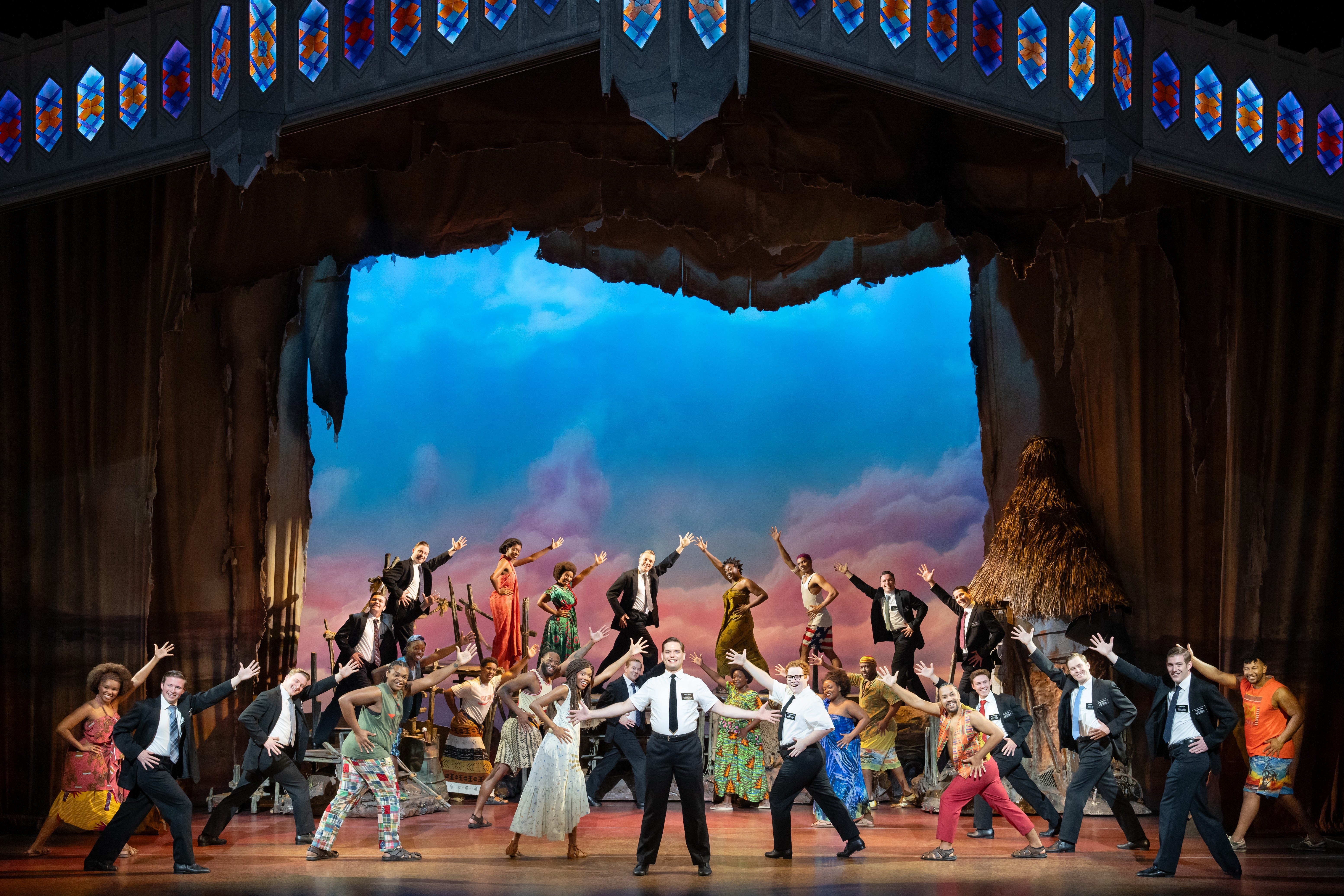
When I first saw The Book of Mormon during its 2018 tour here, that moment hit me with an exhilarating jolt. It seemed to encapsulate, concisely and with expert comic timing, two things I’ve always believed about religion: a) from the point of view of truth or falsehood it’s transparently nonsense, but b) concluding that the entire enterprise is therefore worthless is a grave error. That’s a powerful lesson to encode amid deliciously puerile humor, catchy song-and-dance numbers, and pasteboard characters.
But when I returned to the Orpheum Theatre last week for the latest touring incarnation presented by BroadwaySF, I was surprised to discover how fleeting that memorable twist actually is. The line gets a laugh, and then the show moves on. It felt like revisiting a place you’d lived as a child: Really, that’s all it was? As before, I enjoyed Mormon from start to finish; the songs are tuneful and damnably clever, the book sparkles with rapid-fire comic bits, and there’s even a little emotion to leaven the raunch. But I missed that earlier lightning strike.
Lily Janiak, San Francisco Chronicle: “Mormon is still hilarious, though, especially with [Jacob] Aune as the bungling nerd Cunningham. His face buckles like a squashed tomato when he’s disappointed. When he’s trying to duck responsibility for a grievous error, he might gaze around as if inventing an invisible mosquito to swat.”
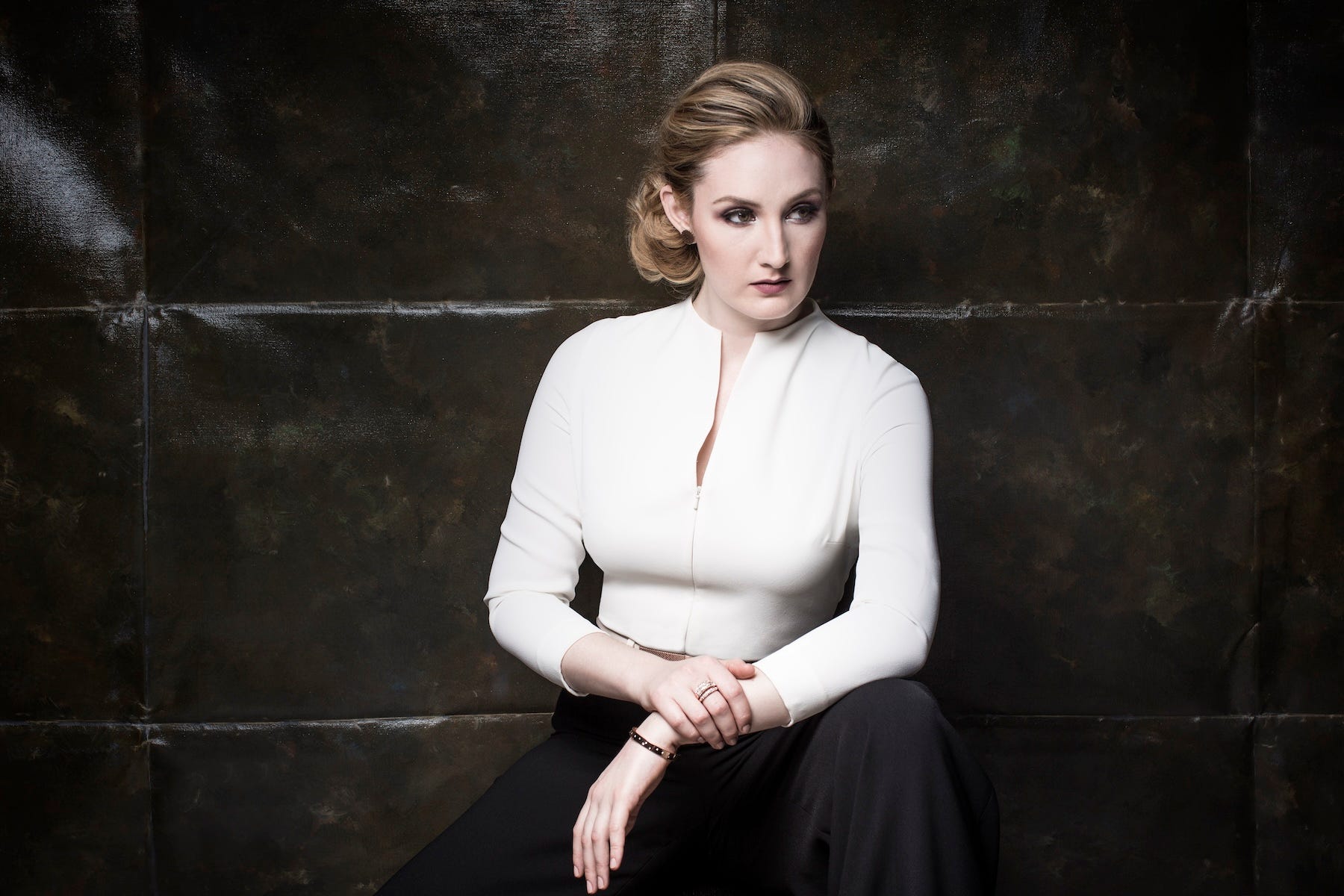
• The prize in mezzo-soprano Samantha Hankey’s Sunday afternoon recital in Berkeley’s Hertz Hall was the program’s extra-concise second half, devoted to cabaret songs by Satie, Schoenberg, Weill, and others. Some of these songs (Weill’s “Speak Low,” Cole Porter’s “So In Love”) are well-known, some less so. But Hankey and pianist Myra Huang gave them all a fluid, easy swagger that segued into seductiveness and out again with perfect assurance.
Those songs came as a marked contrast to the strenuous acerbity of the first half, devoted to Poulenc’s Three Songs of Federico García Lorca and Robert Schumann’s great song cycle Dichterliebe. These songs were delivered at high volume, with urgency and insistence often substituting for tonal variety or expressive depth. The tension level was suggestive of a young singer taking an audition that she wasn’t sure was going well for her; you wanted to urge her to relax and let the music breathe. Happily, that’s just what she did after intermission.
Cryptic clue of the week
From Out of Left Field #303 by Henri Picciotto and me, sent to subscribers last Thursday:
Menacing and covered with cotton? (7)
Last week’s clue:
Audited purchase: simple aircraft (7)
Solution: BIPLANE
Audited: homophone indicator
purchase: “buy”
simple: “plain”
aircraft: definition
Coming up
• Sarah Cahill: The Bay Area’s leading champion of contemporary piano music offers a deftly themed recital program of music written in homage to predecessors and colleagues. Ravel’s Tombeau de Couperin sets the course, and is followed by other musical homages by Lou Harrison, Zenobia Powell Perry, Danny Clay, and more. Jan. 23, Old First Church. www.oldfirstconcerts.org.
• New Century Chamber Orchestra: Violinist Simone Porter steps in as leader for a program featuring a collaboration with students from the San Francisco Conservatory of Music. The repertoire ranges from Hildegard von Bingen through Andrew Norman and Juhi Bansal, with stops for music by Bach, Mozart, and Villa-Lobos. Jan. 23, Bing Concert Hall, Stanford. Jan. 24, San Francisco Conservatory of Music. www.ncco.org.
well this prompted me to look up a recording of the Vaughan Williams "Wasps" piece and you're right, it's a delight!
(also, can you block that 'AI Architect' commenter? Strongly suspect they are a bot. They've been spamming other Substacks I read with similar comments that just regurgitate what the essay said.)
Really sharp observations here. That bit about the Vaughan Williams overture being a 'fluid succession of thematicaly distinct chapters' captures exactly what makes those kinds of pieces work. I've always found those early 20th-century British composers have this weird ability to make folk-inflected music sound both nostalgic and completely fresh. Dunno if that made sense but the whole reveiew felt like sitting in on a great conversation about music.