

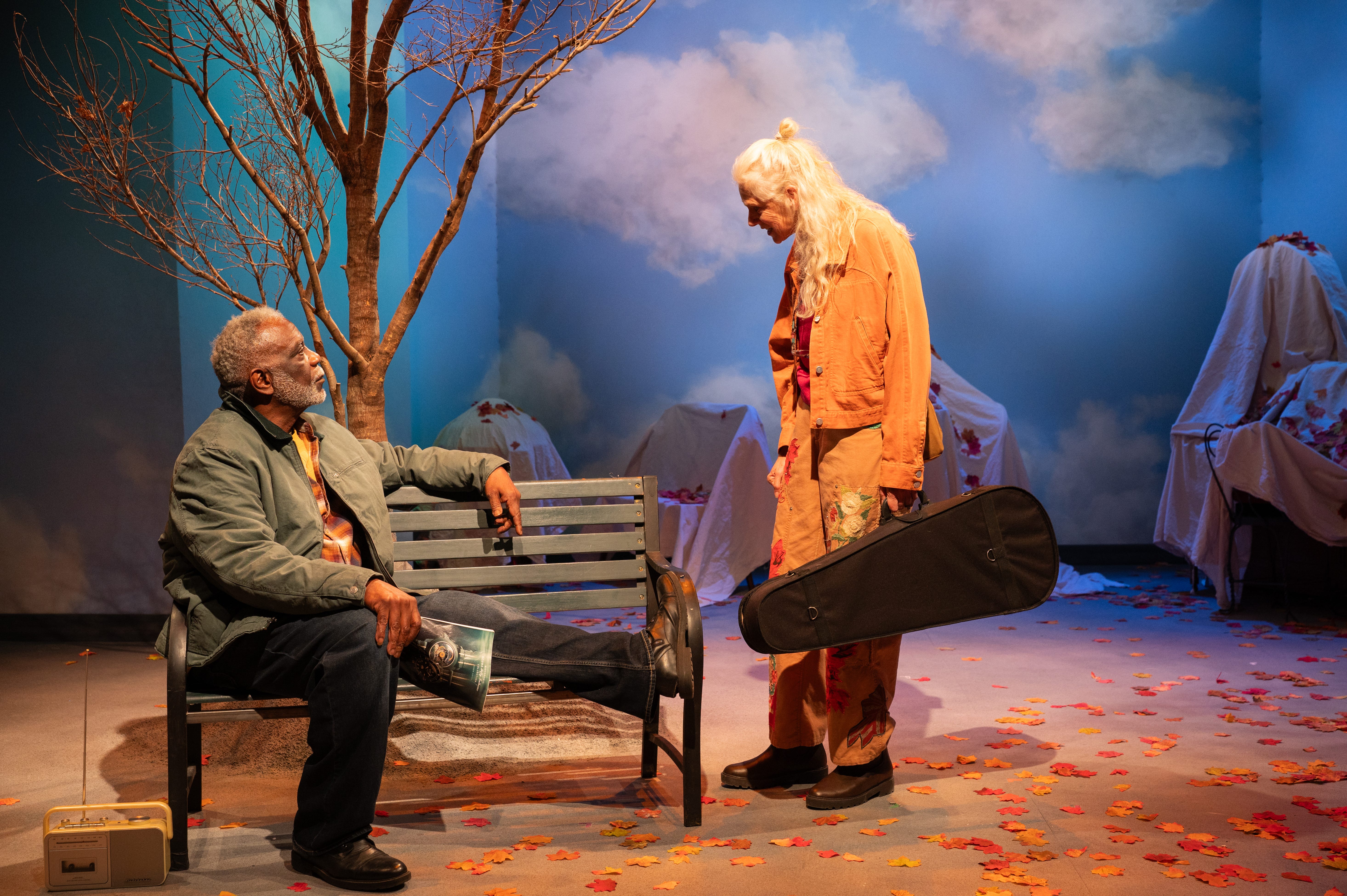
At the deep heart of The Fall Show — very deep, far beneath the ornamental features that define the play and make it such an endless theatrical delight — is a story that’s simple to the point of banality. It’s not even a story, really, so much as a prompt. A man and a woman, neither of them in the first blush of youth, meet on a park bench and … well, they don’t exactly fall in love there and then, but they feel something that makes them think the possibility of love might be worth exploring. That’s it, that’s the premise.
Yet what grows out of that simple seed in this work by Erika Chong Shuch and Charles Mee, now onstage at Shotgun Players, is a manic, overgrown riot of music, visual imagery, theatrical stunts, humor, and pathos so lovingly multifarious that you have to surrender yourself to it. Don’t ask why, don’t ask what — those answers may or may not come. The experience is everything.
As one character puts it, concluding a long, discursive conversation about a life well lived, “I would just take delight, long-term.”
A little description might make it easier to envision this one. The two protagonists (Beth Wilmurt and Reginald Wilkins) do a meet-pugnacious one autumn afternoon in the park, when she imperiously demands that he shove over to give her room to sit. He’s reading the AARP Bulletin, she’s reading Harpers. Their shared commitment to ’60s radical politics emerges with comic speed. They talk and argue and talk some more, and he goes back to her place for more of the same, along with what the Scots call houghmagandy.
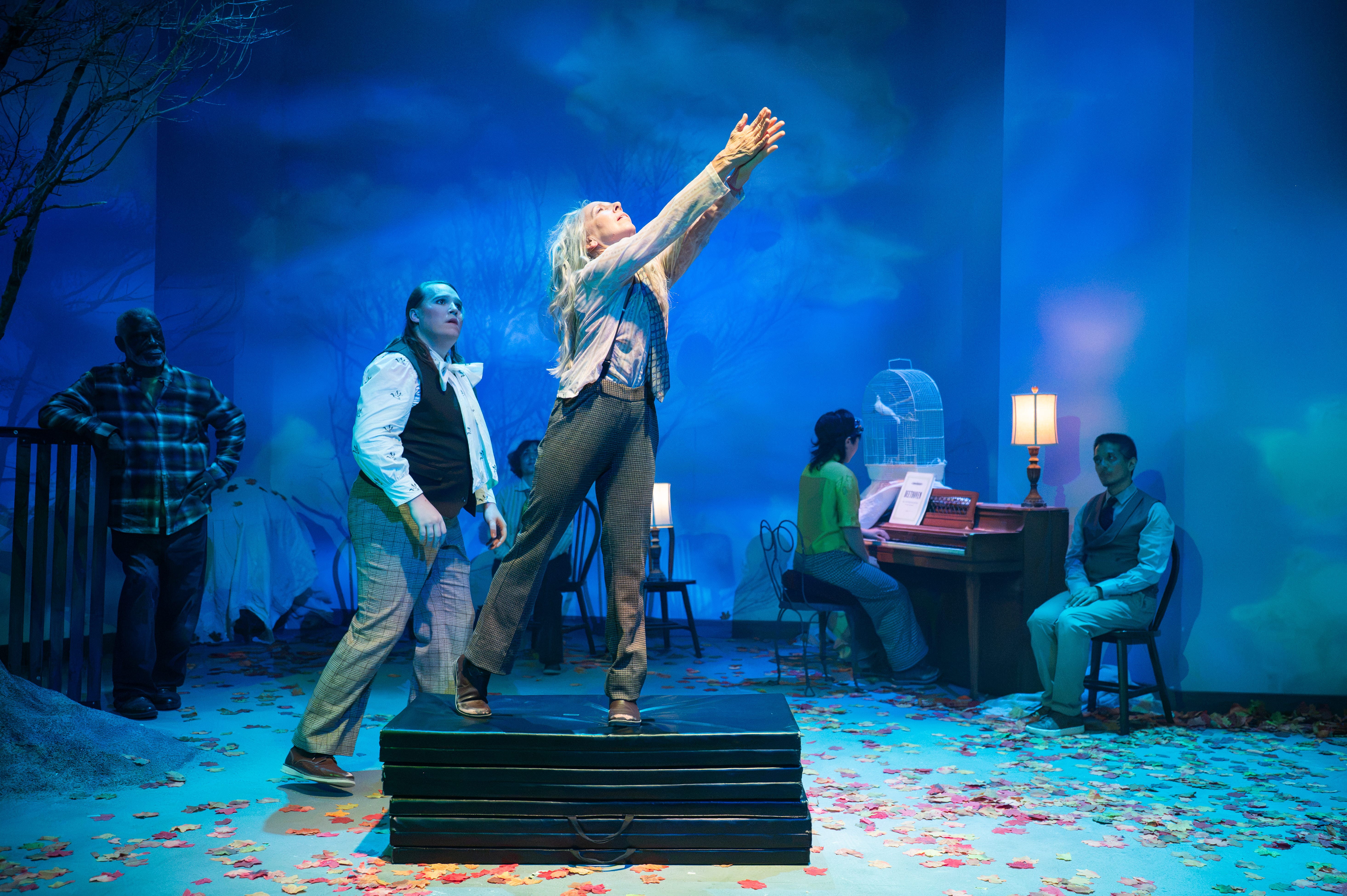
But draping themselves around this simple sequence of events is a corps of six shape-shifting performers who race constantly up, down, and across the stage, like so many demons and imps cavorting in the margins of an illuminated manuscript. They’re unconstrained by narrative logic or rational thought — a model for the audience to follow.
What do they get up to? Well, there’s a lot of music, including a reggae mashup of “Ring of Fire” and “I Don’t Want to Set the World on Fire,” a Beethoven piano sonata, and Jackie Wilson’s “I’ll Be Satisfied” accompanied by a ukulele. The actors take up elaborate stage tableaux recreating René Magritte’s best-known paintings. There’s a TV game show about sex and death.
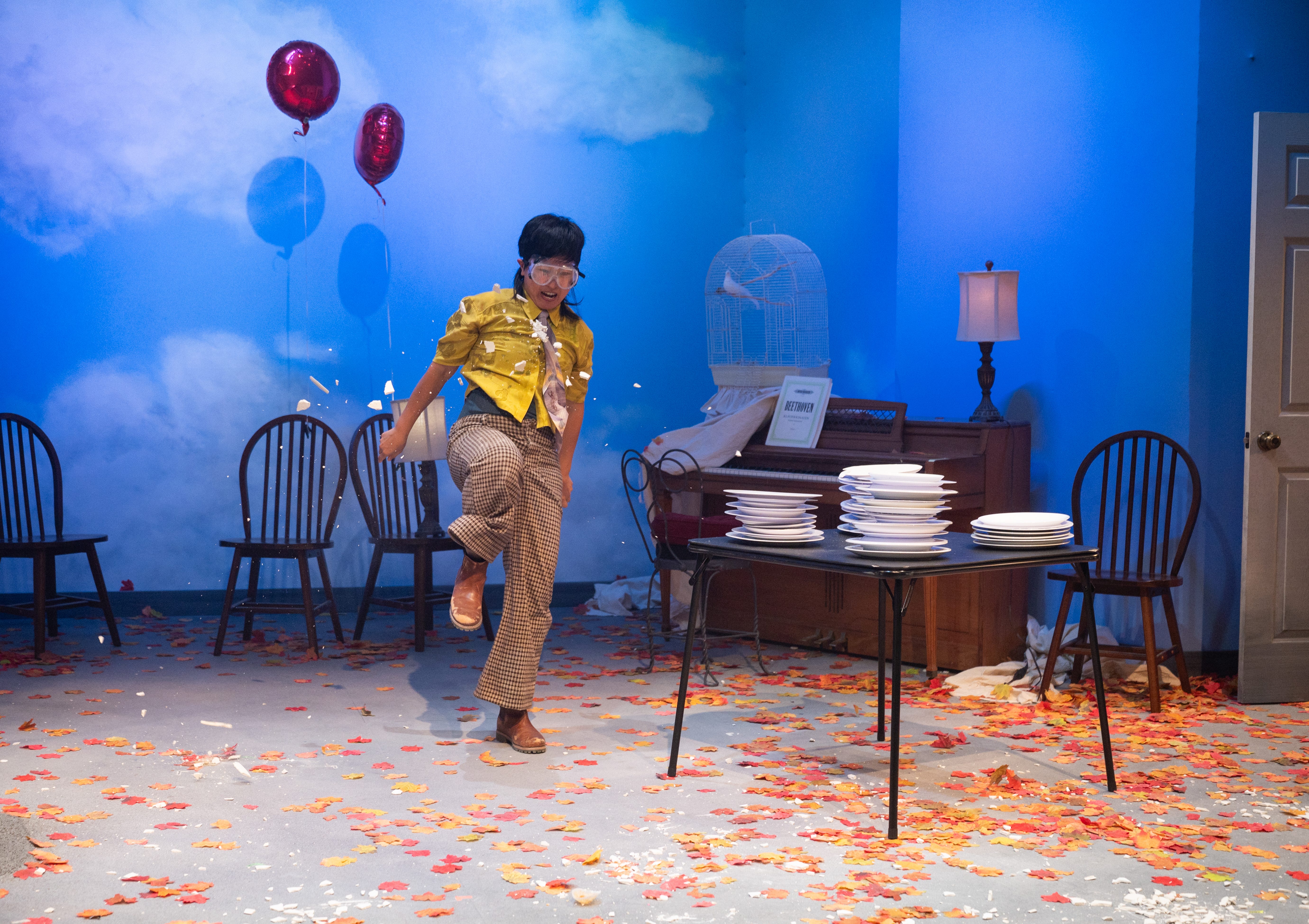
At one point, an entire door frame is pulled out of the set and rolled to center stage, where it’s rotated frantically to serve as both sides of a fierce doorstep set-to. At another, pieces of furniture come to life and start muttering commentary, which of course leads to a musical except from Beauty and the Beast. Plates are shattered amid screams of rage.
Yet it would be a mistake to confuse the outer and interior layers of The Fall Show. Beneath the frou-frou lies a small but profound consideration of love and aging and family and nature. The Fall Show asks us to consider — maybe later, when the hubbub has died down — what other people mean to us, and what we bring to new situations in life once we’ve accumulated experiences and children, and why in spite of everything we might not be better off alone. After spending 75 minutes immersed in the show’s circus-like ebullience, you might still find yourself wiping away a delicate tear on your way out.
The Fall Show: Shotgun Players, through Oct. 25. www.shotgunplayers.org.
Elsewhere:
Lily Janiak, San Francisco Chronicle: “At its best, Chong Shuch’s direction makes the world, onstage and off, look more magical. Maybe our easy chairs, birdcages and other household objects secretly do become animate sometimes, Beauty and the Beast-style, to follow us around and whisper gossip about our love affairs. Maybe, when our toasters explode, it’s because all the human feeling in our kitchen is just too hot and heavy.”
Straussian letdown
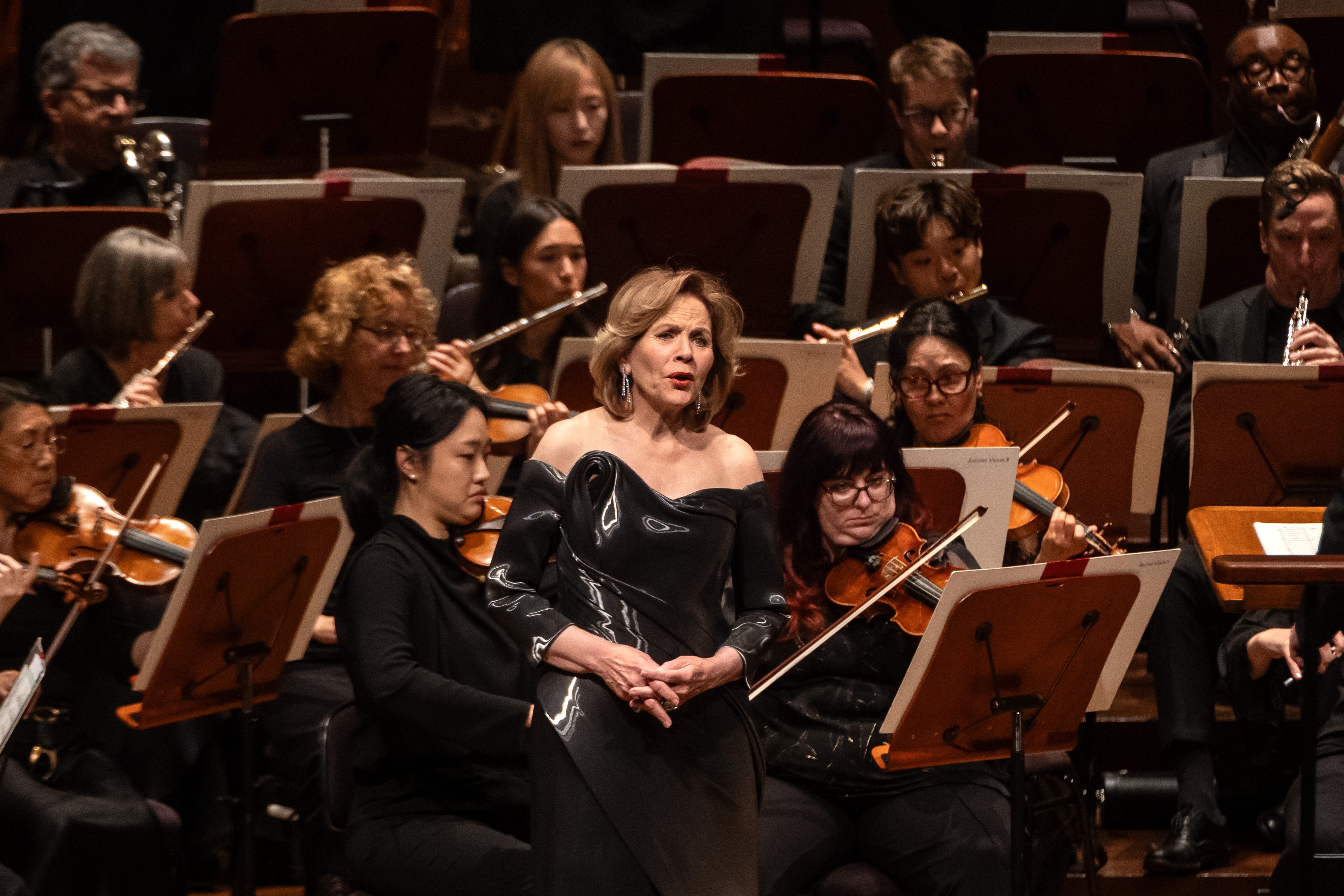
For many decades now, soprano Renée Fleming has been one of the most prominent figures in the operatic world, well known outside the narrow confines of the opera house and praised beyond measure within it. And for nearly as long, I’ve been over here in my little corner thinking Really though?
Yes, her voice is beautiful; of course it is. In her best years, Fleming’s singing combined plushness and clarity in a blend that could be practically intoxicating. But there was always a certain vacuous quality to her performances, a sense that tonal riches were expected to cover for a lack of expressiveness. Her last performance in a staged opera at San Francisco Opera, a glazed-over version of the title character in Donizetti’s Lucrezia Borgia in 2011, was nothing short of an embarrassment in this regard.
And of course, when you put all your reliance on tonal beauty, there comes a time when the vocal instrument itself no longer does its part. Fleming’s regrettable account of Strauss’s Four Last Songs with the San Francisco Symphony on Thursday afternoon suggested that that day is either here or not far off. Quite simply, there’s not much voice left. Great stretches of melody were barely audible; the parts you could hear often sounded tentative or unsteady. Even when Fleming sang forthrightly and clearly, Hermann Hesse’s fragrant poetic texts streamed past without much nuance or communicative presence.
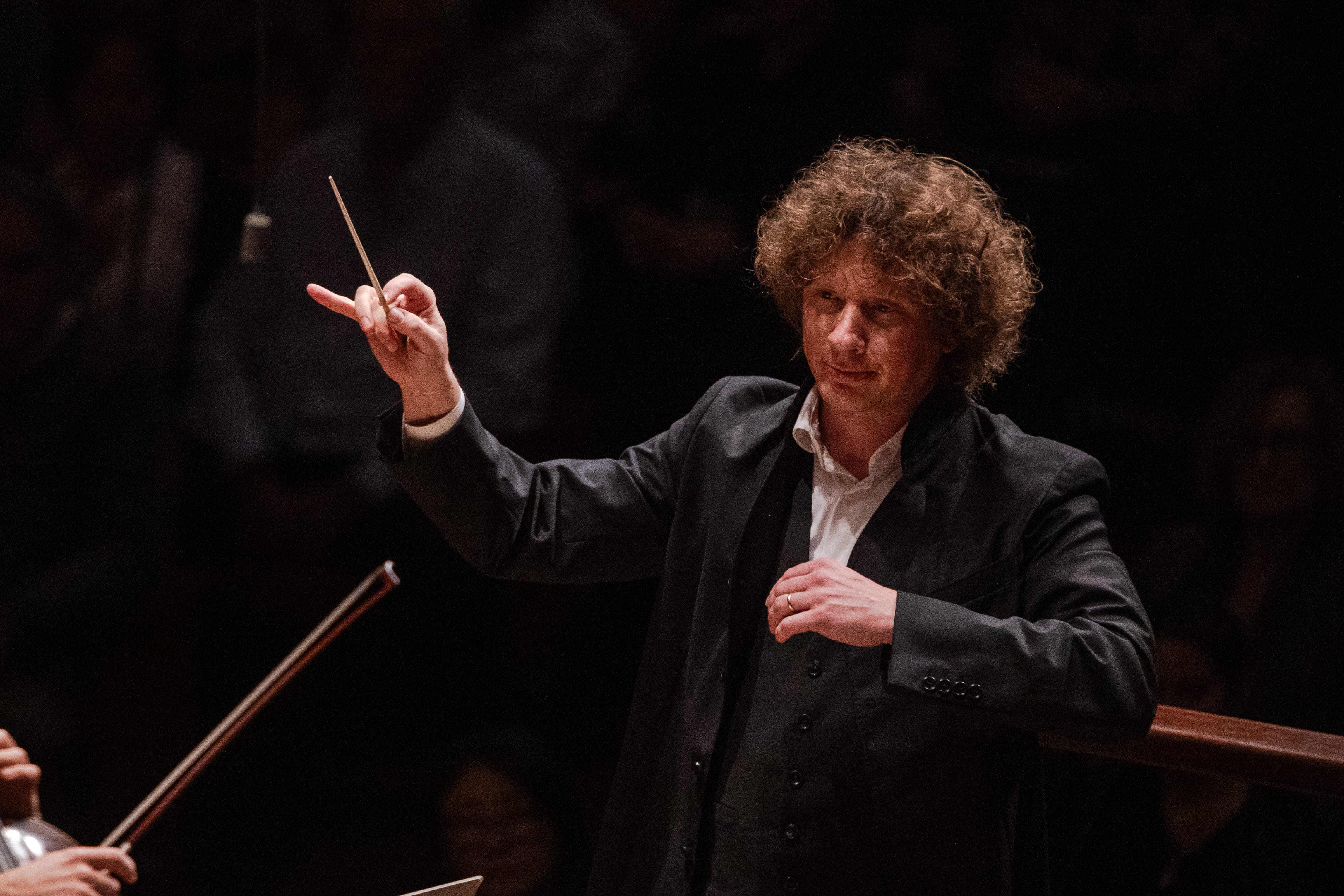
Santtu-Matias Rouvali, the Finnish conductor making his Symphony debut, did neither her nor anyone else many favors. Instead of clearing space in which Fleming might have been heard, he just kept the orchestra rolling along, as if balances were someone else’s responsibility. And after intermission, for the second half of this Straussian double-header, he led the orchestra in a blunt, galumphy account of Ein Heldenleben (A Hero’s Life). Admittedly, Heldenleben — Strauss’s chest-beating celebration of his very own self — can often sound a little brutish compared to the composer’s other orchestral tone poems. But Rouvali leached out all the score’s orchestral color and most of its harmonic luster, leaving 45 minutes’ worth of gray, featureless tromping from one chapter to the next.
Elsewhere:
Lisa Hirsch, San Francisco Chronicle/SFCV: “As the Marschallin says in Strauss’s Der Rosenkavalier, “Time…is a strange thing” — and it’s catching up with Fleming.”
Also elsewhere
Friday night brought the San Francisco Symphony’s Concert for MTT, a three-hour event featuring music, reminiscences, video and photo projections, and more. I wrote about it for The Chronicle, and I don’t have much to add here. It’s just sobering and jubilant and sorrowful — all the feels, really — to think about what a huge presence he was in our lives for so many years, and how this was probably the last occasion for a public acknowledgment and farewell. I miss him so much.
Cryptic clue of the week
From Out of Left Field #340 by Henri Picciotto and me, sent to subscribers last Thursday:
Beethoven creation is timeless pornography (6)
Last week’s clue:
Composer Charles has no time to play the market (6)
Solution: INVEST
Composer Charles: IVES
has: container indicator
no: N
time: T
to play the market: definition
Coming up
• Brooklyn Rider: This tirelessly innovative string quartet makes a welcome return to the Bay Area with a program for San Francisco Performances that blends old and new. Haydn opens the evening, only to give way to recent works by Angélica Negrón, Don Byron, and Ted Hearne, with violinist Colin Jacobsen’s arrangement of Bob Dylan’s “The Times They Are A-Changing” to close. Oct. 8, Herbst Theatre. www.sfperformances.org.
• Other Minds Festival: As co-founder and longtime artistic and executive director Charles Amirkhanian prepares to hand the baton to his successor, Joseph Bohigian, this revolutionary champion of new and unusual music marks its 30th annual festival. The four-day celebration includes a full-length work by Bohigian about the Soviet-Armenian filmmaker Sergei Parajanov, an evening of new and improvised music spotlighting the Hardanger fiddle, a visit by minimalist legend Charlemagne Palestine, and much more. Oct. 8-11, Brava Theater. www.otherminds.org.
We saw "The Fall Show" last night, and wow, 100% agreement." What a wonderful show. I need a full playlist, though maybe you recognized the piano piece I didn't - Satie, maybe?
Also! Category is "Games Music Majors Play," in this case "Identify a Work From Its First Chord." I don't have perfect pitch, but I knew exactly what piece started with that big Eb major chord, presumably from the orchestration and voicing. Did you?
EROTICA - T