
Primary killers
In Oakland, a one-man “Assassins” anatomized the lure of political homicide

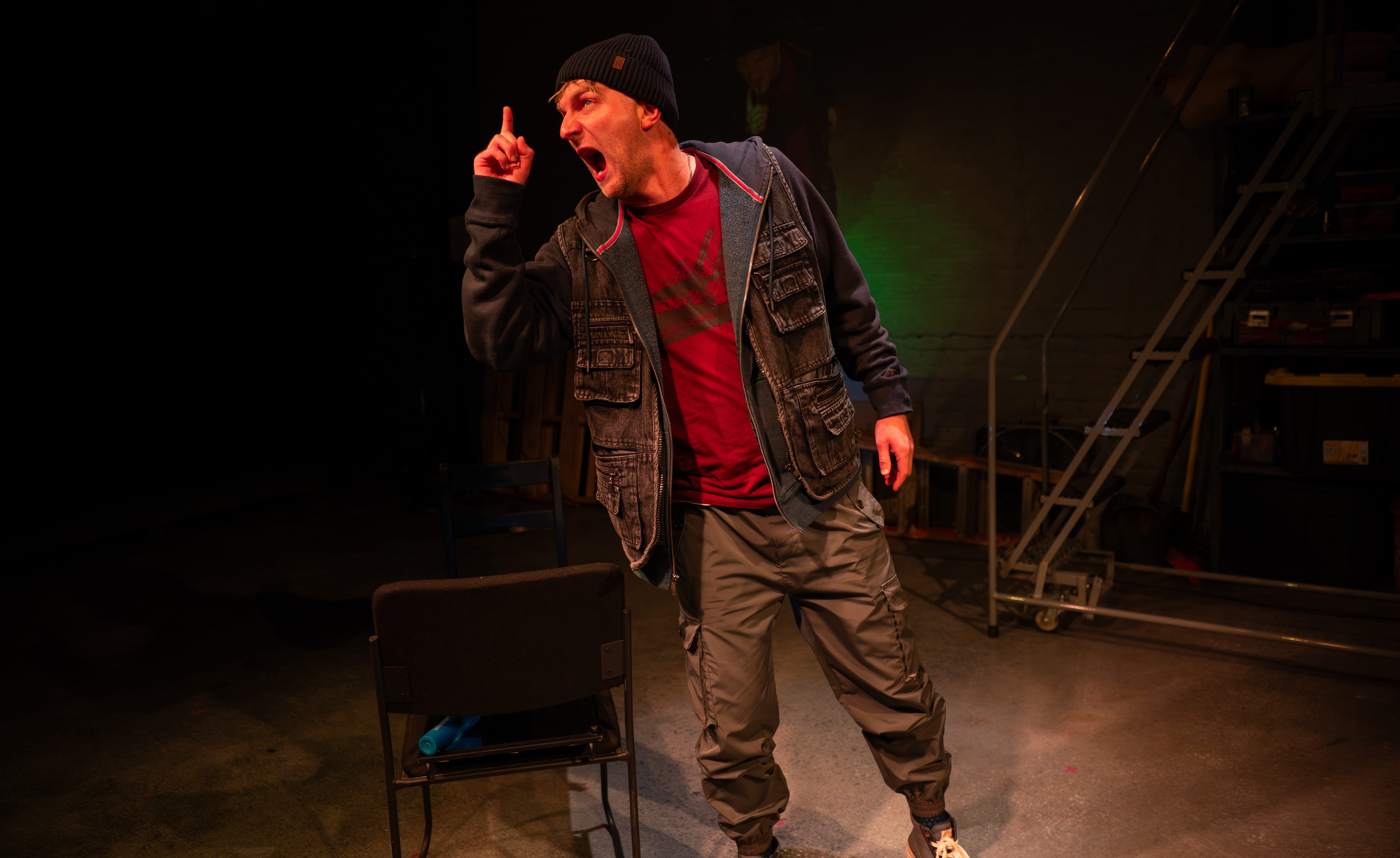
Assassins, Stephen Sondheim and John Weidman’s 1990 musical revue about the misfits, screwballs, and malcontents who try — sometimes successfully and sometimes not — to shoot an American president, can be thought of as an attempt to tease out a coherent theory to explain an array of stories that really make no goddamn sense, either individually or collectively. This one wants to avenge the Confederacy, that one to impress Jodie Foster, yet another to get himself named ambassador to France. It’s all a mass of disassociated delusion, with each shooter starring in a private morality tale of their own devising.
What Sondheim and Weidman do is to bring all these loners together, collapsing the differences between them so that their various stories become one story. Do you have unbearable stomach pain? Are you angry because Charles Manson isn’t revered as a god? Are you being ground down by the social injustices of capitalism? The solution is always the same — kill the president — and slowly that commonality comes to be all-defining. In the great climactic scene, where all the assassins gather around Lee Harvey Oswald up in the Texas School Book Depository and try to persuade him to be their Messiah, that project finally comes to completion. They’re no longer disparate lost souls. They’ve become an army, working toward a single goal.
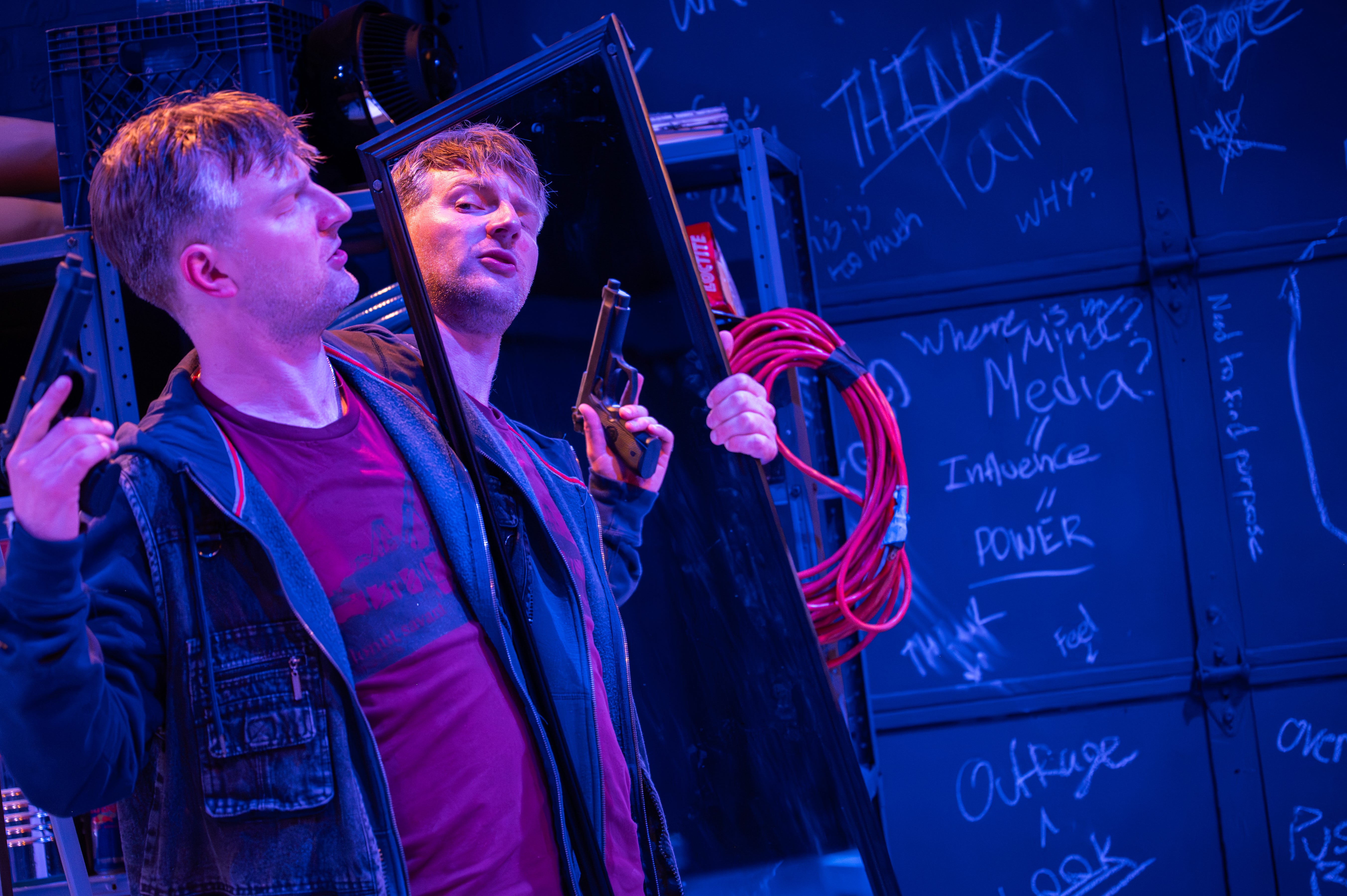
That reading helps make the galvanizing production of Assassins that’s now running at Oakland Theater Project feel right, almost to the point of inevitability. A show that ordinarily teems with people — not just the nine title characters but an array of narrators, confederates, and onlookers — is performed here by a cast of one. The breathtakingly virtuosic Adam KuveNiemann, working with director Weston Scott, incarnates every figure, switching back and forth among them with a degree of manic energy that constantly threatens to boil over. (He does get an occasional brief assist from YouTube or Spotify.) He uses a video camera, a tape recorder, a mirror, and more to create the illusions of company, but in fact he’s the loneliest man in the world.
Is this a gimmick? To some extent, yes. (After the applause had faded, the woman next to me turned and chuckled, “Well, they really committed to the bit.”) But it’s a gimmick that offers deep insights not only into the work itself, but also into its subject matter. It makes explicit the musical’s moral: that presidential assassinations reflect an underground vein of malleable madness that remains constant throughout its countless manifestations.
KuveNiemann, it should be said, isn’t actually playing any of the characters in Assassins. Rather, he’s playing some unnamed modern-day descendent of theirs, an avatar of despair and rage who discovers Sondheim and Weidman’s work online and stages his one-man rendition of it in an attempt at self-medication. The tiny performance space, which represents the character’s garage, struggles to contain his prowling, omnivorous ferocity. Sometimes he grabs a script and recites several pages of dialogue at an uninflected gallop, because those pages don’t contain what he’s looking for.
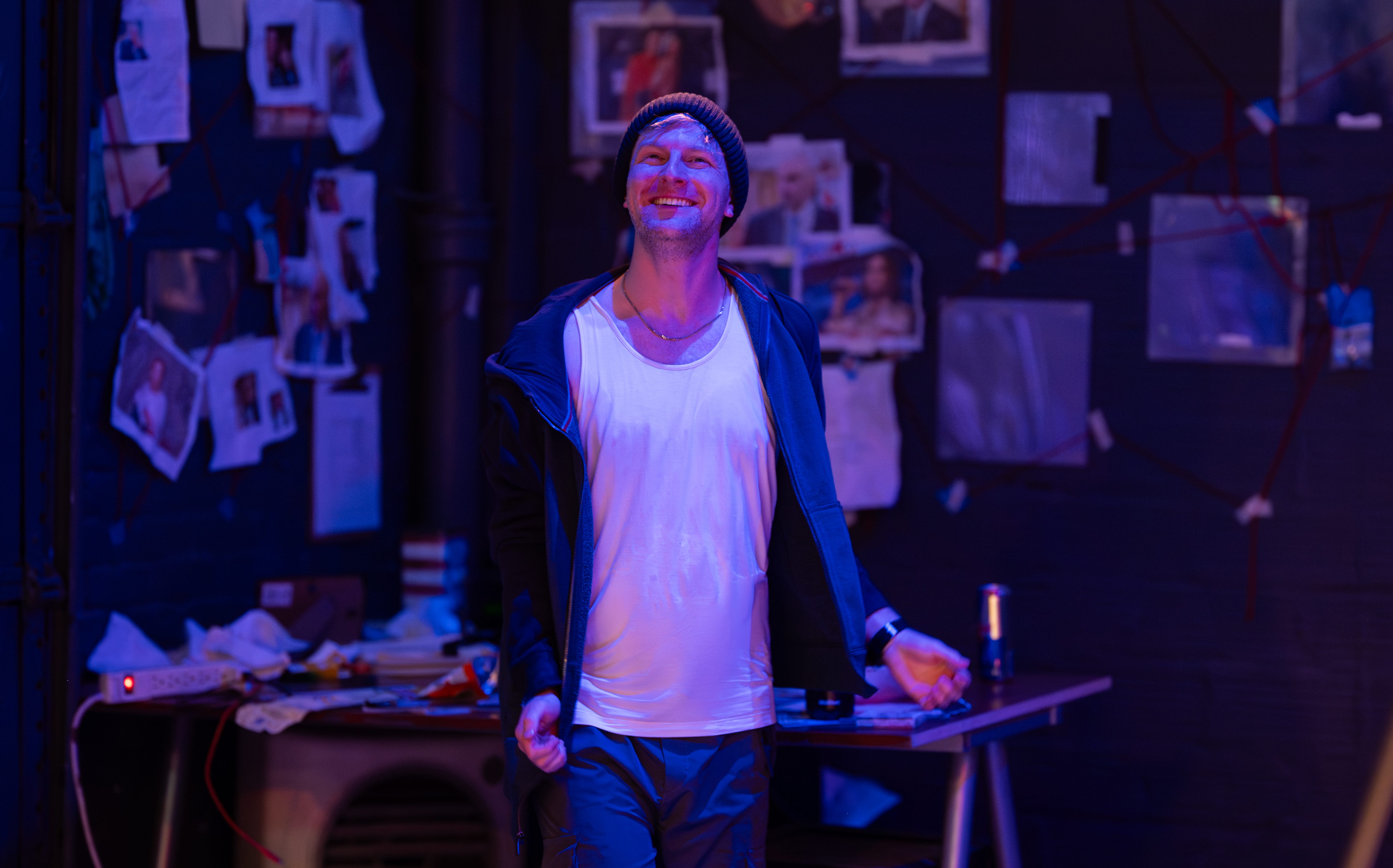
What he wants is a way out of his pain and dysfunction, the one dramatic step that will set everything right. In truth, he already has that step in mind. When the show begins, his bulletin board is scattered with images of various high-value celebrity targets; already we know that he’s got a plan of action, just like his predecessors from John Wilkes Booth on down. He just needs the right push, and once Assassins is over (in an unforgettable coup de théâtre), he gets down to business.
Assassins: Oakland Theatre Project, through April 19. www.oaklandtheaterproject.org.
Elsewhere:
Lily Janiak, San Francisco Chronicle: “KuveNiemann is frightening before he first speaks or sings, just stalking the conspiracy theorist’s lair of Sam Fehr’s set design, with printed out photos taped to a wall and connected with a web of dark red yarn. Scrolling on his phone, setting up various laptops and camcorders, and testing out projection screens, he has the air of one who’s made many bombs out of garbage while rattling off ‘just doing my own research’ rants.”
Steve Murray, Broadway World: “We don’t empathize with these villians — Sondheim’s songs and Weidman’s story strangely mocks their intentions and motivations while revealing a dark side of the American Dream that creates an endless cadre of miscreants.”
Jenyth Jo, Theatrius: “Grunge-styled Adam KuveNiemann paces the floor, glued to his cell phone. He becomes a variety of outcasts, revealing eerie similarities between assassins and near-assassins of our presidents. These citizens feel betrayed by their leaders and their lovers. With nothing left to lose, maybe notoriety could end their loneliness?”
Henselmania
Why is it that women have been composing music for centuries and yet we hear practically none of it in the ordinary rounds of modern-day concert life? People, by which I mean men, offer up various different answers to this question, and nearly all of them are bad-faith bullshit. One that I find especially galling is the argument that the music can’t be all that good, because if it were it would already be in the canon. This is not only empirically false (the wisdom of canon formation is instantly disproven by Gounod’s continued presence in our concert halls and opera houses) but a classic example of begging the question.
The truth is that the works of Clara Schumann and Louise Farrenc and Florence Price have always been judged — more or less a priori — to be Not Up To Male Standards. Over the years, that judgment rarely gets revisited because we don’t hear the music enough, and we don’t hear the music enough because the judgment of history assures us it’s not worth revisiting. As Yossarian says, “That’s some catch, that Catch-22.” And in the meantime, there are reams of exciting music gathering dust while contemporary listeners, which is to say all of us, wind up the losers.
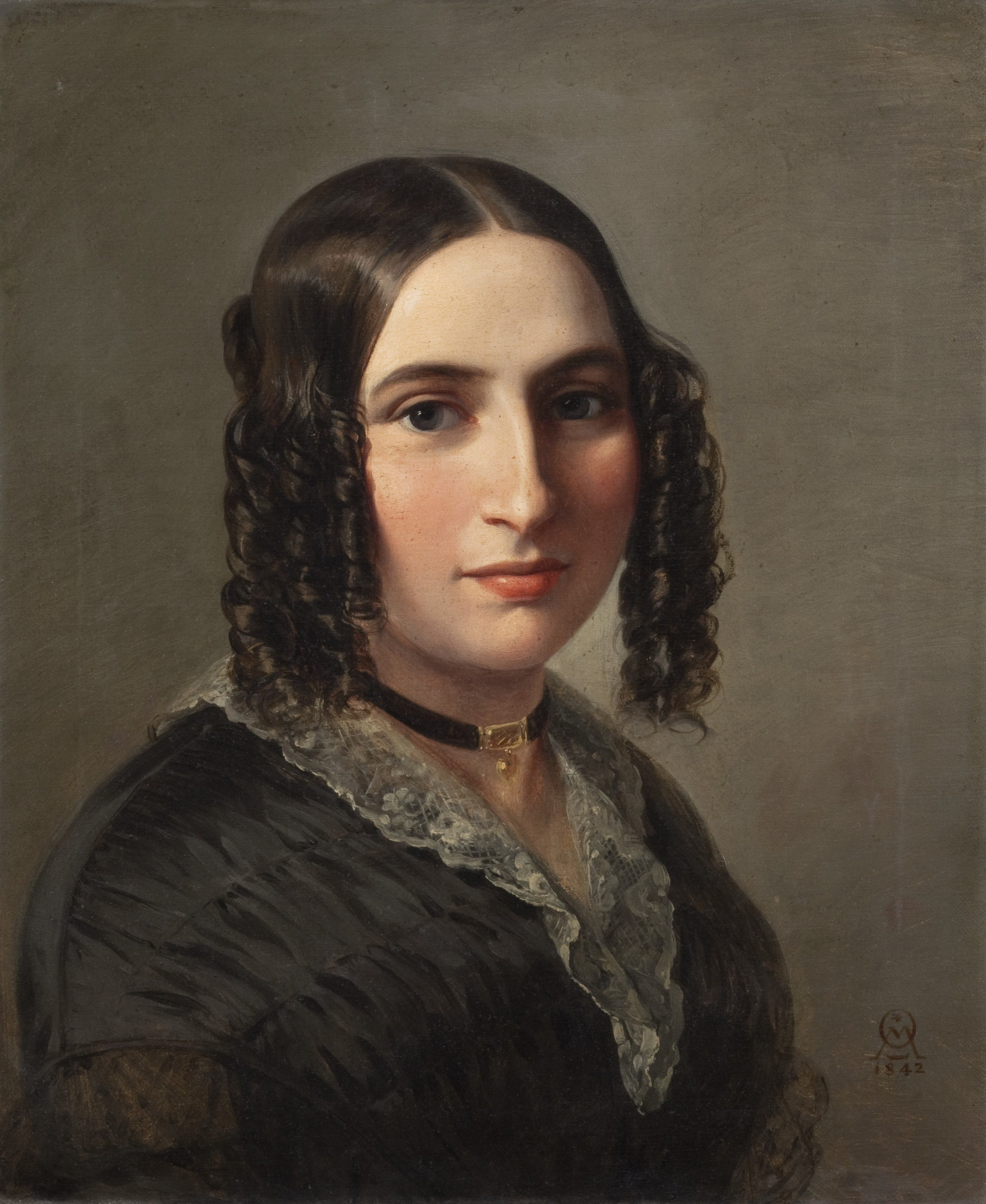
A wondrously enlightening event at the Berkeley Piano Club on Saturday introduced at least one listener to such a work, the 1834 String Quartet of Fanny Hensel. Fanny Hensel, of course, was born Fanny Mendelssohn, Felix’s elder and equally prodigious sister whose musical career was cut short and stunted by, to put it bluntly, the patriarchy. Shortly after her marriage, Hensel embarked on a piano sonata; she wrote three movements but never completed the piece. Five years later, she took up the score again to transform it into a string quartet. She made some revisions to the first two movements, and composed two entirely movements to fill out a robust formal plan.
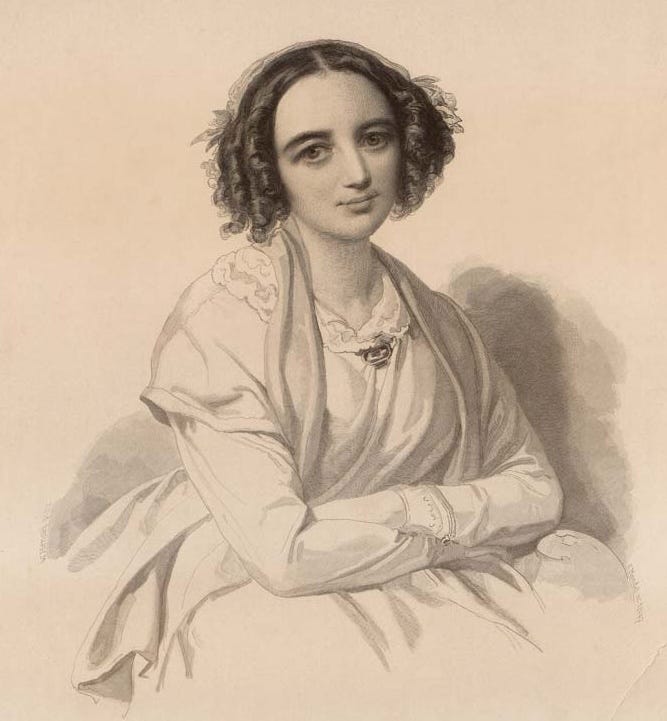
No need to mince words: The quartet, at least on a single hearing, seems to be a phenomenal piece. The opening movement, like its piano counterpart, begins with the development section; the themes are there in a somewhat latent form, but only get stated clearly once we hit the recapitulation. There’s a brisk, scampering scherzo that brings joy as only an early-Romantic romp can do, and an expansive finale that evidently encodes musical references to both Fanny and her kid brother. The entire thing is ingenious, hearty and often ravishingly beautiful.
Saturday’s event was a lecture-concert organized by musicologist Molly McCann, whose website, www.henselpushers.com, exists to promote Hensel’s music and make her scores — which are otherwise hard to come by — freely available. In the lecture sections, she guided the audience through the history, psychology, and musical workings of the two pieces. In between, we got to hear both the unfinished sonata and the glorious string quartet, in fine renditions by, respectively, Monica Chew and the Town Quartet.
What the quartet in particular needs now is broader exposure, both to delight listeners and to confound the misogynist snobs. If I had a string ensemble of my own, I’d push this piece onto the repertoire list today. If you have a string quartet, or know someone who does, the score is available here at no cost.
Don’t wait too long
• Take some advice from your Uncle Kos: When someone you consider reliable tells you that there’s a great show playing in town and you should go see it, do what they tell you. In particular, do it promptly, without procrastinating until two days before the show closes. Otherwise you wind up seeing something terrific when it’s already too late to spread the word to everyone you know.
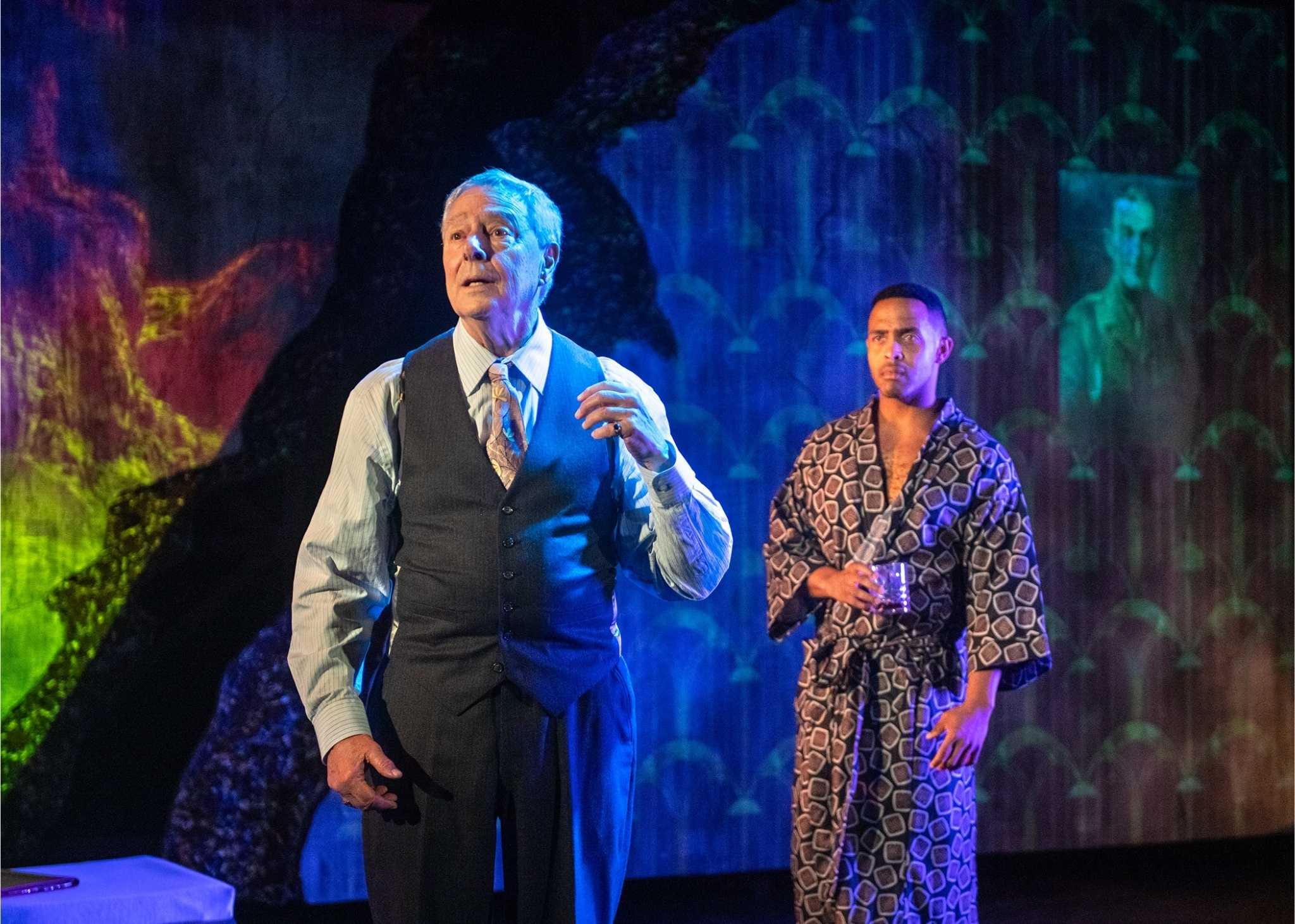
Do I speak from experience? Always. A friend buttonholed me a while back to encourage me to check out Gods and Monsters at the New Conservatory Theatre Center, but in spite of my best intentions, I somehow didn’t follow through until Saturday’s penultimate performance. And now the play has run its course, and all I can tell you is that it was wonderful, and I wish I’d been able to spread the word sooner.
Like the 1998 film of the same name — to which it is vastly superior in just about every way — Tom Mullen’s stage adaptation of Christopher Bram’s novel concerns the final days of James Whale, the British-born director best known for having made both Frankenstein and Bride of Frankenstein. Whale, who drowned himself in the pool of his Hollywood home in 1957, was a rarity — an openly, indeed flamboyantly, gay artist whose career does not seem to have suffered as a result. (His career did crash and burn, but the main cause was a single box-office debacle.)
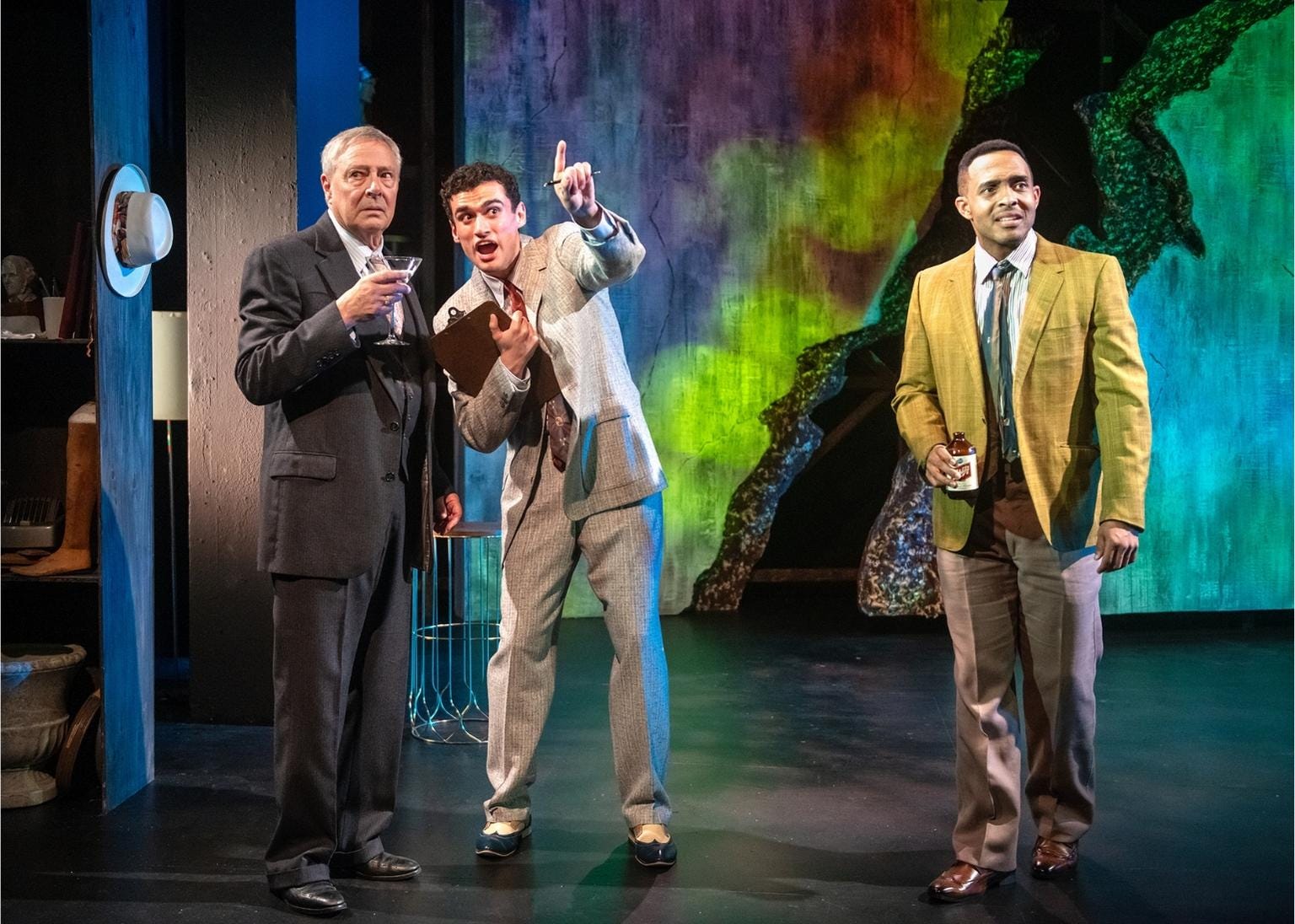
Mullen’s version restores the Latina identity of Whale’s housekeeper as Bram had conceived it, and more importantly, turns the Brendan Fraser character, Boone — a hunky young gardener who comes into Whale’s generous but exploitative orbit — into a Black man. Instantly, we have profound themes of race to go along with those of art and sexuality; Boone’s explication of Frankenstein as a tale of racial injustice is brilliant. So, too, was the production’s cast, headed by Donald Currie as a silky, vulnerable Whale; Jason M. Blackwell as Boone, by turns headstrong and tentative; and Francine Torres, Tyler Aguallo, and Ryan Lee rotating through several complementary roles under the dexterous guidance of director M. Graham Smith.
• One last short-fuse recommendation on which time has fortunately not yet run out: Alvin Ailey American Dance Theater is at Cal Performances through Saturday with a handful of different programs, all but one of which include Ailey’s 1960 masterpiece Revelations. Many people, I think, are aware of this vividly moving and colorful treatment of African American spirituals, and understand the urgency of experiencing it.
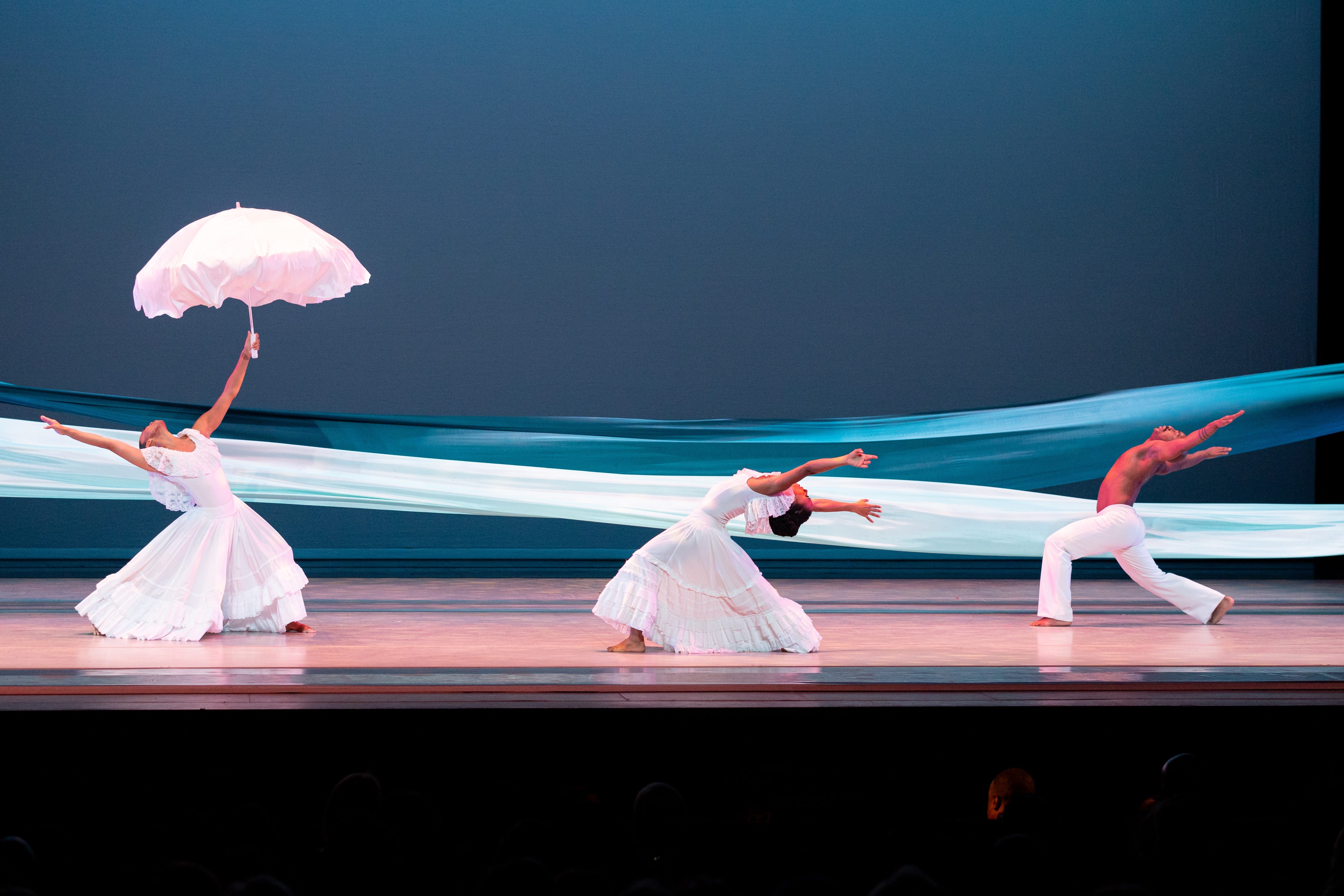
But not everyone! My conversations in the past 48 hours have revealed a surprising number of people who are walking around like, “Revelations? Is that a thing?” and to them I say, Good lord yes! It will change your life. It’s sorrowful and mighty and full of joy and vitality. As far as the rest of the lineup is concerned, I refer you to my knowledgeable and insightful colleague Rachel Howard, whose review is now out in the San Francisco Chronicle. But I can tell you that Revelations is a work of ineffable, boundless beauty, not to be missed.
Alvin Ailey American Dance Theater: Through April 12, Zellerbach Hall, UC Berkeley. www.calperformances.org.
Cryptic clue of the week
From Out of Left Field #314 by Henri Picciotto and me, sent to subscribers last Thursday:
Englishman who wrote of French adversary (5)
Last week’s clue:
Rash (spots on your face, perhaps) doesn’t start small (8)
Solution: RECKLESS
Rash: definition
spots on your face, perhaps: FRECKLES
doesn’t start: skip the first letter
small: S
Coming up
• Miah Persson: The graceful and eloquent Swedish soprano returns to the Bay Area with a recital program of Nordic art songs. The program, with pianist Magnus Svensson, features music not only by such familiar figures as Sibelius and Grieg, but also new names including Gösta Nystroem, Emil Sjögren, and Ture Rangström. April 9, Herbst Theatre. www.sfperformances.org.
• San Francisco Contemporary Music Players: The most recent creation of composer Steve Reich, the 2023 vocal and instrumental work Jacob’s Ladder, has its West Coast premiere with artistic director Eric Dudley conducting. The program, based on themes of ascent, includes West Coast premieres by Seare Ahmad Farhat and Vivian Fung, as well as Ruth Crawford’s Music for Small Orchestra. April 11, Taube Atrium Theatre. www.sfcmp.org.
• Attacca Quartet: Two of the most thrillingly memorable music events of the past few months have been the December premiere of Caroline Shaw’s The Holdfast and the Attacca Quartet’s March program with vocalist Theo Bleckmann. If you missed either or both of them, here’s your chance to compensate: a full program of Shaw’s music, performed by her and the quartet together. April 12, Taube Atrium Theatre. www.sfperformances.org.
Thanks for the rave review of the Fanny Hensel String Quartet.
Defoe