
Strike zone
The grape strike of the 1960s provided the backdrop for Dolores, a powerful new opera centered on labor leader Dolores Huerta

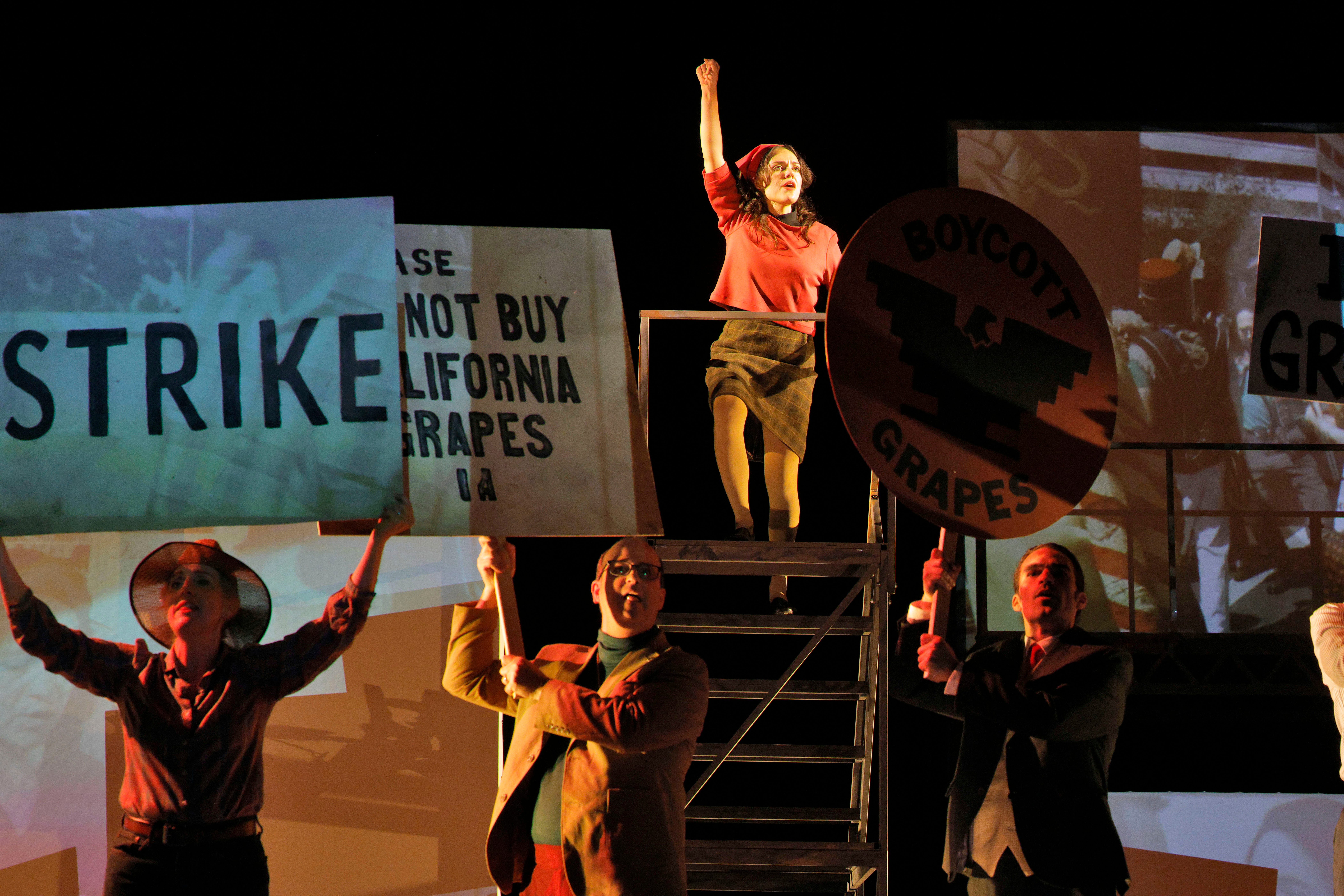
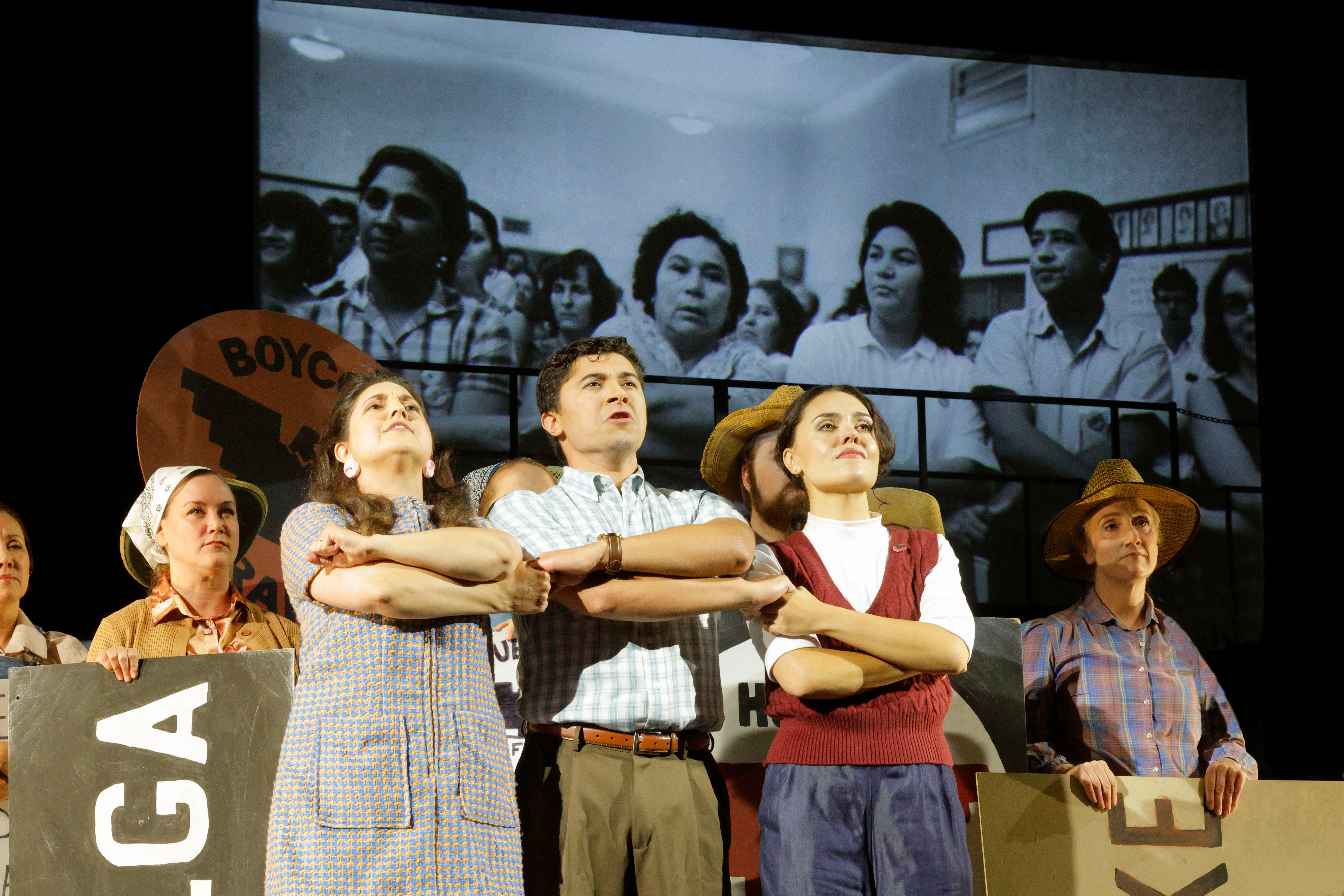
Dolores, the richly affecting new opera by composer Nicolás Lell Benavides and Marella Martin Koch currently having its world premiere at West Edge Opera, tells a story of communal action. The setting is the Delano grape strike, during which the primarily Mexican and Filipino members of the United Farm Workers undertook a massive labor action in California’s Central Valley that wound up lasting five years, from 1965 to 1970. Dolores Huerta, one of the planners and guiding spirits in that action, was a key player in this piece of history. But the victories and setbacks were not hers alone. Every worker, every labor leader and supporter, shares in the tale.
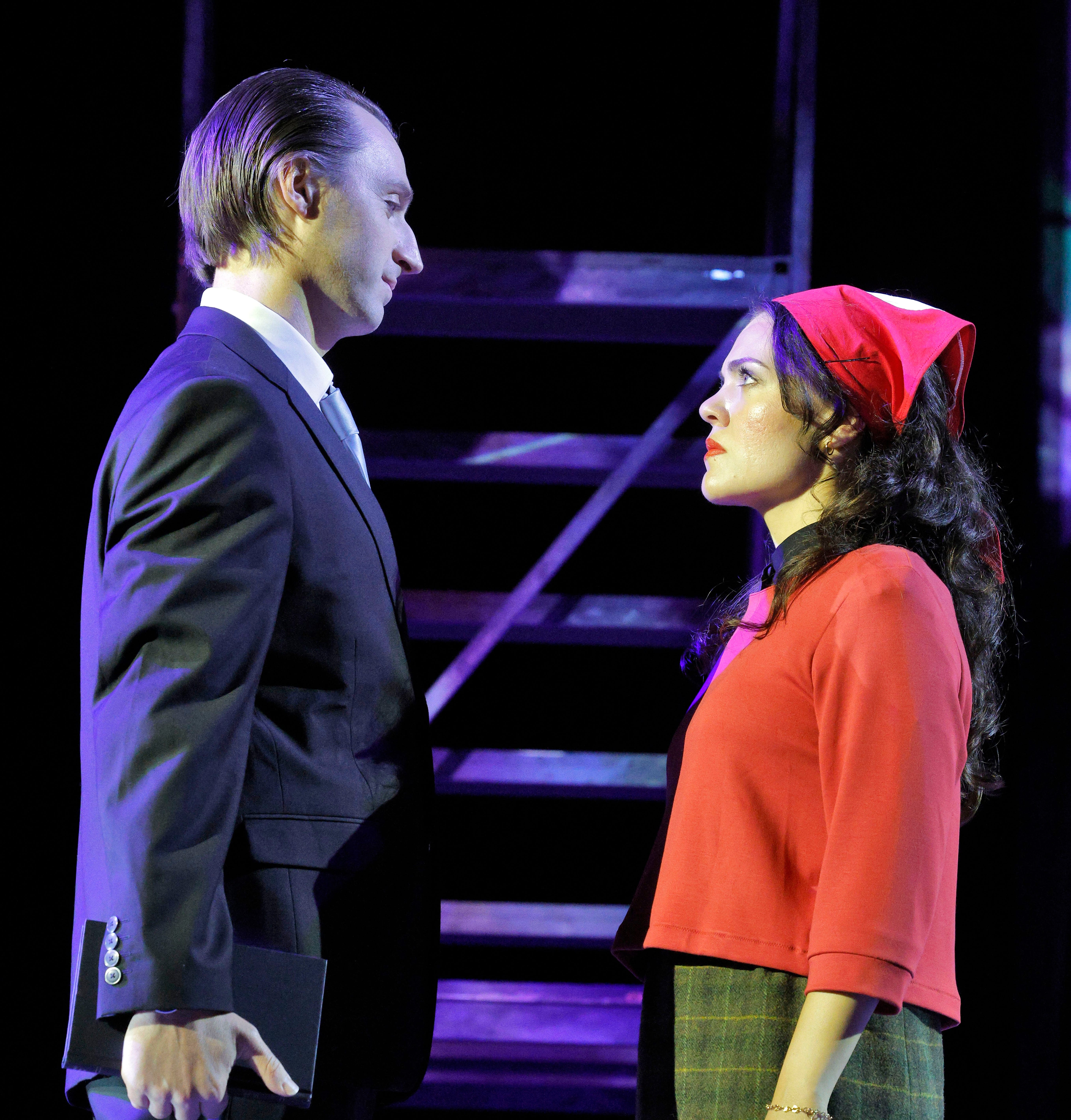
So even though Dolores is the opera’s title character, she doesn’t dominate the proceedings the way, say, Lohengrin or Tosca do. Her fellow union leaders, Cesar Chavez and Larry Itliong, have key roles to play. Bobby Kennedy, whose endorsement of the union workers promised to swing the struggle in their favor, often emerges (or threatens to emerge) as the opera’s moral center; certainly his assassination on the night of his 1968 victory is the work’s dramatic fulcrum. Richard Nixon, oily and malevolent as always, serves as the antagonist. The opera travels from the fields to the voting booth to the ballroom of the Ambassador Hotel and back again.
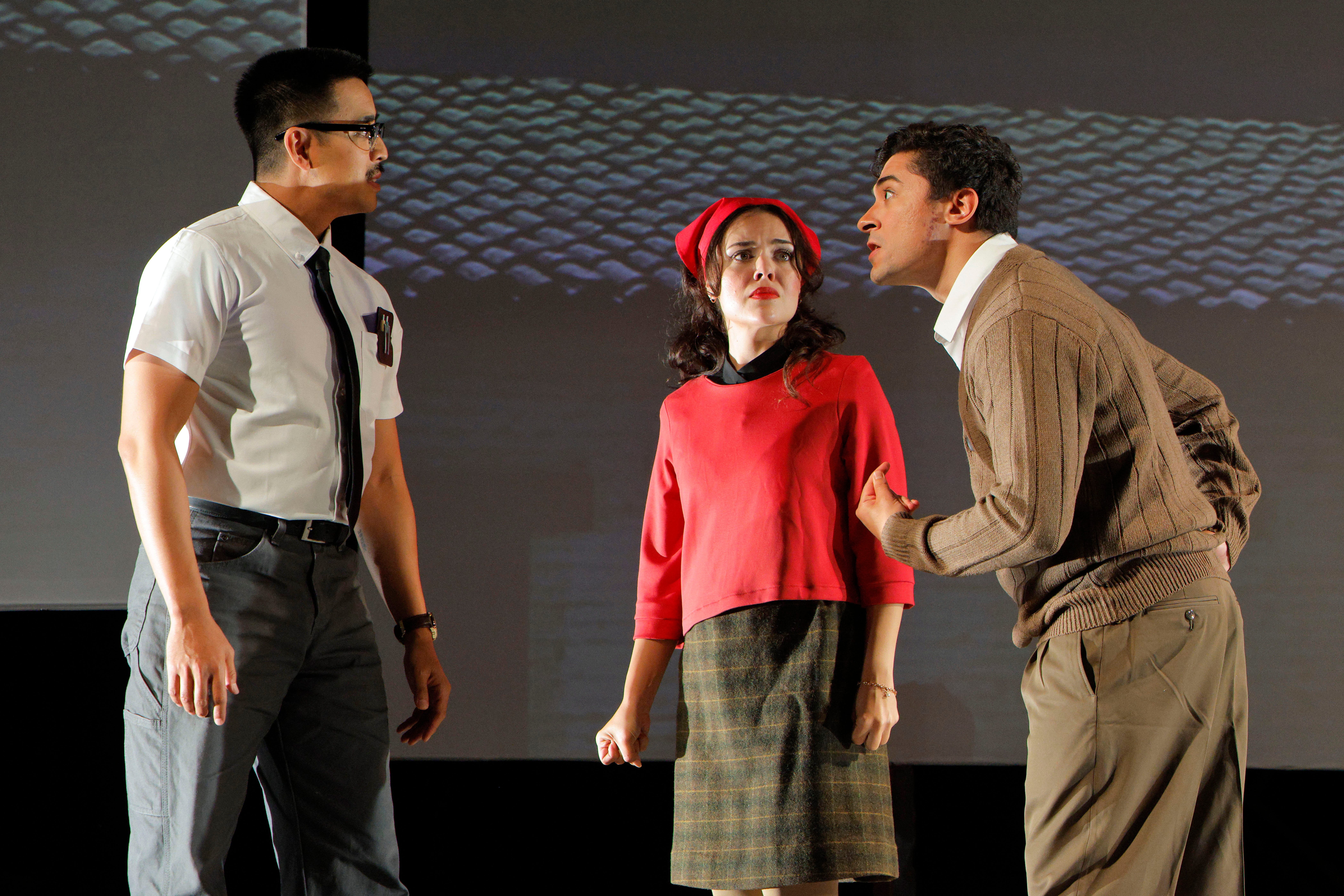
The effect of this broad theatrical lens is to produce a work that is simultaneously panoramic and a little blurry. Even in the expert hands of director Octavio Cardenas, who shapes one scene after another with visionary cogency and force, it can sometimes be hard to tell precisely where our attention is meant to be focused. We see the toll that union work takes on Dolores’ family; we watch as Chavez, Itliong and Huerta debate strategy and push for individual agendas that are not always aligned; we witness the unfolding of the pivotal presidential campaign; we gasp in horror at the assassination and are left to contemplate how little has changed on the American political landscape over more than half a century.
Yet if these components sometimes jostle one another from scene to scene, we only need to dolly back a bit to become swept up in the opera’s powerful musical and theatrical evocation of that time and place. Photos and videos from the period create a moving backdrop. The opera conveys clearly just how much Kennedy’s advocacy meant for the striking workers, and what his stirring model of liberalism meant to the nation as a whole. In the final moments, as the strikers’ chants of “¡Sí, se puede!” spread from the stage into the auditorium, it becomes impossible to separate past from present, or to ignore the message of hope embodied in Martin Koch’s libretto, which shows the union leaders regrouping in the wake of the cataclysmic assassination to renew their struggle. In the title role, mezzo-soprano Kelly Guerra beautifully captures Huerta’s combination of fierce tenacity and vulnerability. (The 95-year-old Huerta, who is a cousin of the composer’s, was on hand for the first two nights of the three-performance run.)
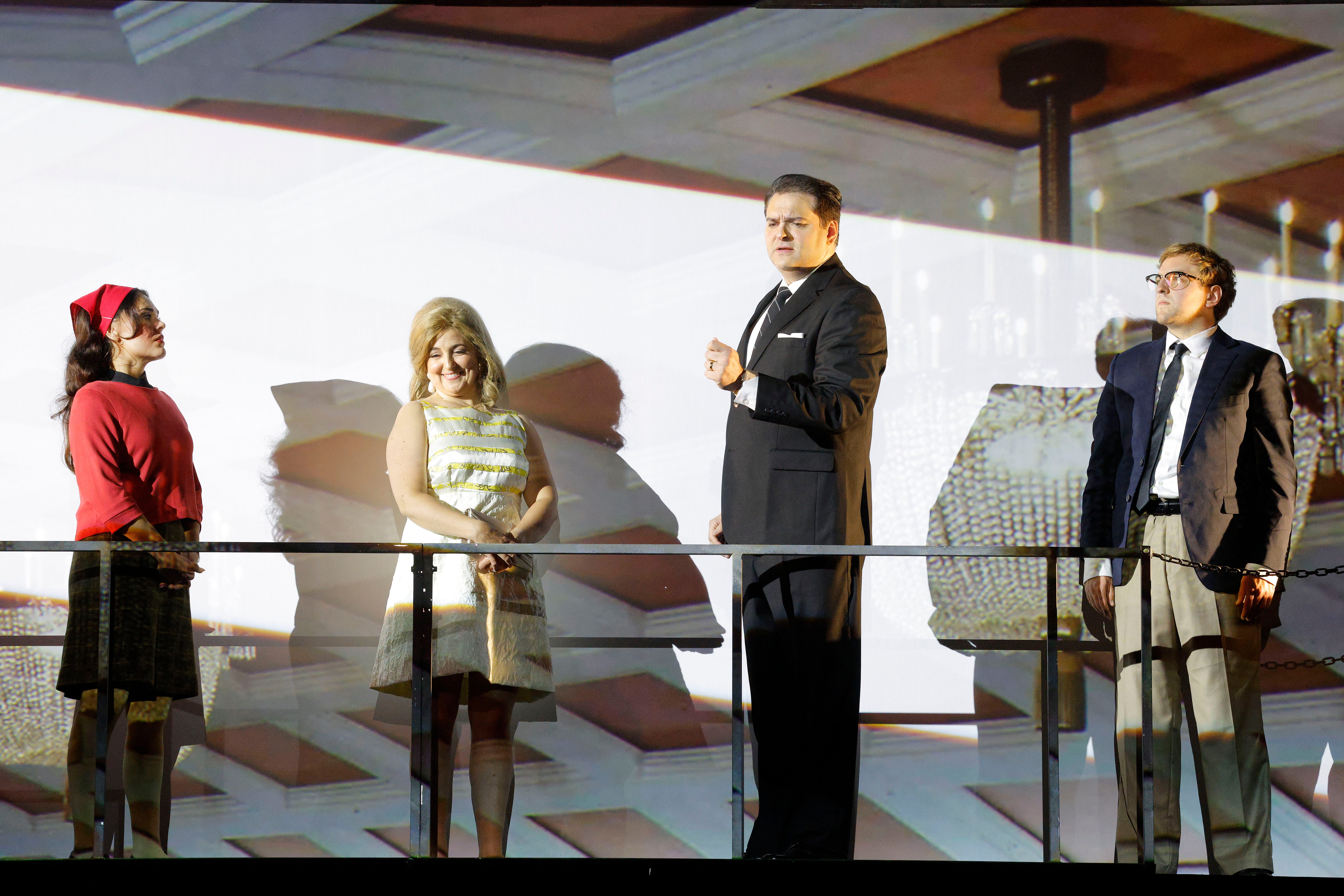
The strongest argument in favor of Dolores’ catchall approach, though, is Benavides’ resourceful and wonderfully eclectic score, skillfully conducted by Mary Chun. Wherever the story turns, Benavides stands ready to infuse it with just the musical expression it needs. When Chavez (bass-baritone Phillip Lopez) endangers his own life by embarking on a hunger strike to further the union cause, he gets a vivid leitmotif associated with personal sacrifice. The hard-bitten Itliong (baritone Rolfe Dauz) declaims in short, punchy bursts of tough-guy dialogue; Nixon (tenor Sam Faustine) sings a glib, slightly nauseating waltz. There are mariachi strains and potent choruses, a sweetly ingratiating duet for Dolores and Ethel Kennedy (soprano Chelsea Hollow) in which they bond over the tribulations of motherhood, and a sudden burst of horrifying noise in the aftermath of Kennedy’s assassination.
Perhaps no moment in the score better embodies Benavides’ eloquence than his setting of Kennedy’s acceptance speech. The text, which is either Kennedy’s actual speech or Martin Koch’s dexterous mimicry, is banality itself — a series of thank you’s and lame politician’s jokes amounting to nothing. But in Benavides’ soaring vocal line, with its Coplandesque phrases and naturalistic rhythms given life in a vibrant performance by tenor Alex Boyer, you feel the shimmer of Kennedy’s charisma in a way that only music can quite conjure up.
Yet the scene in the opera that just about reduced me to tears came later, after Kennedy’s assassination. Suddenly, the famous photo of busboy Juan Romero holding the body of the fatally wounded senator appeared behind the stage, and I realized he was about to get an aria. That wasn’t strictly necessary — the story had been told perfectly well without him. But tenor Sergio Gonzalez began to sing, his gorgeous voice framing the music of a heartbroken elegy, and the tragedy seemed to take on a whole new dimension. In a tone of wonderment, Juan recalls how Kennedy, on getting a room service order, had looked him in the eye and taken one hand in both of his. Nobody pays attention to the busboy, he says, but Kennedy did. The creators of Dolores did as well, in an interlude of sublime pathos.
Dolores: West Edge Opera. Oakland Scottish Rite Center, through Aug. 16. www.westedgeopera.org.
Elsewhere:
Michael Zwiebach, San Francisco Chronicle/SFCV: “Telling the story of a pivotal year in the life of labor activist Dolores Huerta, the show is dramatically tight and musically transporting — a work made to last, though it’s also undeniably timely.”
Michael Strickland, Civic Center: “The two-act work by composer Nicolás Lell Benavides was the opening production of West Edge Opera's 2025 summer season at the Oakland Scottish Rite Center, and the occasion was a huge, emotional success.”
Patrick Vaz, The Reverberate Hills: “I go to as many new operas as I can & few of them have struck me as so musically & dramatically complete as Dolores. This is a meaty work that audiences will be pondering for quite a while.”
Main character syndrome
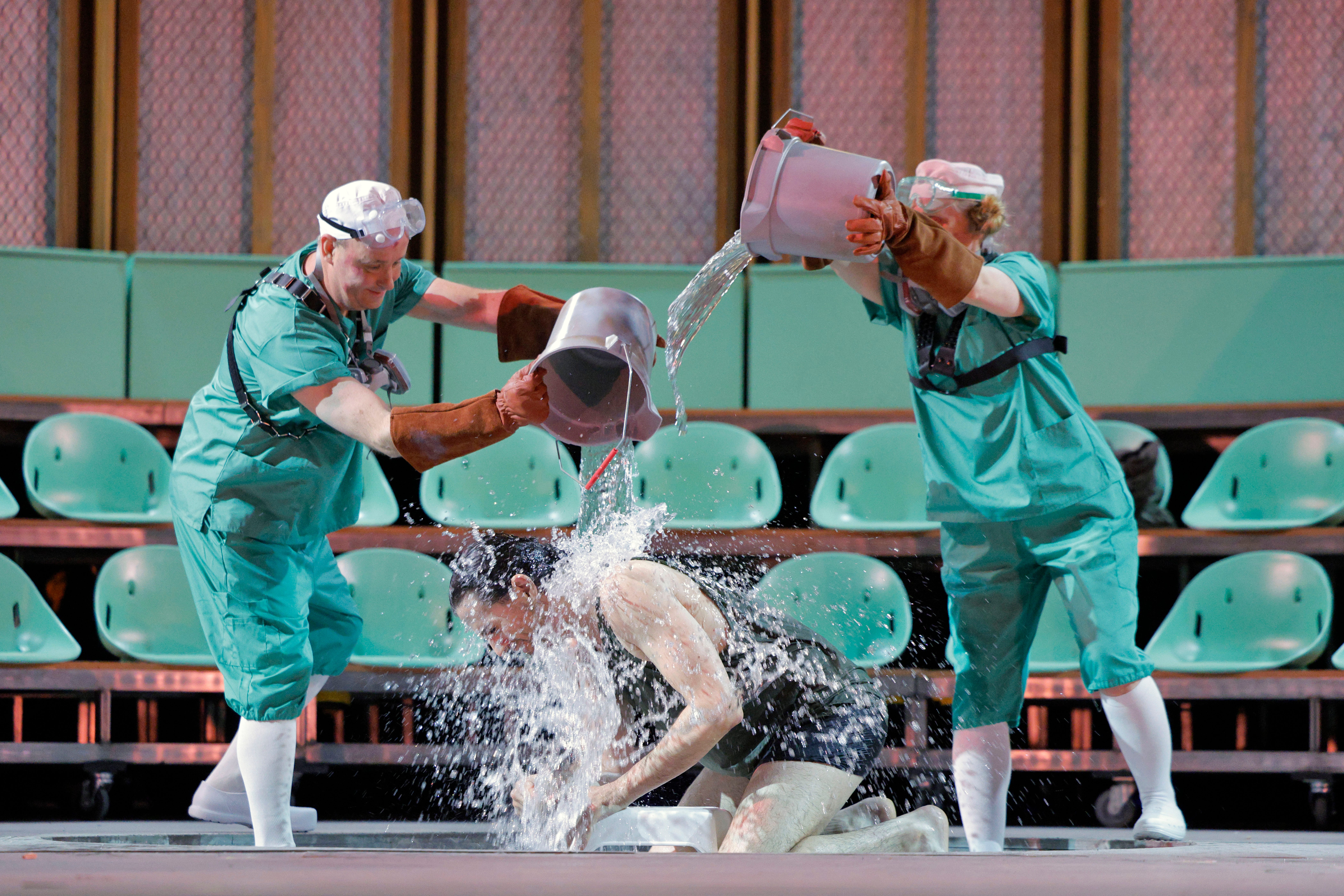
Is Wozzeck the main character in his own opera? On the most basic level, of course he is. His mute suffering, his almost animal stoicism in the face of the world’s indignities, sits at the center of Alban Berg’s 1925 Expressionist masterpiece, which along with Dolores and Marc-Antoine Charpentier’s David and Jonathan, fills out the 2025 summer schedule at West Edge Opera. This is the tale of a man on the edge, barely holding it together as the cosmos conspires to dump ever larger piles of shit atop his head. (It would be fashionable, and not inaccurate, to describe the problem in Wozzeck’s world as late-stage capitalism, if not for the fact that the play by Georg Büchner on which the opera is based dates from the 1830s.)
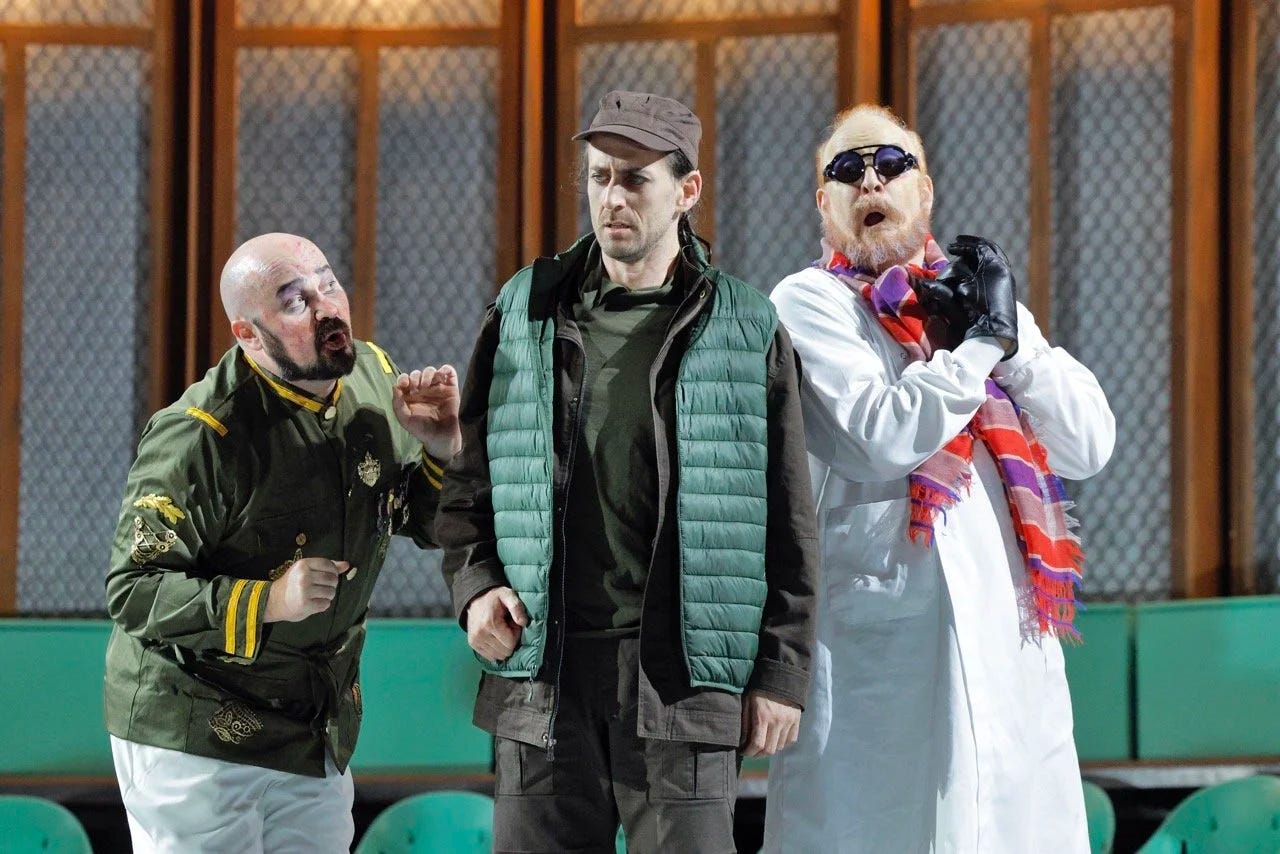
As is so often the case, though, the devil — which in Wozzeck means everyone else — gets all the best lines. The Captain, for whom Wozzeck performs demeaning duties while being lectured on morality, is a glittering comic monster; so too is the Doctor, who throws Wozzeck a few coins in exchange for monitoring his urination levels and bean intake. Wozzeck’s common-law wife Marie, the mother of his young son, has a rich inner life that doesn’t seem to have much to do with him. The Drum Major is an Eveready battery of cuckoldry. Meanwhile, Wozzeck grunts and tugs his forelock, clinging as best he can to some semblance of humanity, until he snaps.
None of this need create a sense of imbalance; in a perfectly judged production, the contrast between Wozzeck and everyone around him is the point of the exercise, producing a sense of existential despair. But in Saturday’s opening performance, there was a vacant spot at the center of the opera where Wozzeck’s suffering should have been. In the title role, baritone Hadleigh Adams seemed to have retreated into his shell and declined to come out, like some kind of risk-averse crustacean. Adams has been an elegant, sweet-toned, and — most importantly — charismatic presence on the local operatic landscape for more than a decade, and I’ve never before seen him fade so thoroughly into the woodwork. Much of his singing was barely audible, and conductor Jonathan Khuner, whipping his chamber orchestra into a full-volume frenzy, did him no favors. Director Elkhanah Pulitzer had him prowling the set like a beaten cur; he spent the entire evening on stage, but you had to remember to look for him.
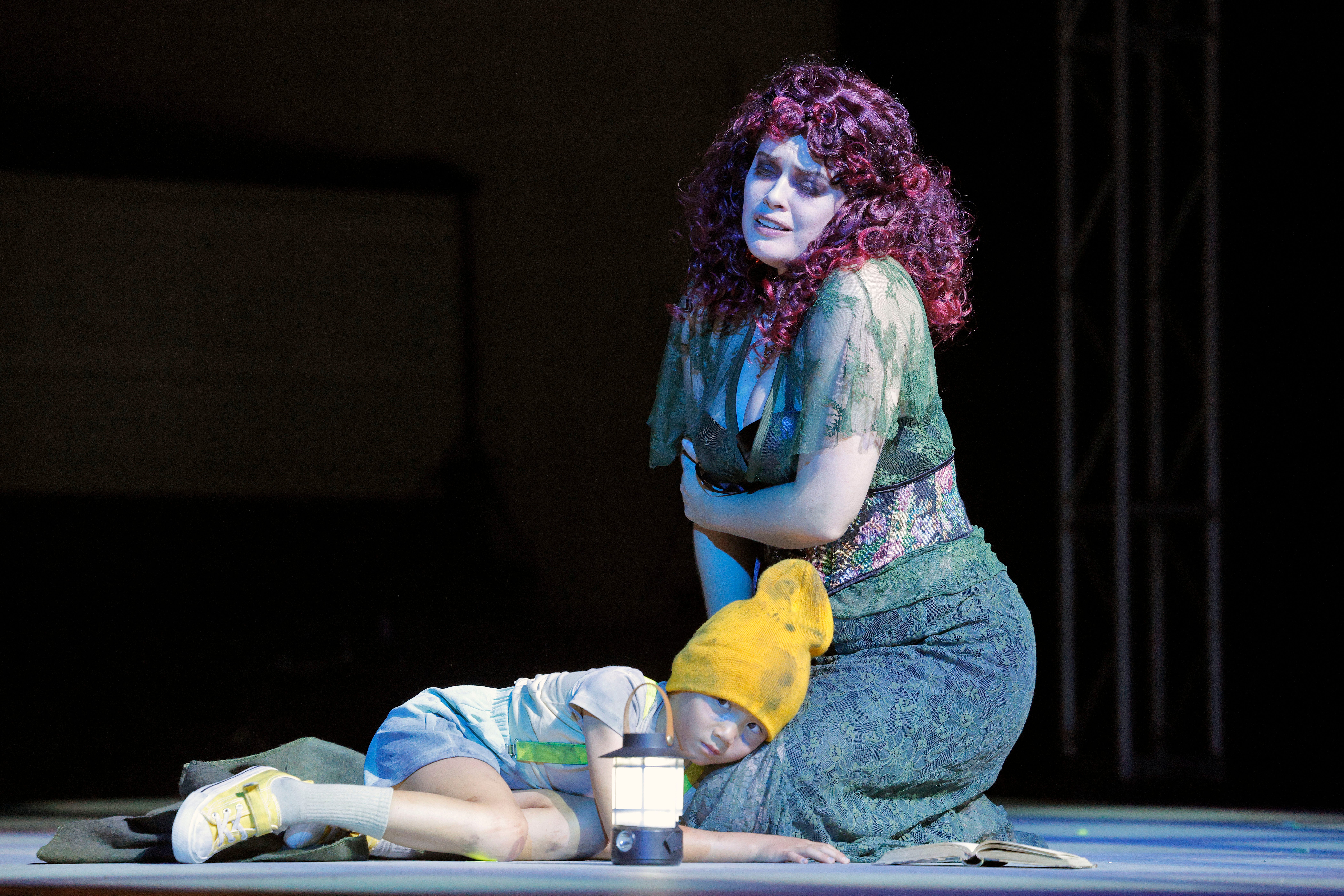
Meanwhile, the other members of the cast gleefully burst through with performances that were as theatrically outsized as they were vocally robust. Soprano Emma McNairy, who brilliantly delivered the title role of Berg’s Lulu with the company a decade ago, put her dazzling vocal artistry and fierce intelligence to use as Marie. Tenor Spencer Hamlin and bass Philip Skinner, as the Captain and the Doctor, respectively, lit up the stage with malice and wit. Soprano Silvie Jensen contributed a short but affecting turn as Margret, everyone’s favorite good-time gal, and tenor C. Michael Belle strutted and crowed persuasively as the Drum Major. But without a suitable object for their malevolence, the whole affair smacked less of existential angst than gratuitous mischief.
Wozzeck: West Edge Opera. Oakland Scottish Rite Center, through Aug. 17. www.westedgeopera.org.
Elsewhere:
Michael Zwiebach, San Francisco Chronicle/SFCV: “A working drain becomes central to the opera’s central visual language. In the fourth scene, baritone Hadleigh Adams, as Wozzeck, kneels at the drain and is repeatedly doused with buckets of water as directed by the corrupt Doctor, portrayed by bass Philip Skinner. It’s a gesture that fully captures the soldier’s humiliation and torment.”
Cryptic clue of the week
From Out of Left Field #280 by Henri Picciotto and me, sent to subscribers last Thursday:
What newbies must learn: Head away from clichés (5)
Last week’s clue:
Wilder allotment for X, perhaps? (10)
Solution: GENERATION
Wilder: GENE
allotment: RATION
X, perhaps?: definition
Coming up
• San Francisco Choral Society: Conductor Robert Geary’s noble chorus provides the traditional close to the summer concert season with a single performance of Brahms’ A German Requiem, the composer’s stately, tender testament of mourning and loss. Along with the chorus and the California Chamber Symphony, soprano Cara Gabrielson and baritone Andrew Thomas Pardini serve as vocal soloists. Aug. 16, Davies Symphony Hall. www.sfchoral.org.
• Merola Opera Program: The Grand Finale concert concludes the San Francisco Opera Center’s summer training program with a diverse evening of arias and ensembles conducted by Kelly Kuo. The young artists who have so far displayed their gifts in two programs of songs and operatic excerpts, and in Rossini’s comic masterpiece Count Ory, now return for one last showcase. Aug. 16, War Memorial Opera House. www.merola.org.
Regarding Adams, he was reasonably audible during the Thursday performance, but definitely less dramatically present than one would wish. I'm not sure whether it was something about him or how he was directed or some combination of both. Everyone else was certainly in Technicolor.
I was at the Valencia Live street fair/night market tonight, and a Latin Rock band played a very catchy song praising Dolores Huerta, complete with "Sí se puede" chant at the bridge. (I wanted to a recording here but couldn't easily find one.) It made me so happy to think that people on both sides of the Bay, using multiple styles of music, are singing in Dolores' honor this weekend.